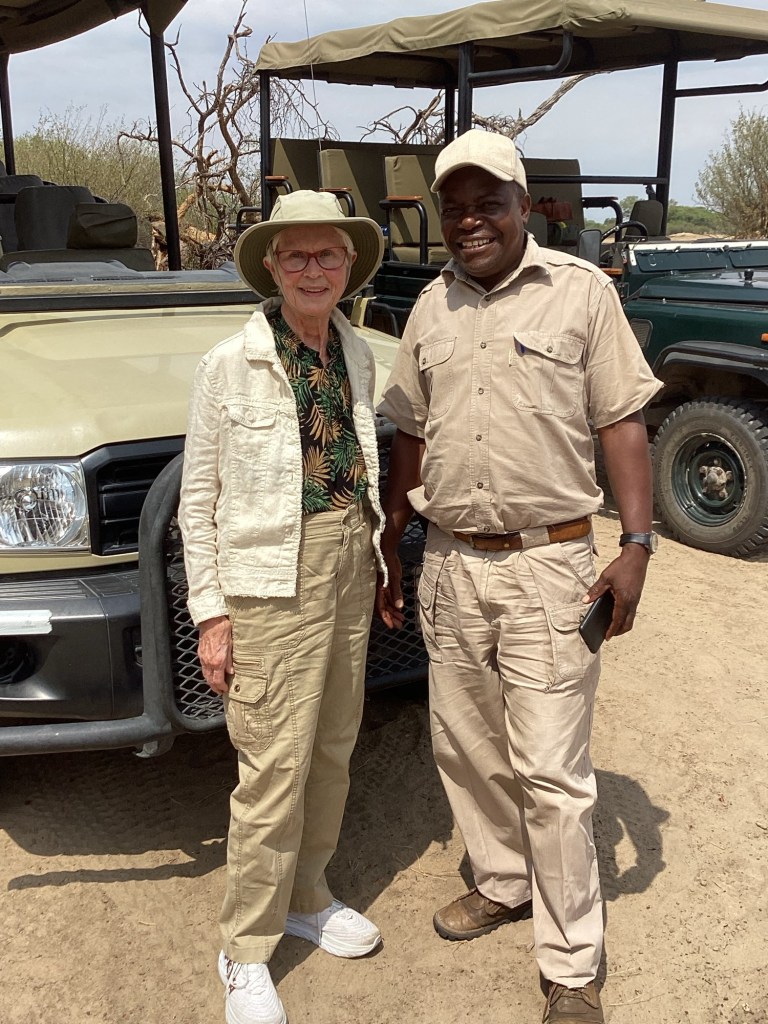
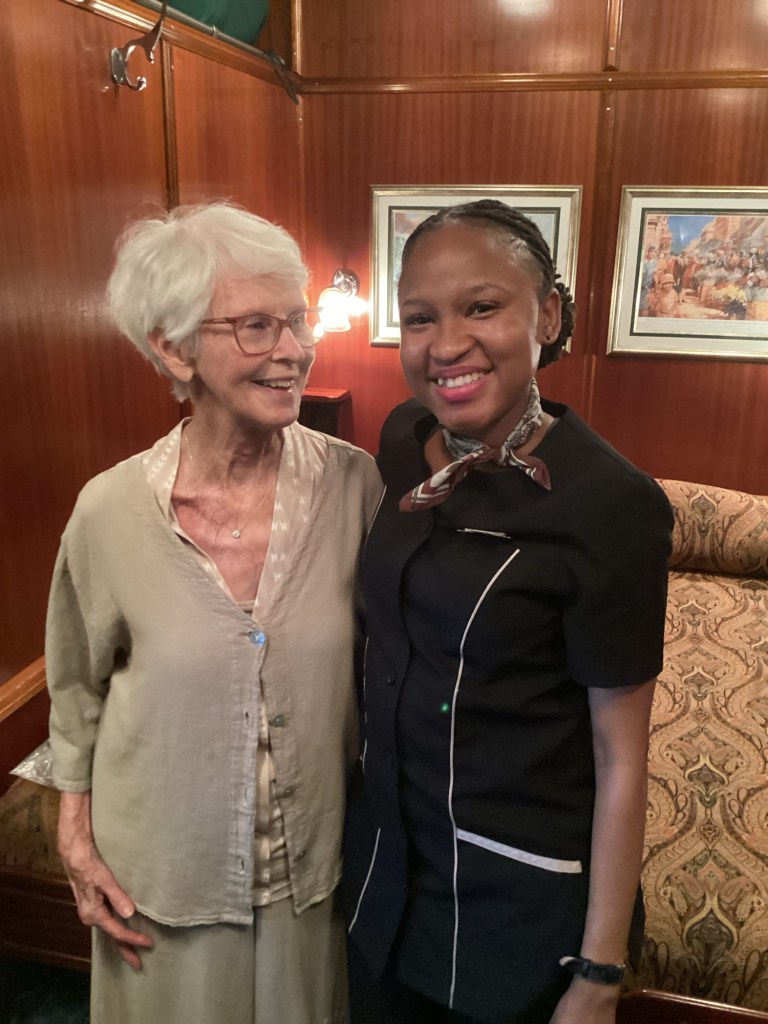
Koketso Sithole (or K.K.) our stateroom steward, woke us up at 5:00 am with a gentle knock on our door.
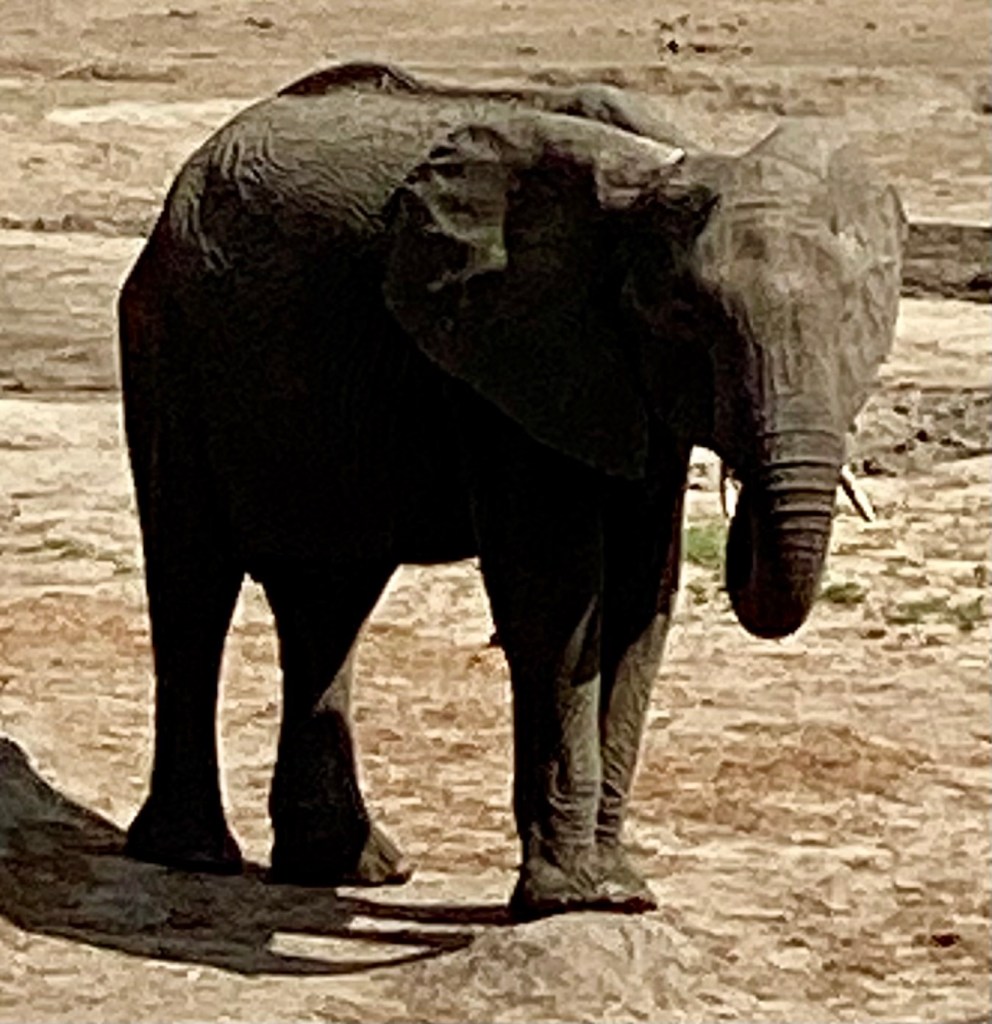
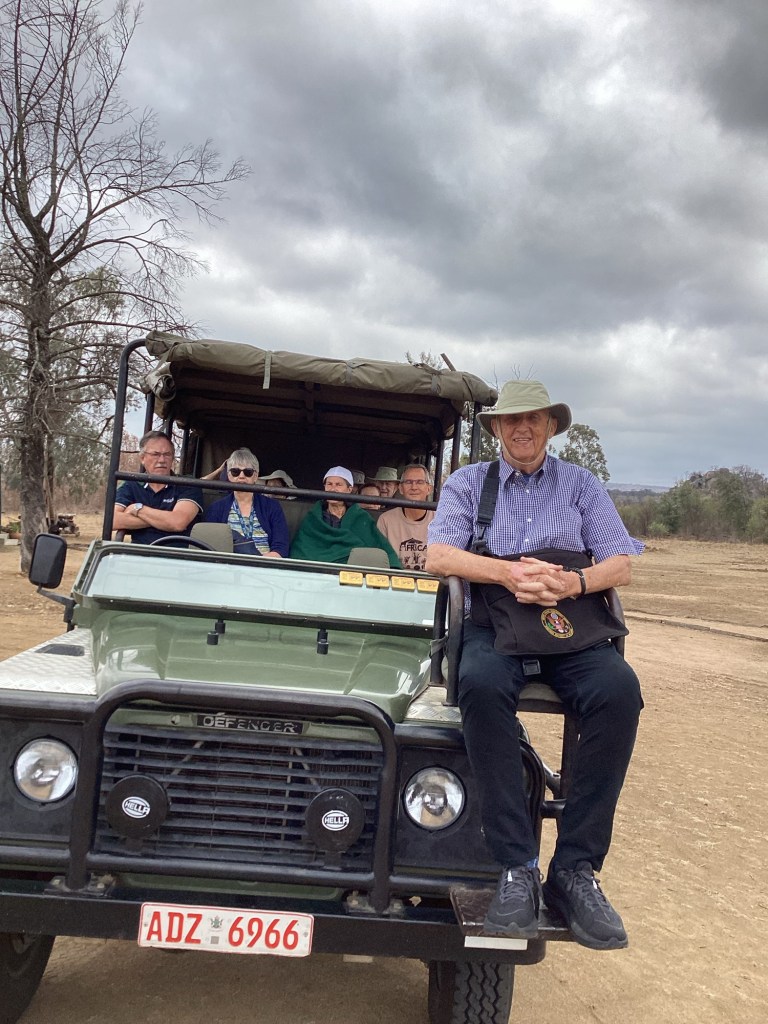
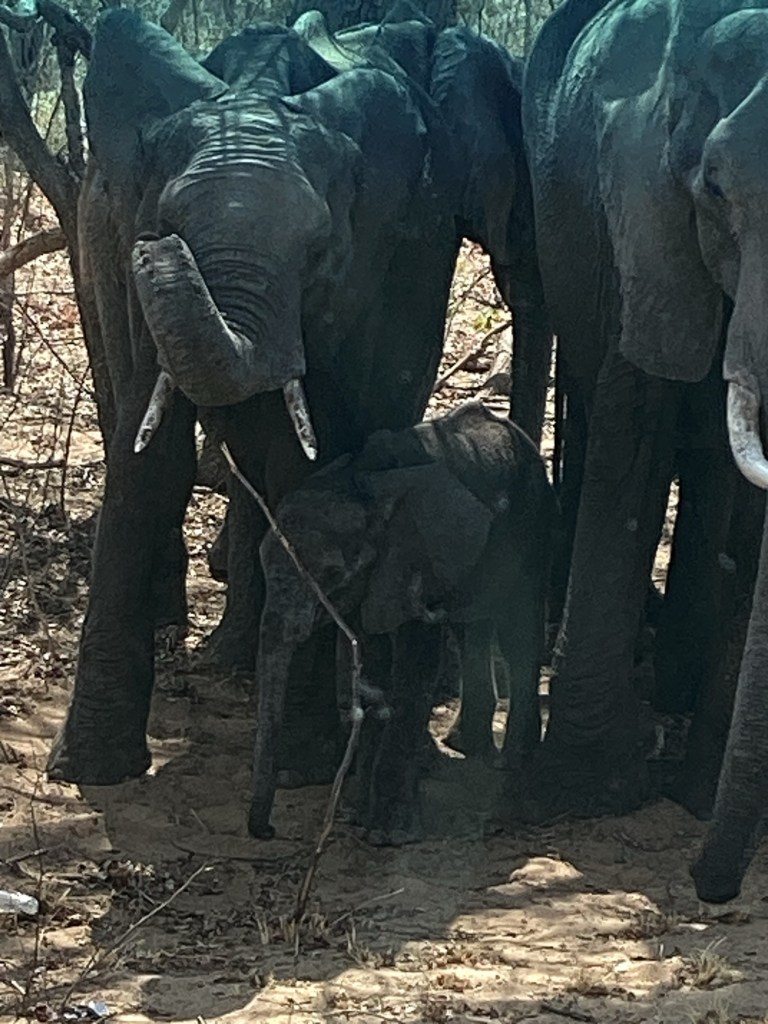
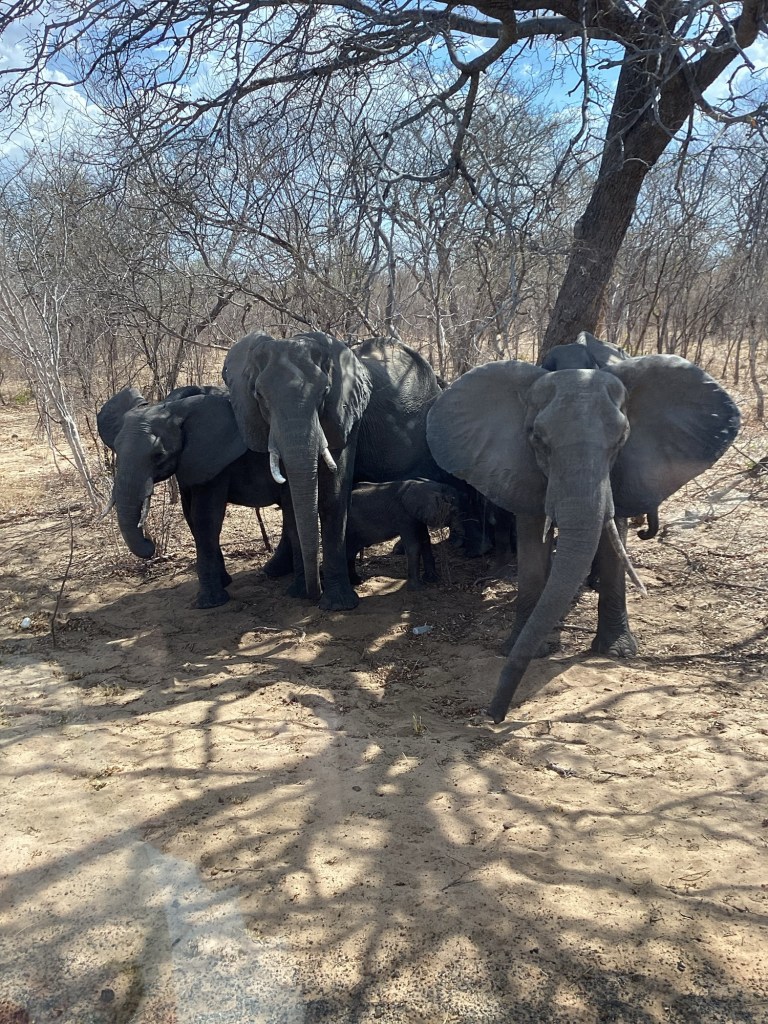
It was time to get ready for the first excursion of this 4-day train trip.. Getting dressed on a moving train that sways and rocks is harder than it may appear. Still we did manage it and they saved a 4 x 4 Range Rover for drive into Hwange Game Reserve. Even though the Reserve’s 20,000 strong elephant herd is world famous we saw far fewer. This herd is large but the Reserve is huge and easy for 20,000 elephants to hide in. They are constantly on the move searching for food during this dry season.
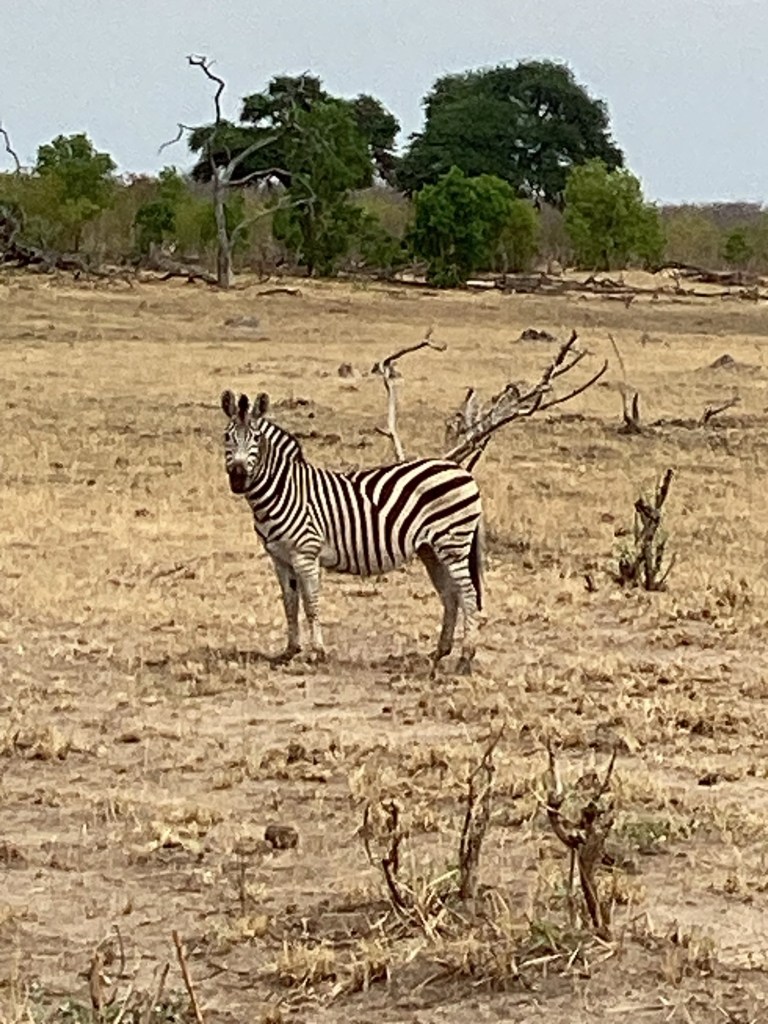
One of the draws of a train trip through the Hwange Game Reserve was the anticipation of spotting many of Africa’s animals from the windows of our stateroom. We see zebras during lunch but otherwise just lots of leafless trees outside our window.
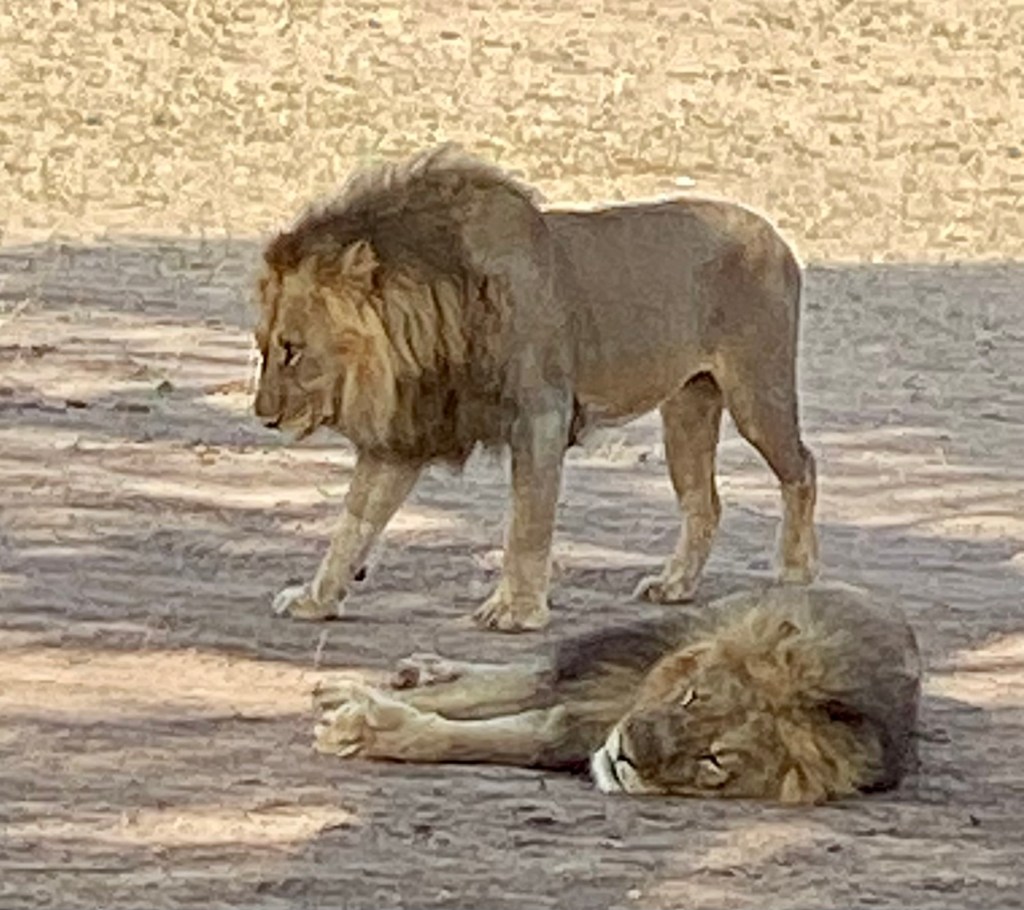
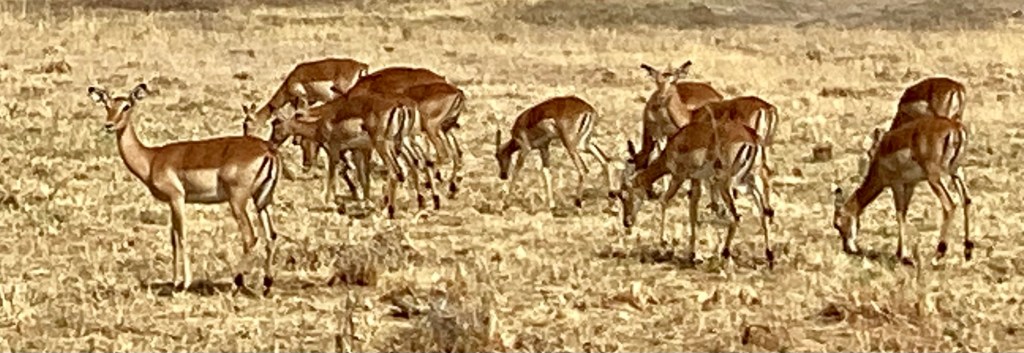
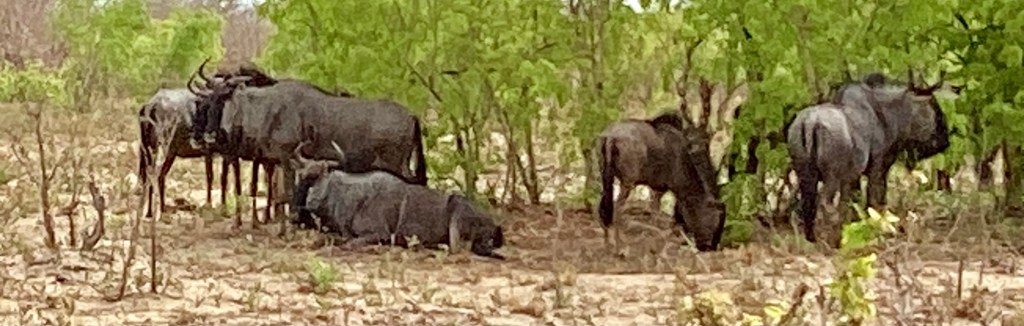
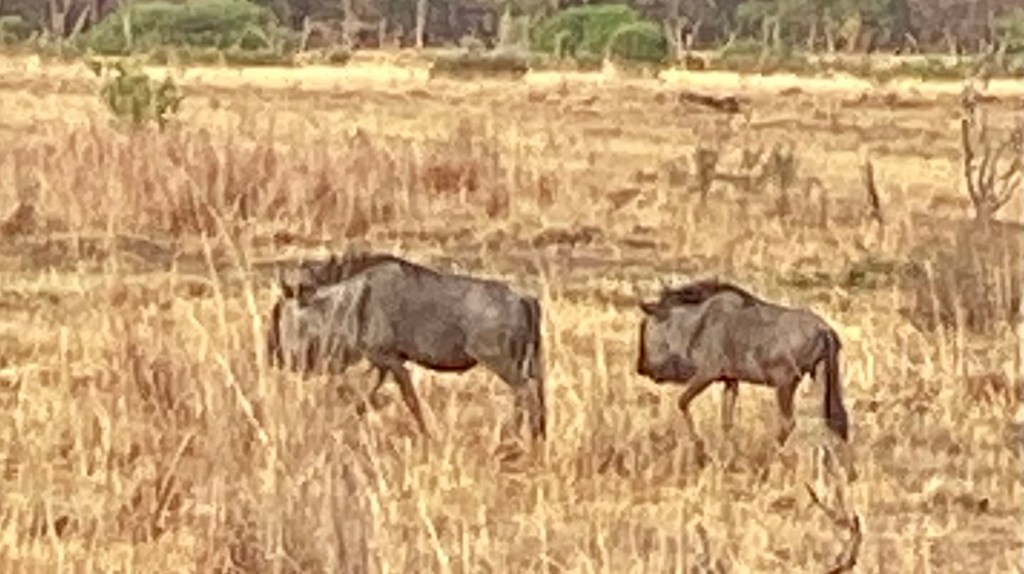
We did see other species:
ZebrasLionsImpalas
Wildebeests
Wildebeests
Our game guide and driver tried his best but neither he nor the other guides could locate the herd of elephants
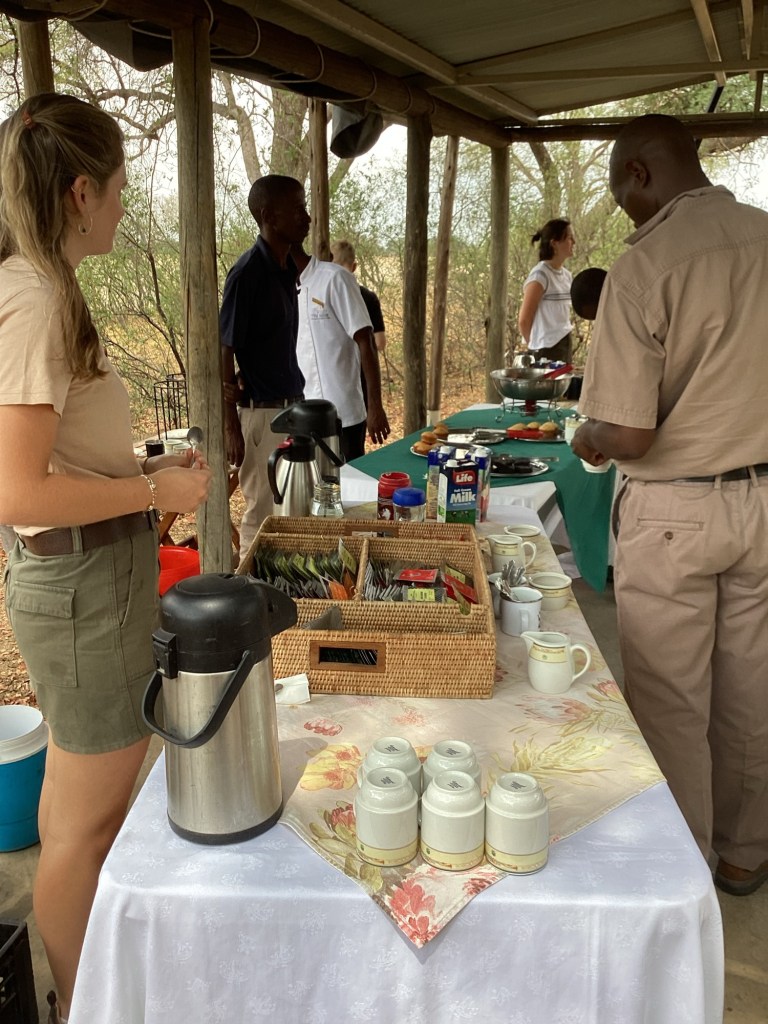
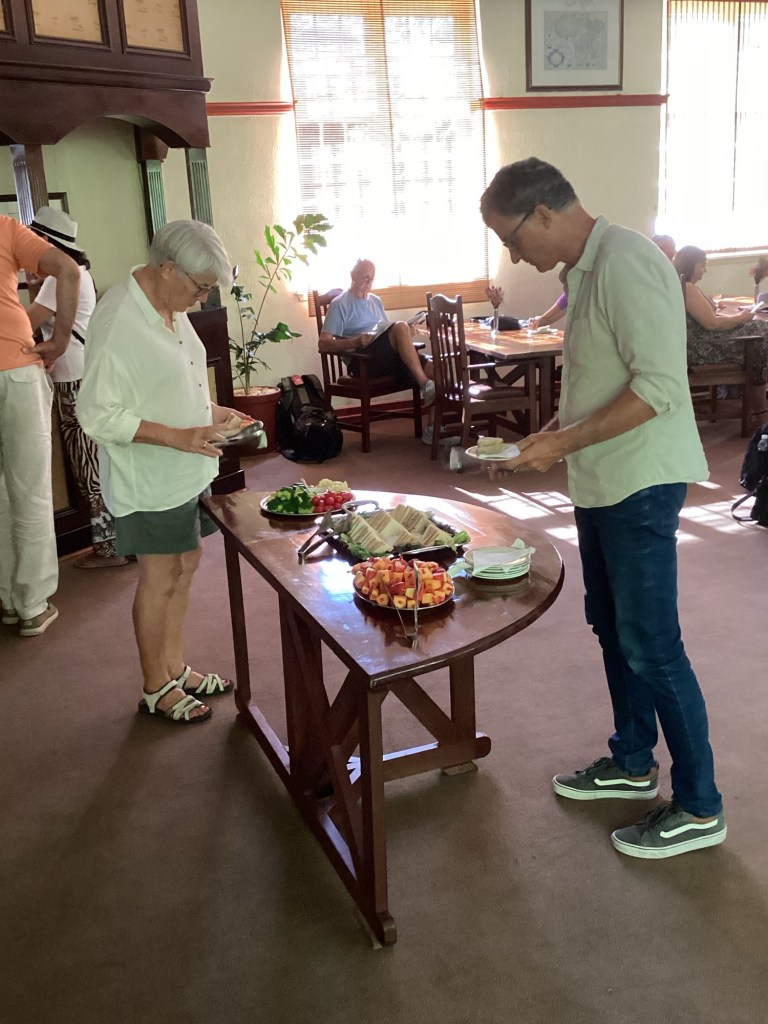
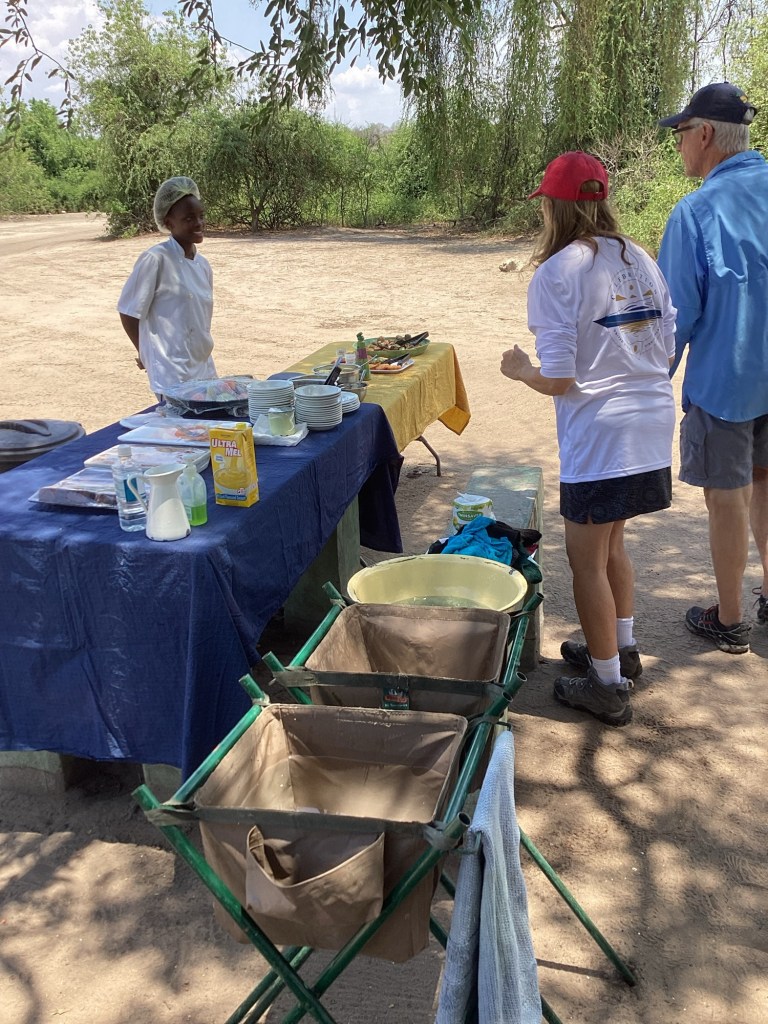
After nearly four, hours we stopped for some refreshments
…waiting to be shuttled back to the train.
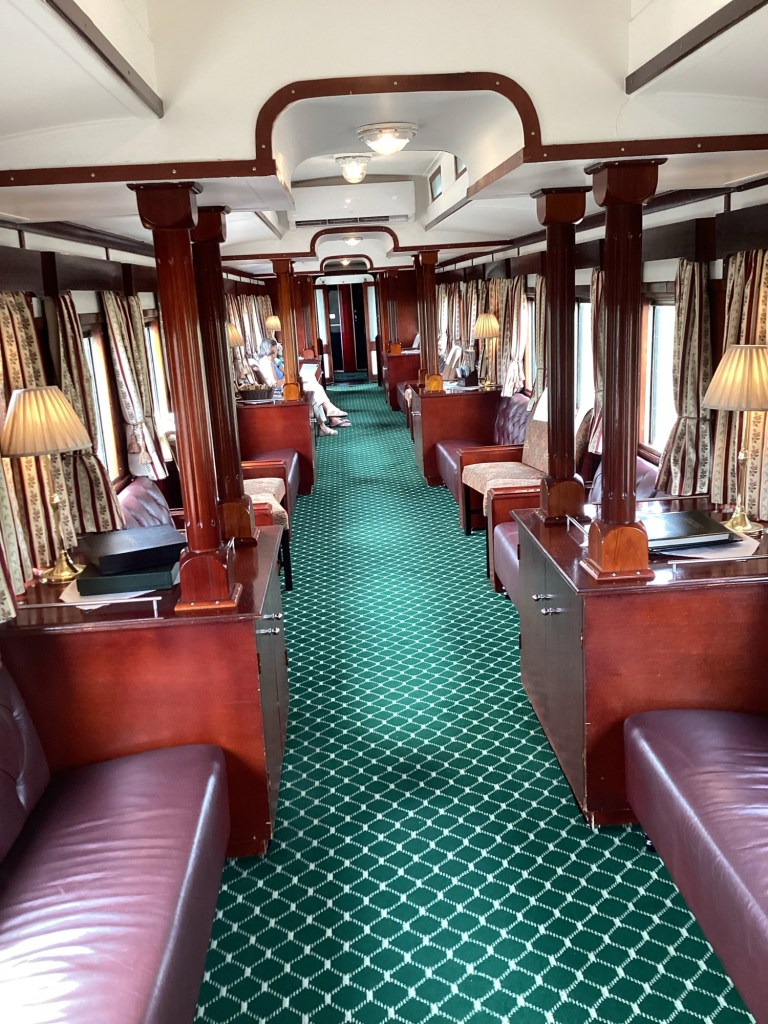
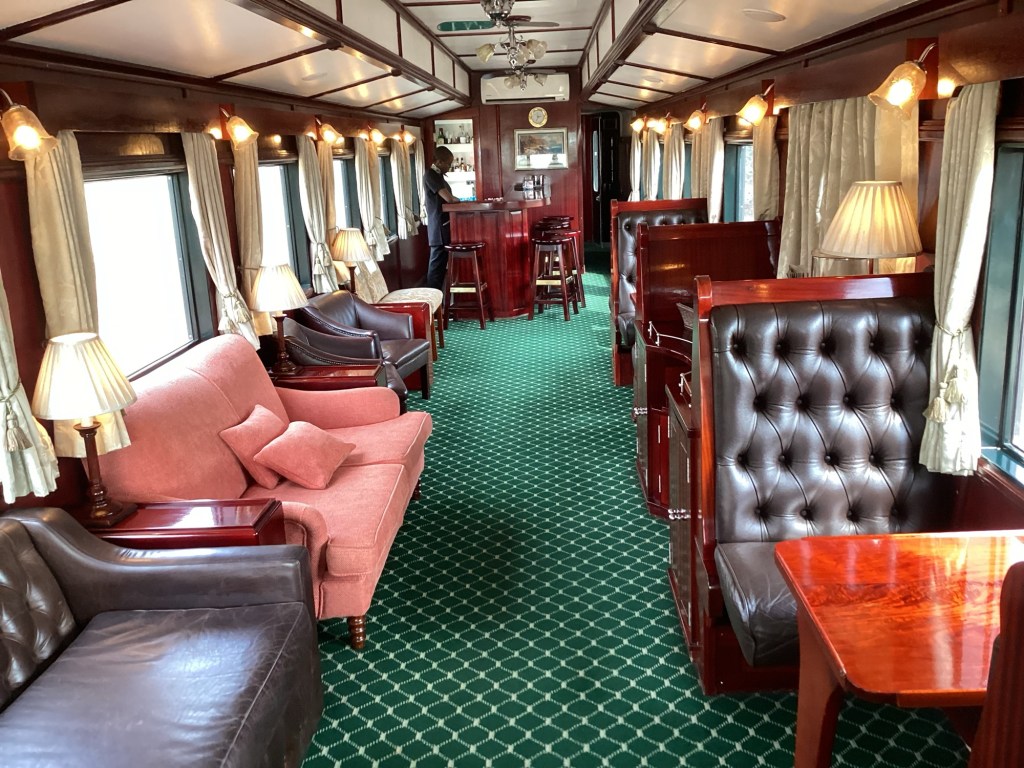
After lunch I went exploring and found the lounge car…
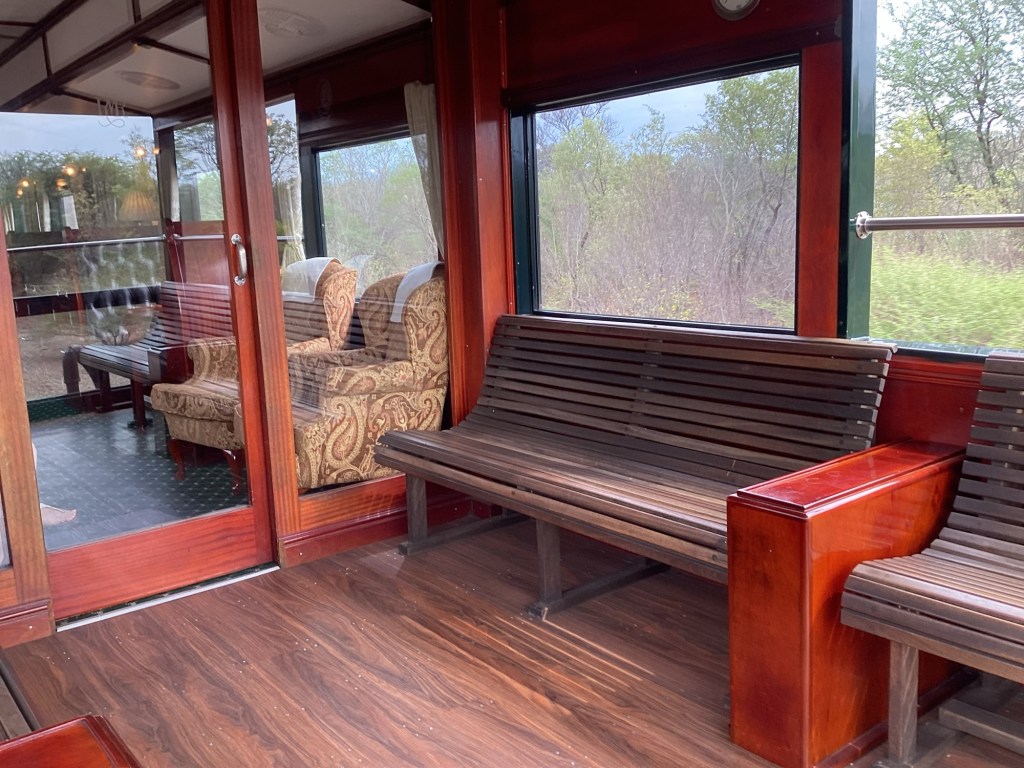
and the observation car..
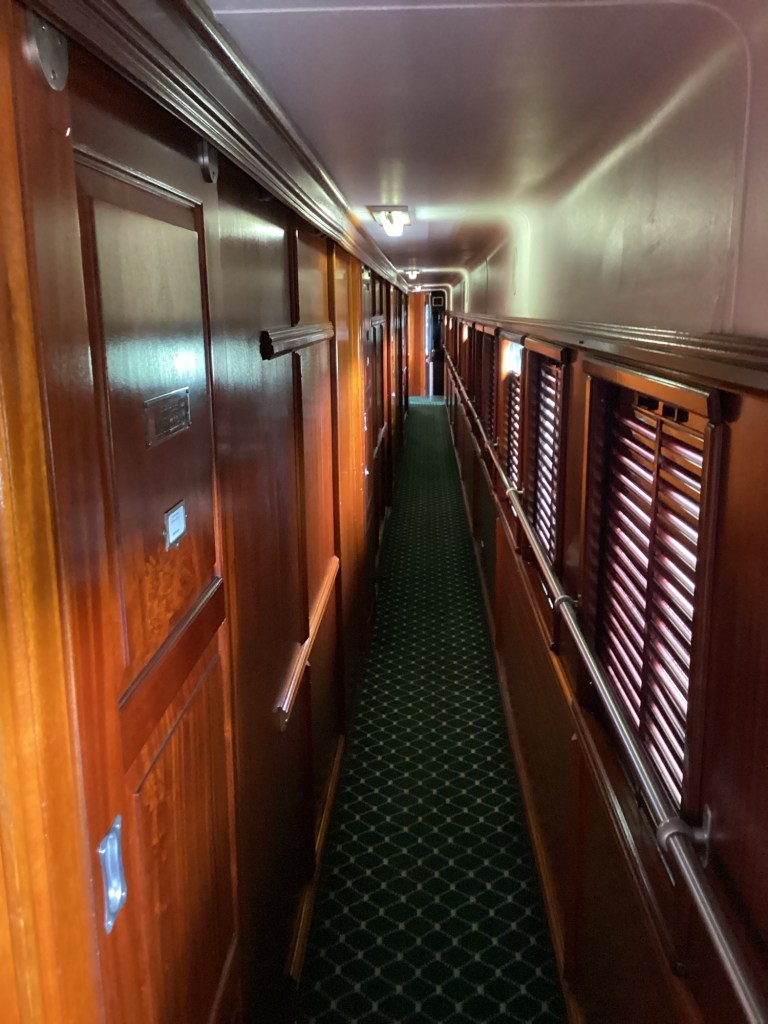
The halls are narrow and the staterooms all look the same…
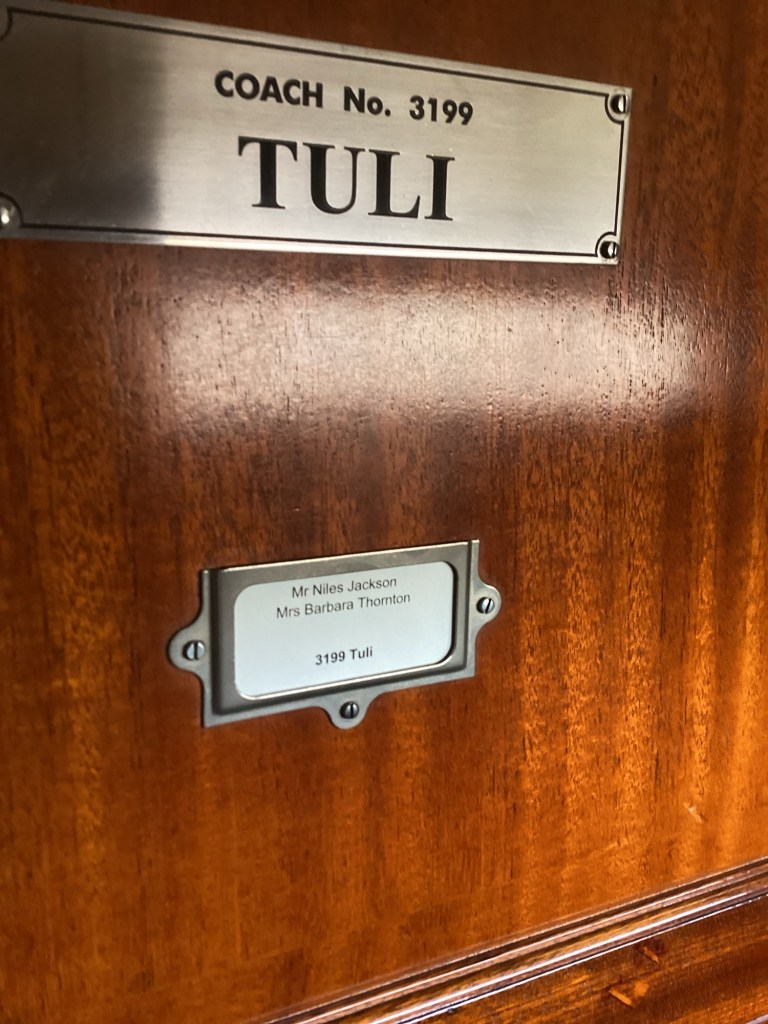
But at least our names are on the door so we can’t lost.
The train stopped by an elementary school about 5 pm. Four girls in school uniformsstood right in front of our stateroom window. I waved and they waved back. Several minutes later they knocked several times on our train car. They began to pantomime hunger and tears, hoping we would toss them something from our stateroom. But Barbara echoed their pantomimed tears and they all had a good laugh.
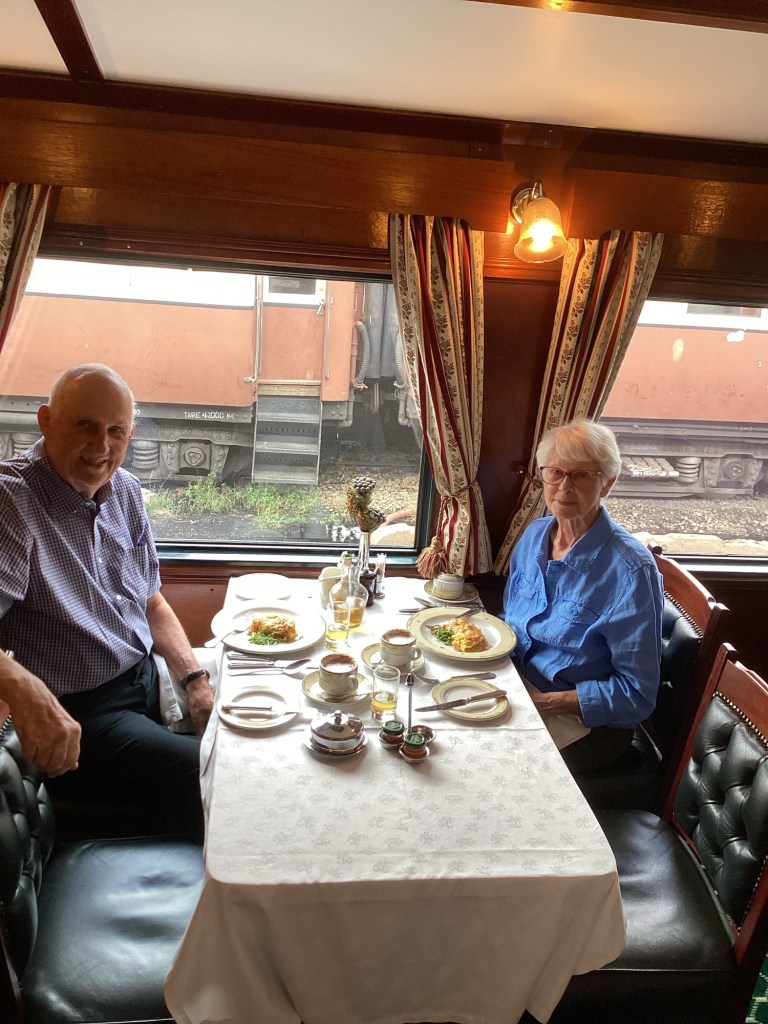
The dining room was full but we managed to find our favorite server Josias Bokaba.
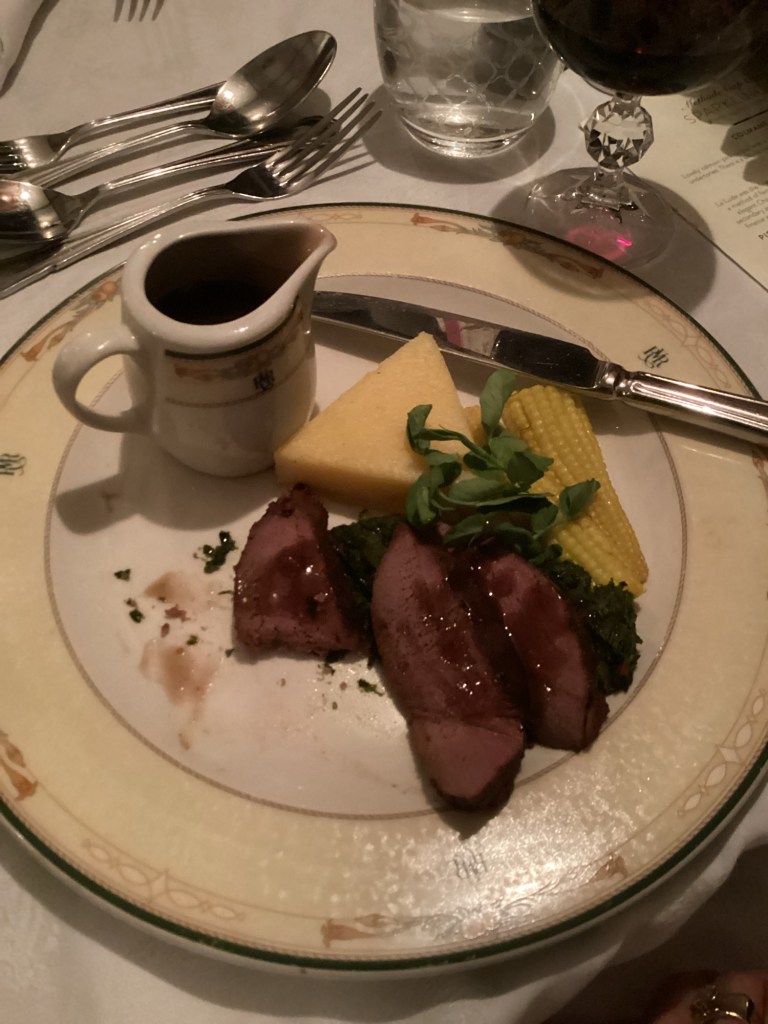
And the featured entry was Springbok from the antelope family and national symbol of South Africa.
Note to self for Chenin Blanc from Peter Smoot. Total Wine or Spitits
No scheduled activities today, just preparing for disembarking tomorrow and heading to the airport at Johannesburg.
That means repacking in one day what it took days or weeks to pack before we left. Now we have to also account an additional 5 bottles of wine, various African handicrafts, and other things we bought that we will need to declare at US Customs. All will need to be packed in one small suitcase, along with the authenticating documents, if customs wishes to inspect our purchases.
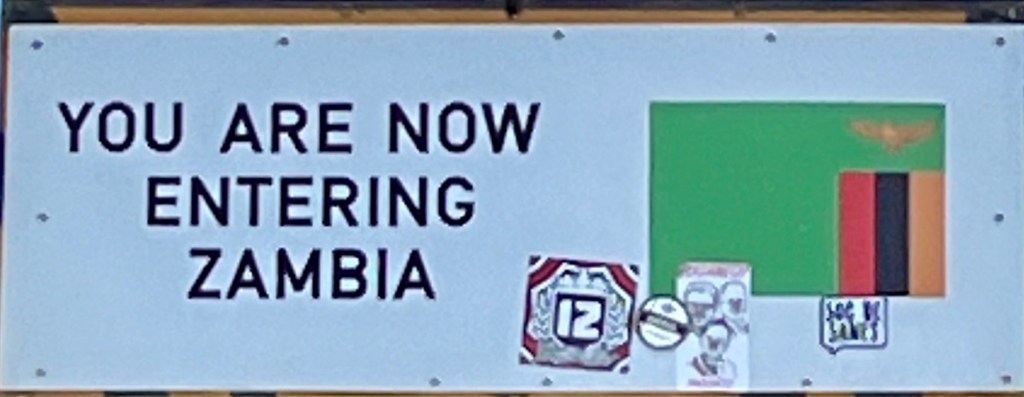
While still in the train we did stop at Zimbabwean immigration to leave the country and South African immigration to enter the country.
K.K. stopped by to ask if all was right.
And for the fourth and last time on this trip: packing for the the trip home.
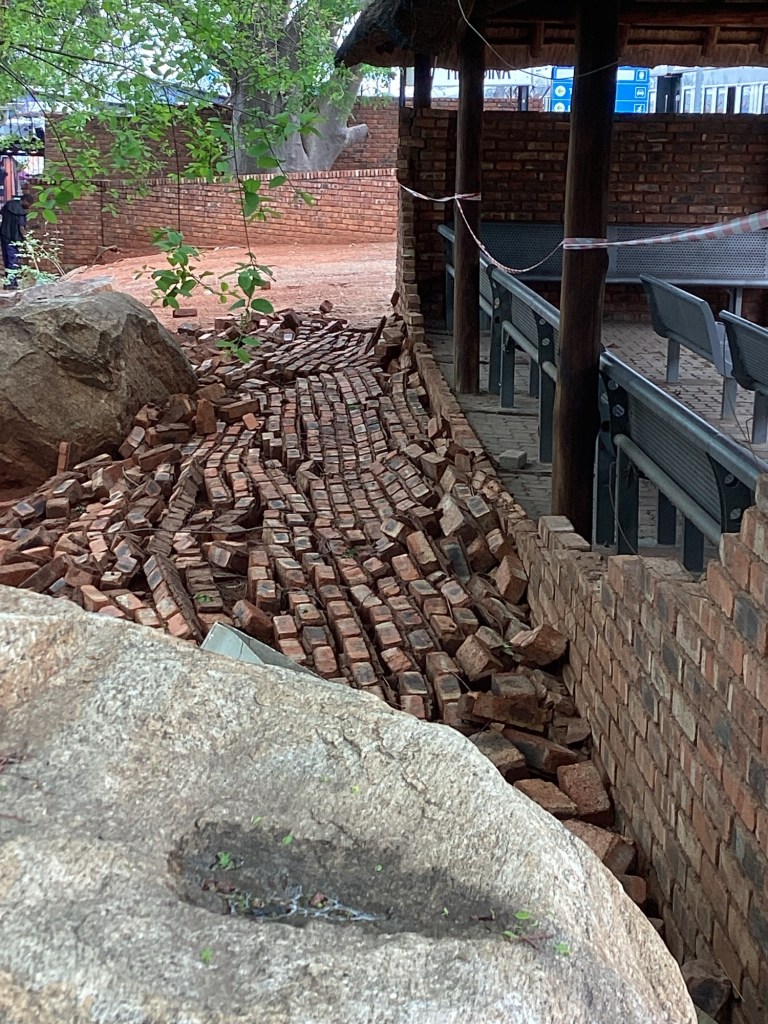
We have been stationary at the station at Musina, South Africa, for a couple of hours. One reason is all our passports had to be checked and stamped before being allowed to proceed. Another, as Darren just informed us, a boulder had tumbled down a hillside in front of us and landed on the track. They are now trying to remove it.
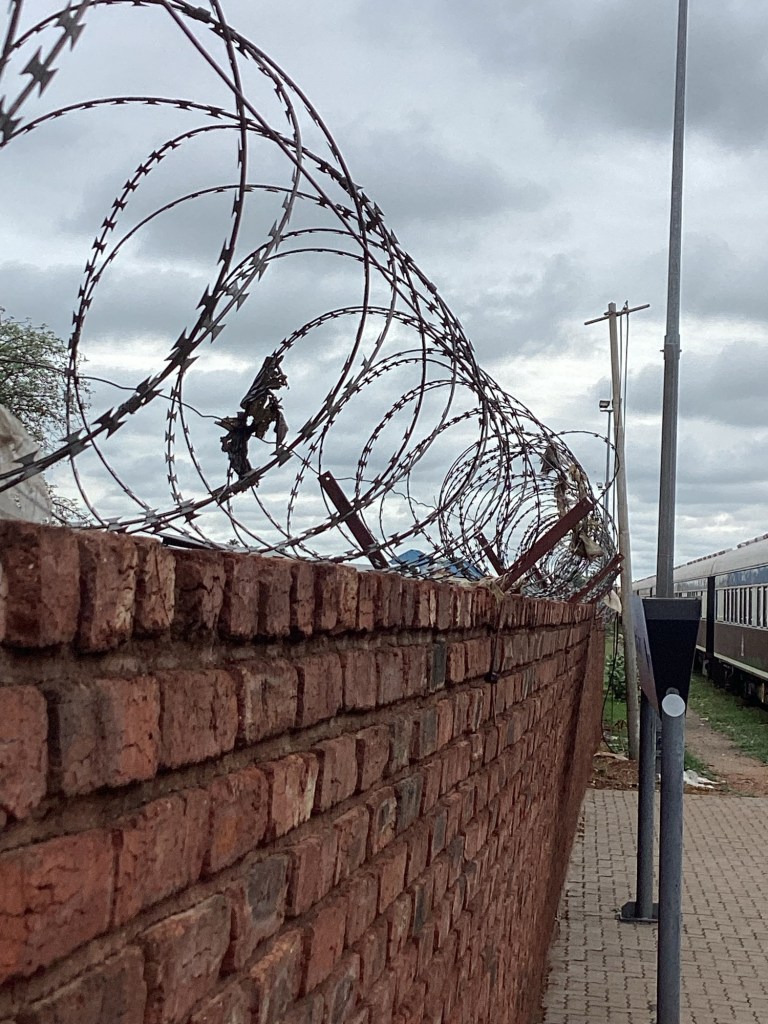
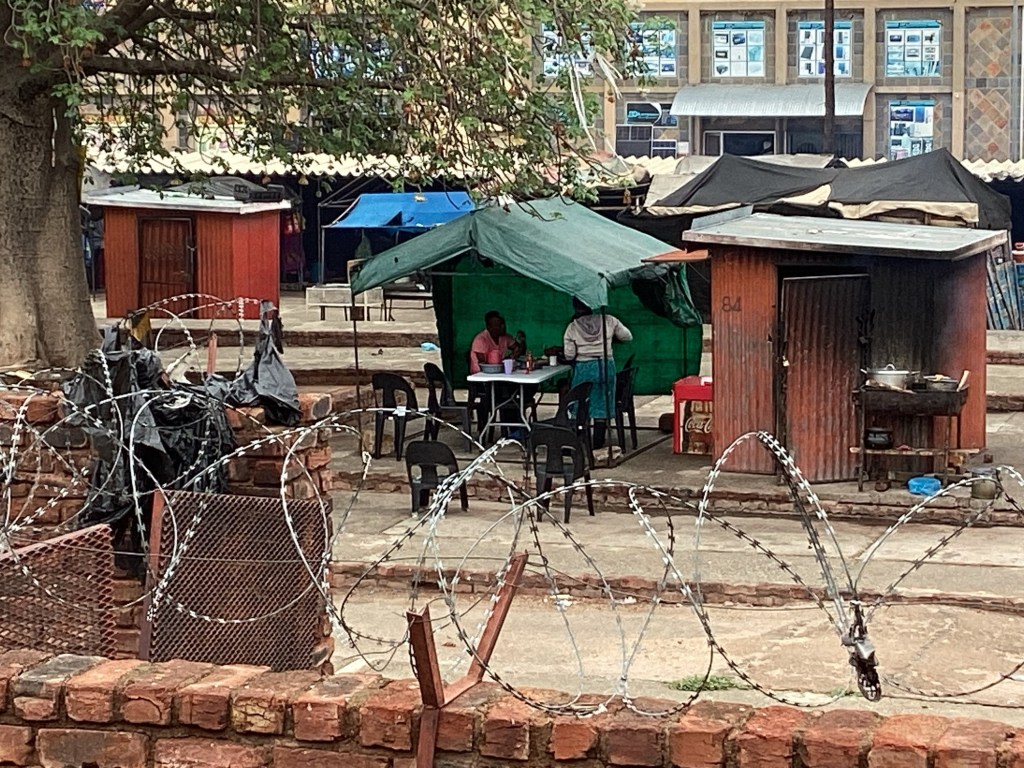
Razor sharp concertina wire is seen around houses, walls and buildings..
The town is not much to look at..
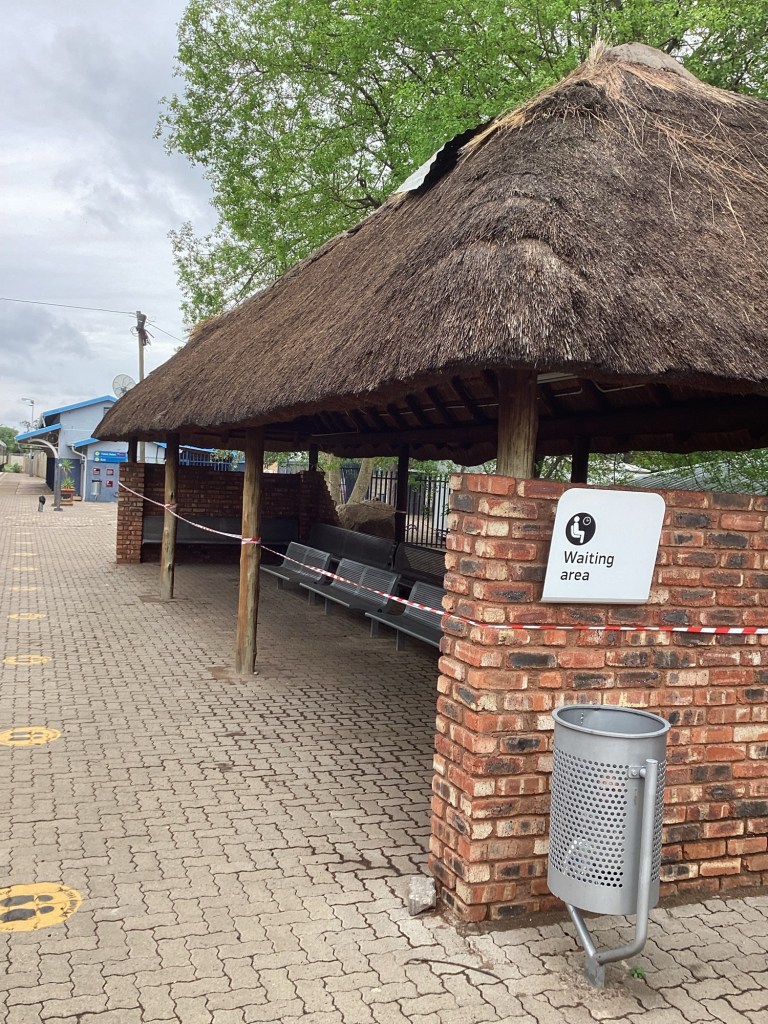
… but this is the first thatched train waiting station I have seen..
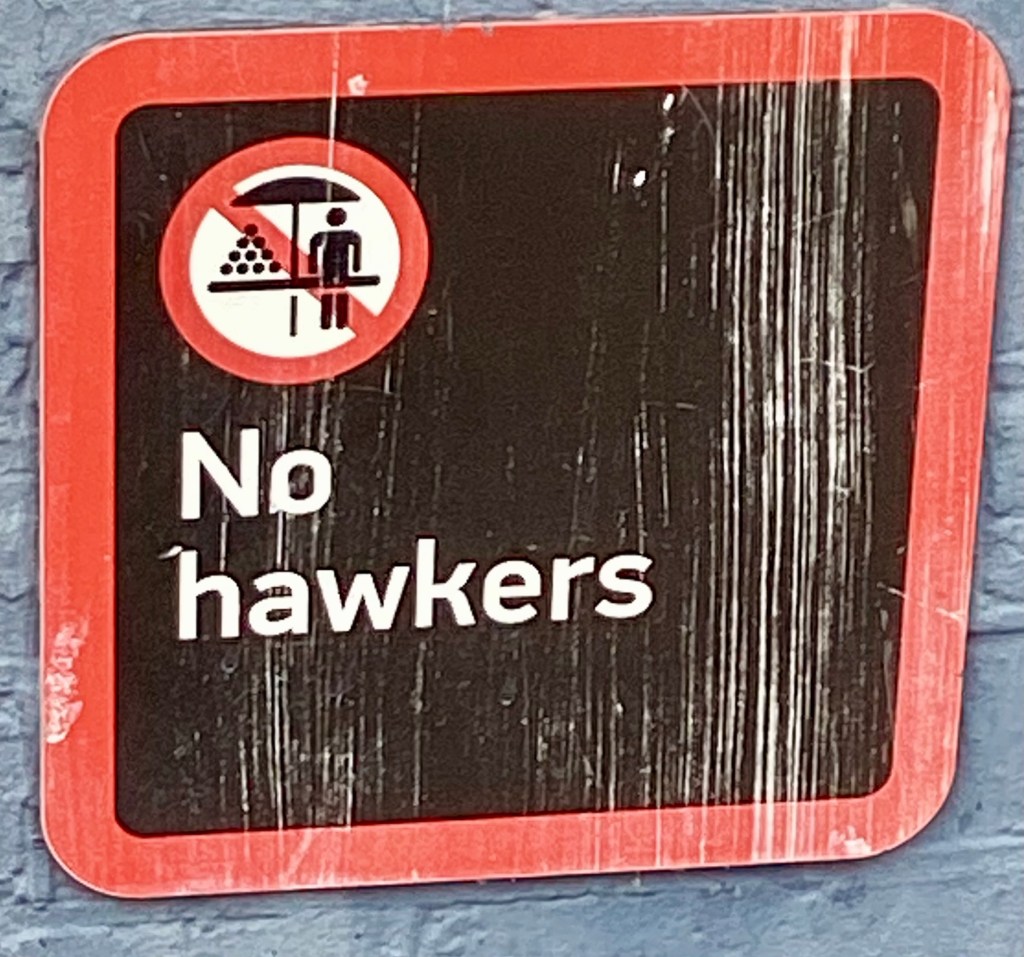
Interesting signs pop up all over…
One wall of the waiting room is in serious need of repair..
Darren told us the bolder has been removed from the track (using manpower and crowbars) and once the inspection trolley had checked out the rest of the track (heavy rain fell last night caused our bolder to dislodge) we will be on our way.
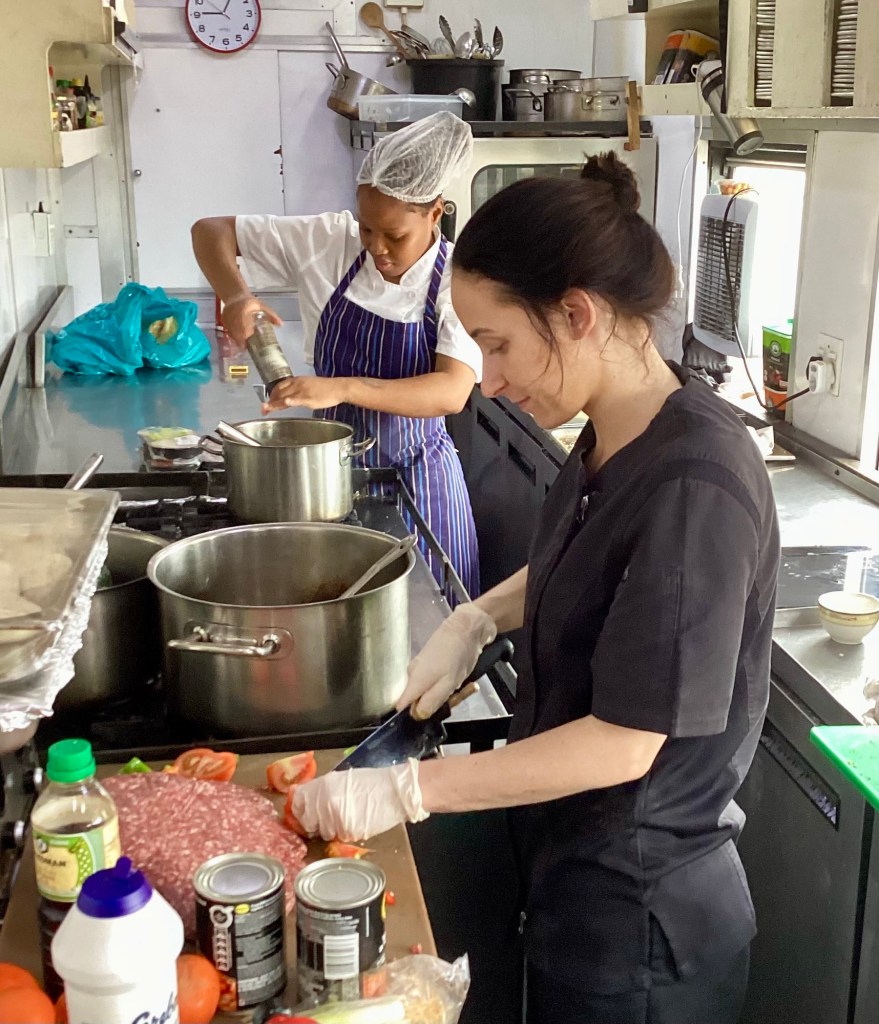
The kitchen staff was hard at work preparing our lunch..
Vico prepared a special cheeseburger for lunch
Upon arrival in Pretoria tomorrow morning AMA will take us to the Johannesburg International Airport. We will check in at the United Airlines desk when we arrive about 2 pm and walk a short 10 minutes to a hotel attached to the airport until time to catch our plane that departs at 10 pm.
Bushmen Caves, 40,000 year old art, Cecil Rhodes and white rhinos.
The train stopped for the night at the border town of Bulawayo, Zimbabwe.
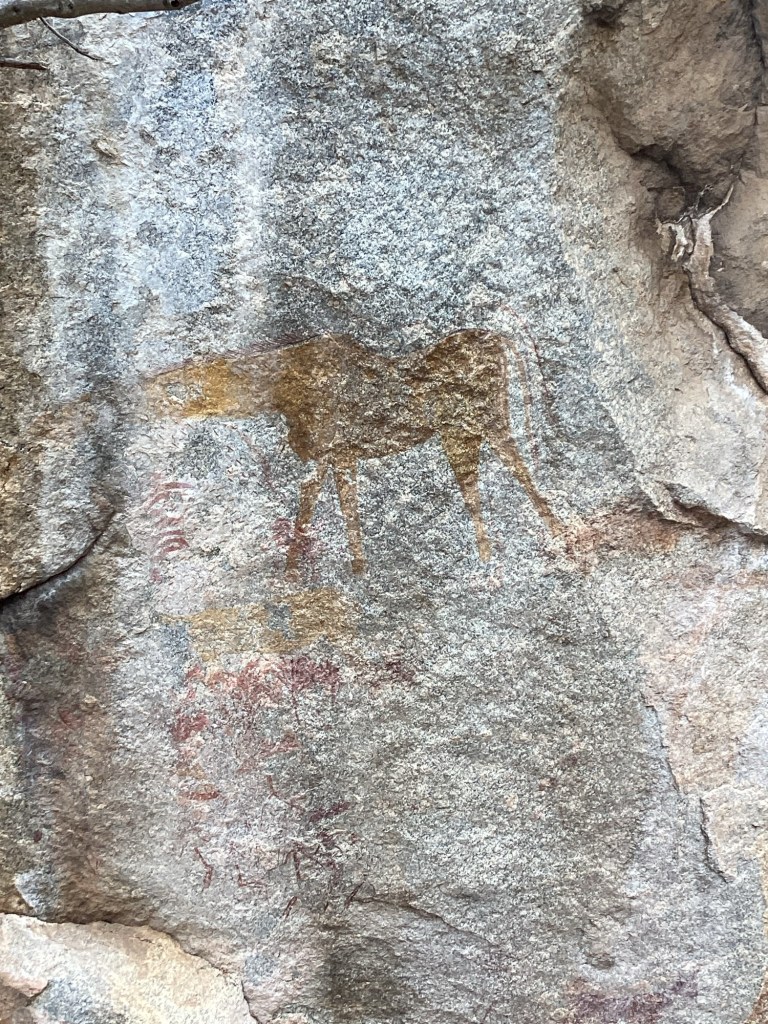
After breakfast we transferred by bus to the Matobi National Park to see bushmen caves and San People’s 40,000-year-old art and drawings on cave walls and rock shelters.
At the Park entrance we again transferred from one bus to five Range Rovers. The game tracker’s seat was open so I became the “official” tracker. At least it had the best place for taking pictures.
Our first stop was the rock shelter art of the bushmen or San people that has been traced to 40,000 years ago.
Our guide said the San People are referred to as “Adam Generation”, the cradle of human civilization. They were small family units of 6-8 people who were hunters/gatherers and who, following the game, seldom stayed more than 2 weeks at any cave or rock shelter. They were small people, no more than 5’1”tall.
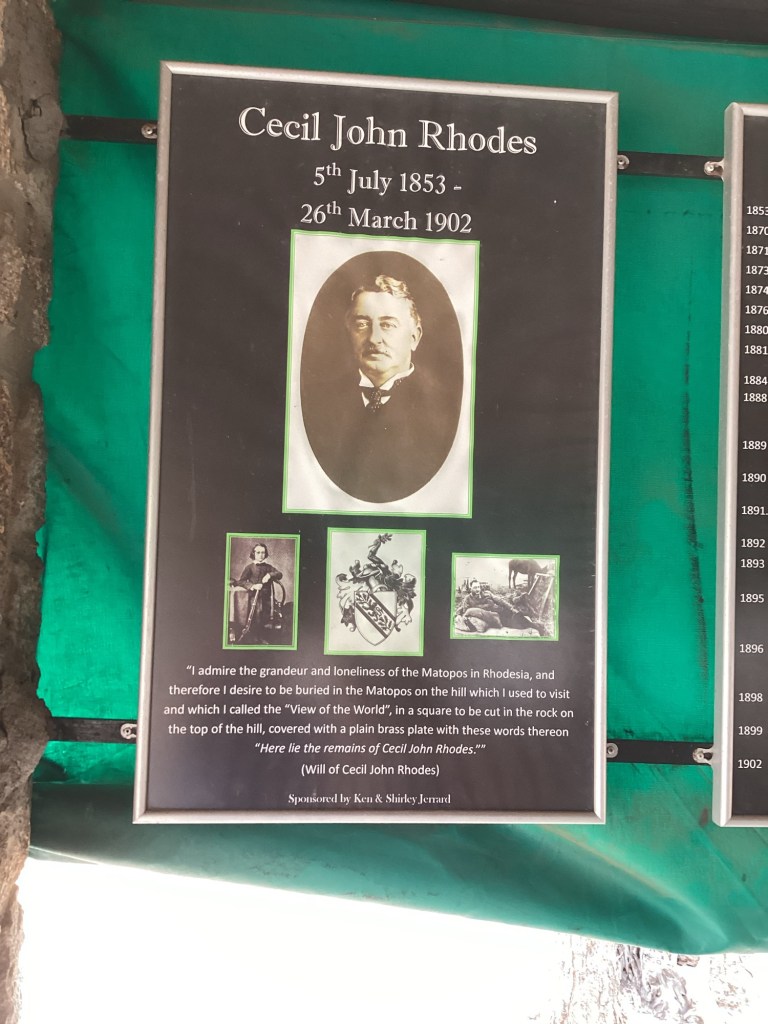
On our way to the grave site of Cecil Rhodes (who founded De Beers Diamonds at age 27 and was the richest man in the world when he died at age 48 in 1902) we stopped for a talk about Rhodes.
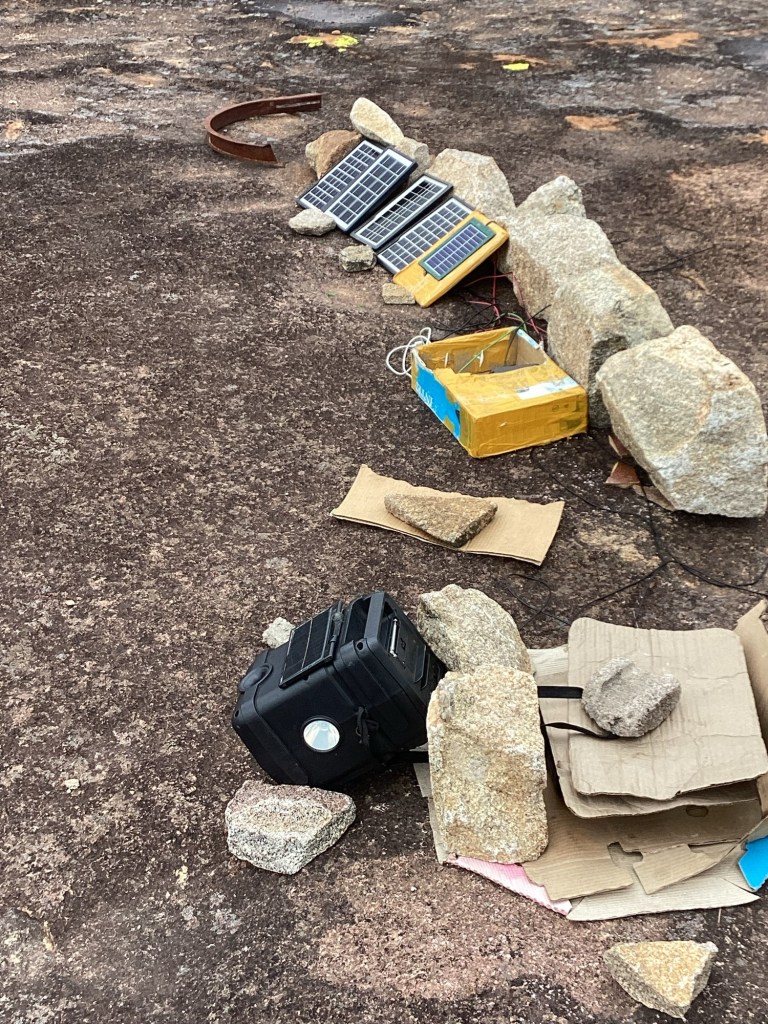
The place was also popular with campers who recharged their electronics with sun powered generators.
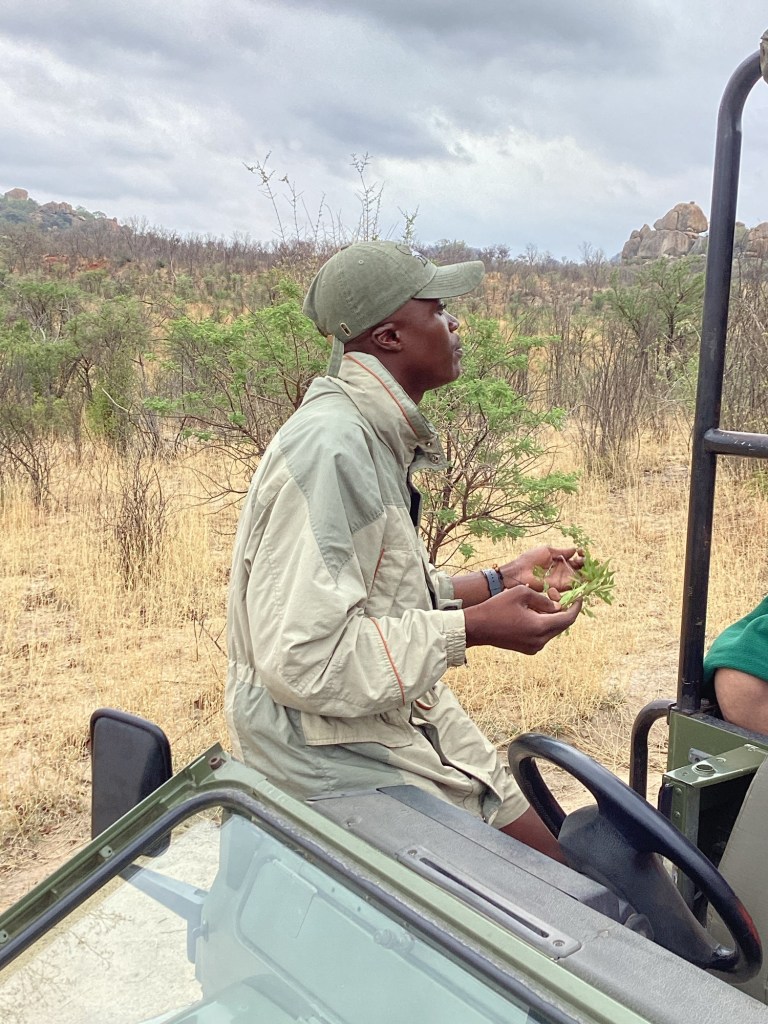
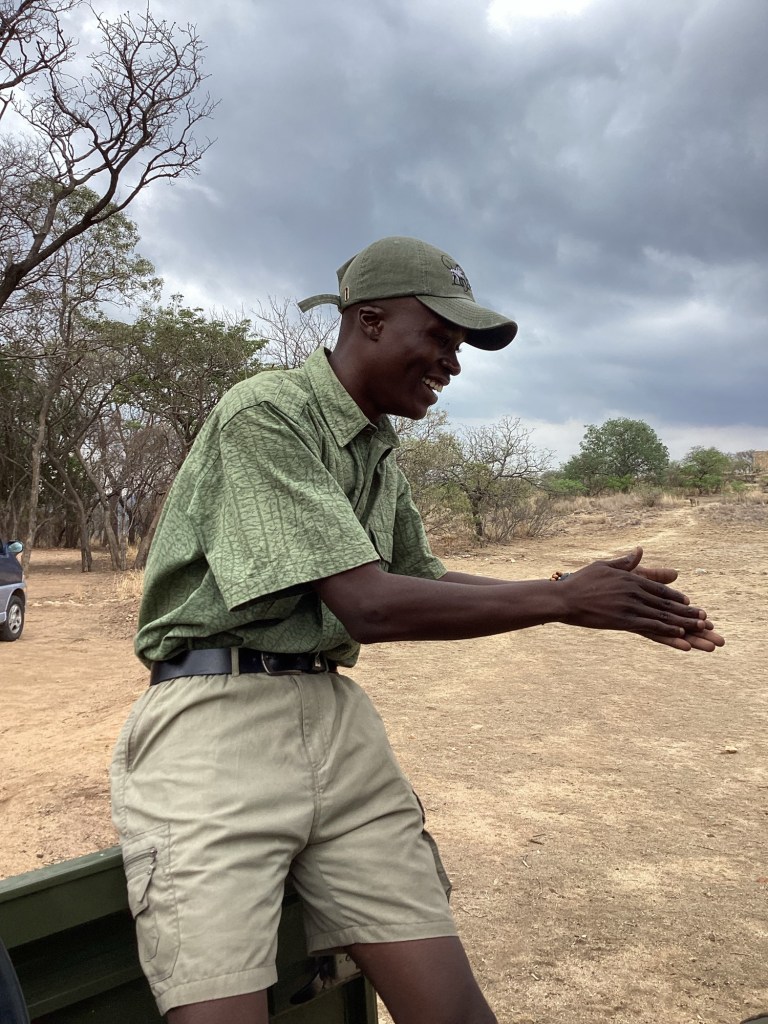
Valentine, our guide/driver, demonstrated use of local plants as tooth brushes…
…and soap:
Cecil Rhodes wanted to be buried on top of a steep rugged granite mountain in the Matapos (in what used to be the country of Rhodesia) where he spent some of his adult life:
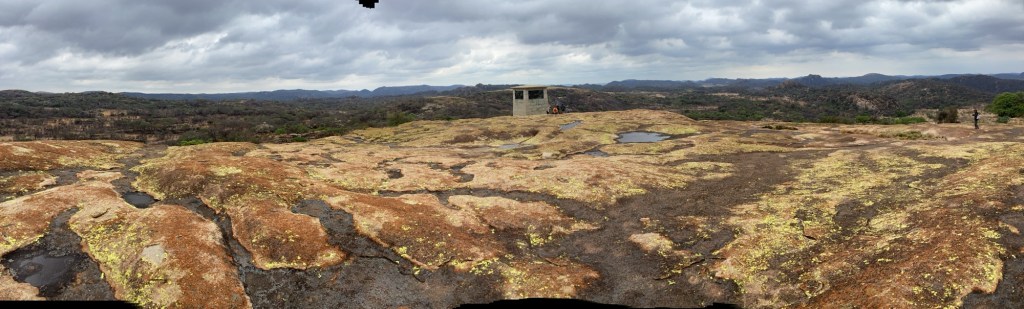
The climb to his burial tomb was steep over rounded granite hillsides.
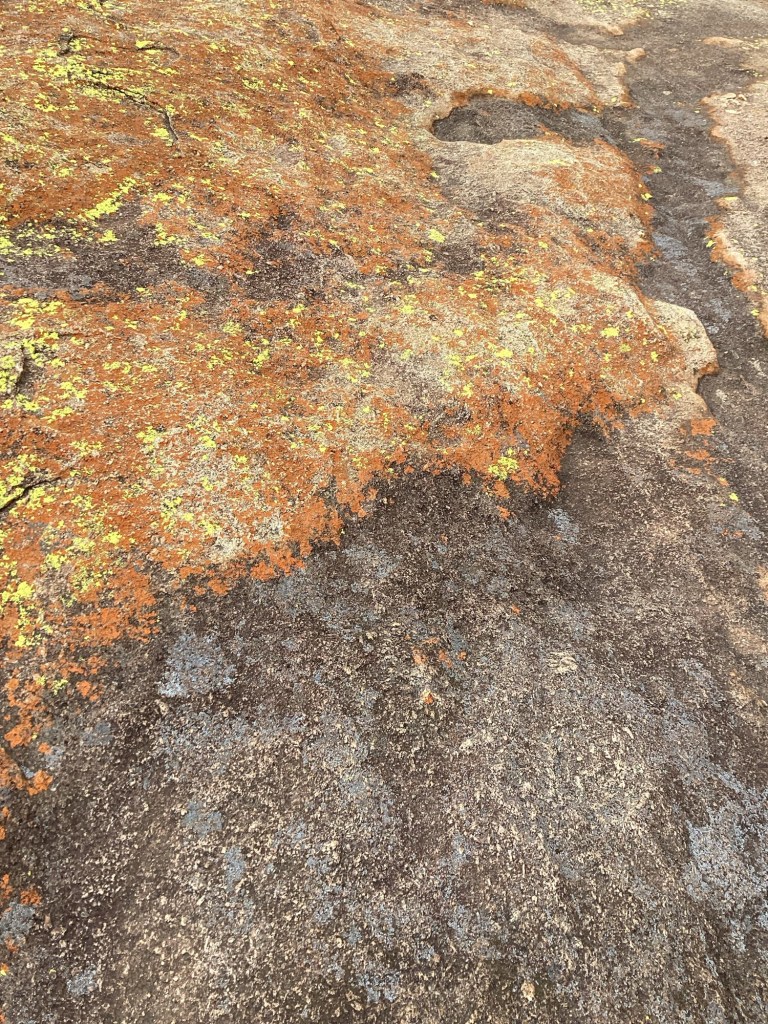
Lichen of various colors covered the rocks:
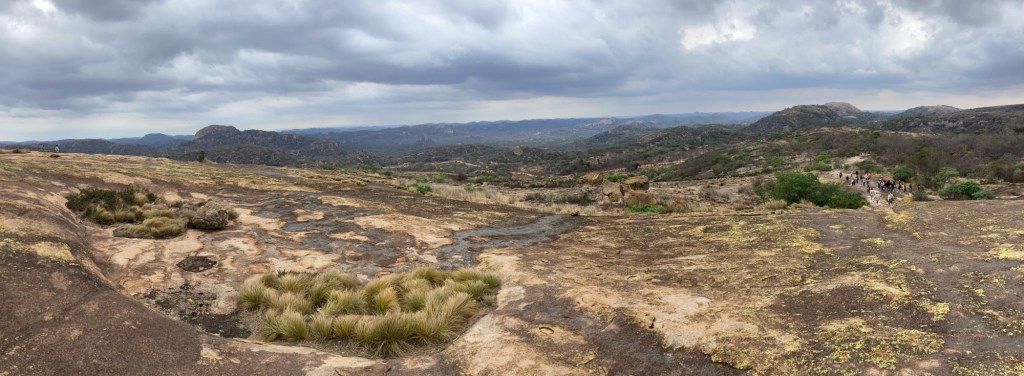
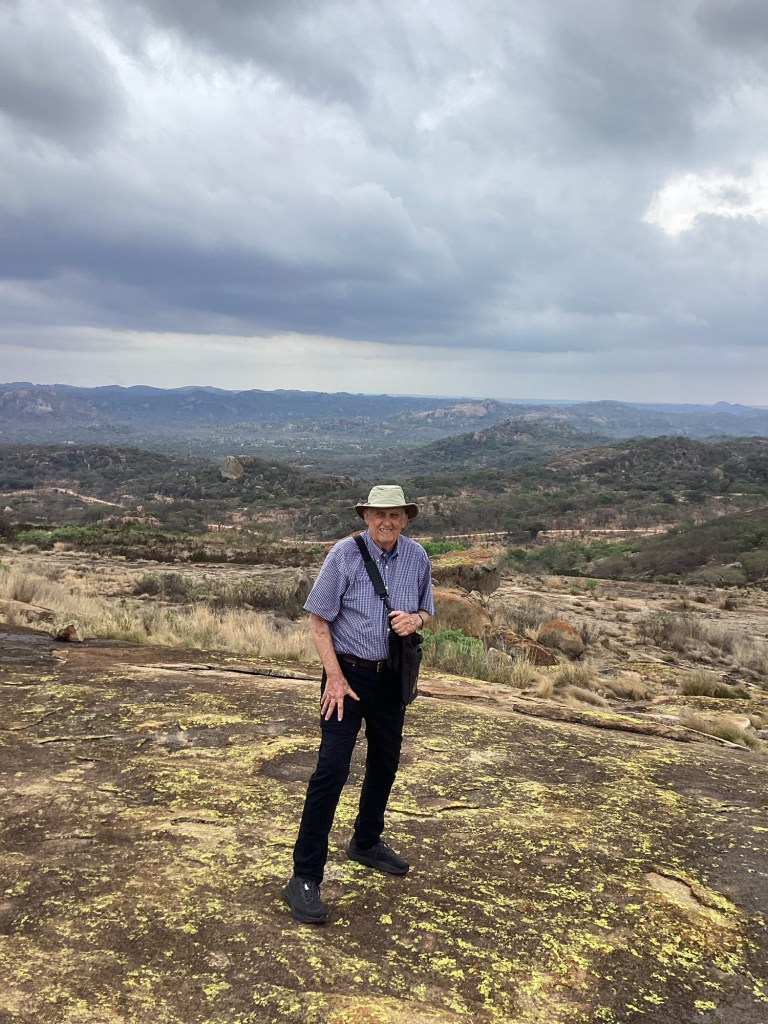
The view from on top is spectacular:
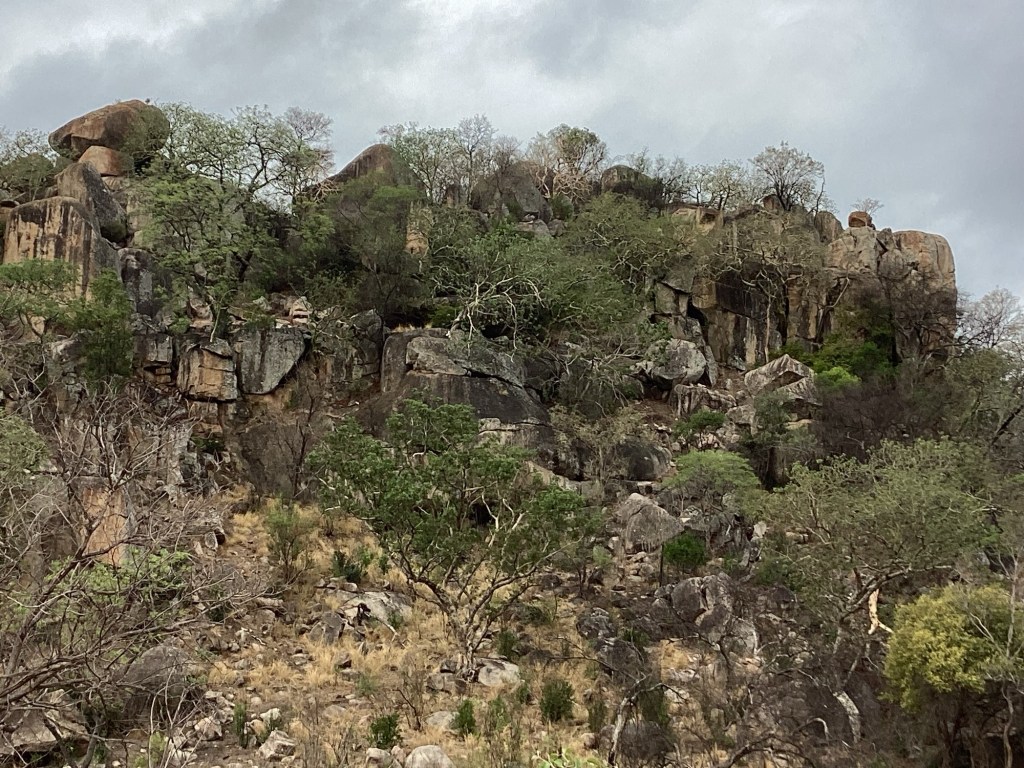
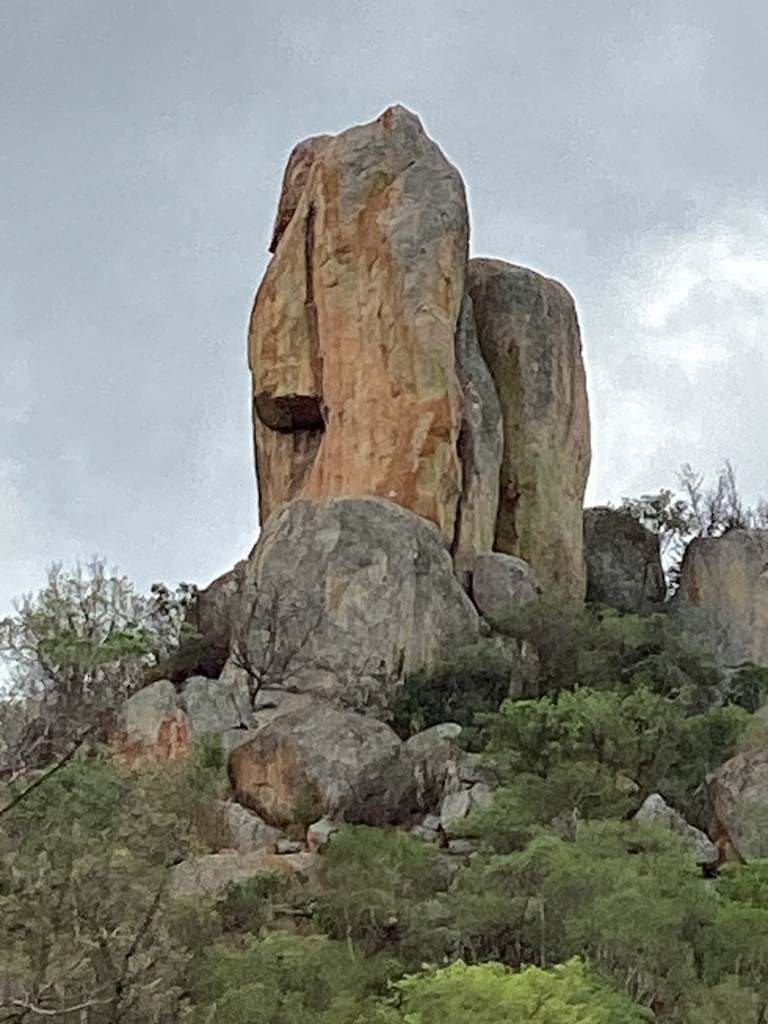
The road into the area is surrounded by hills covered with giant boulders that could tumble down and close the road at anytime.
On the way back to the rendezvous area we spotted two white rhinos (white at another time of year) guarded against poachers by two armed game rangers. The,rangers have the right to kill poachers on site. The poachers, who kill elephants and rhinos only for their tusks and horns, (considered an aphrodisiac in the Far East) have decimated the rhinos herds in southern Africa. This pair was imported from South Africa to repopulate the species in Zimbabwe.
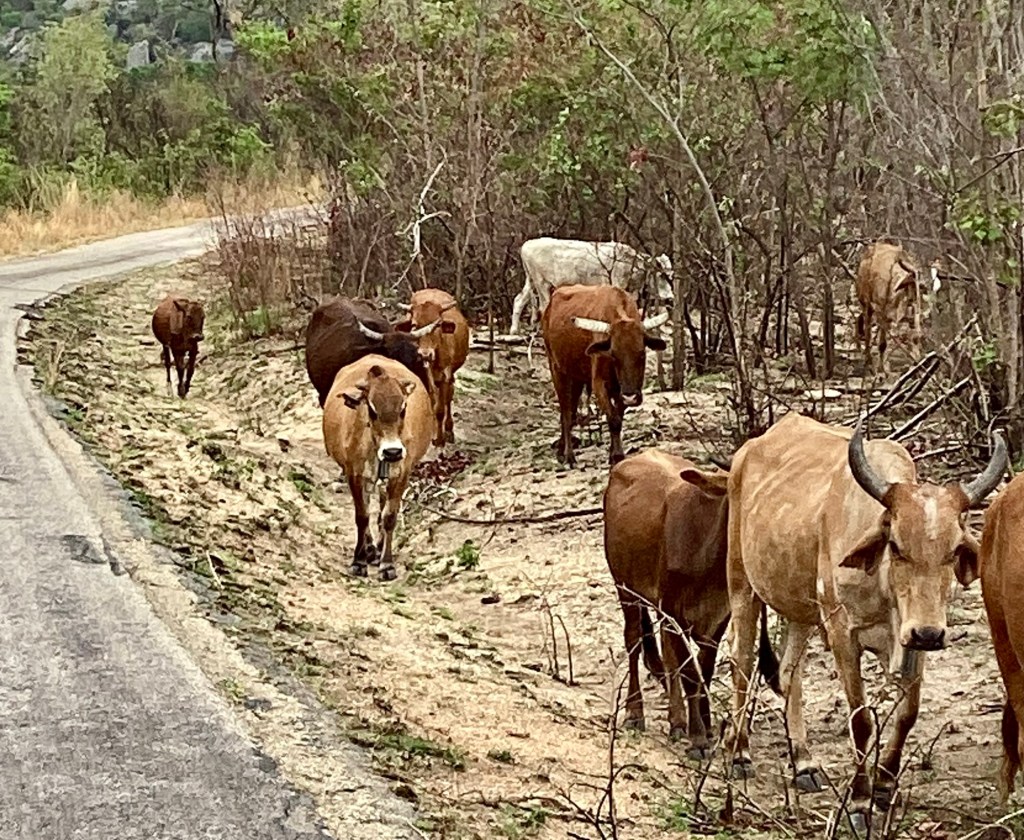
A farmer’s cattle and a gazelle joined us along the route:
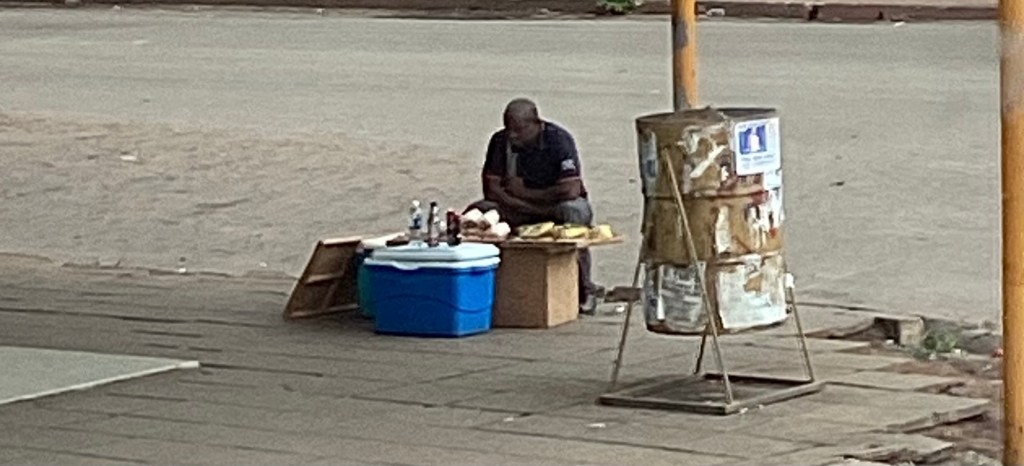
Every street corner provides opportunity:
We arrived back at the train for lunch at 1:30.
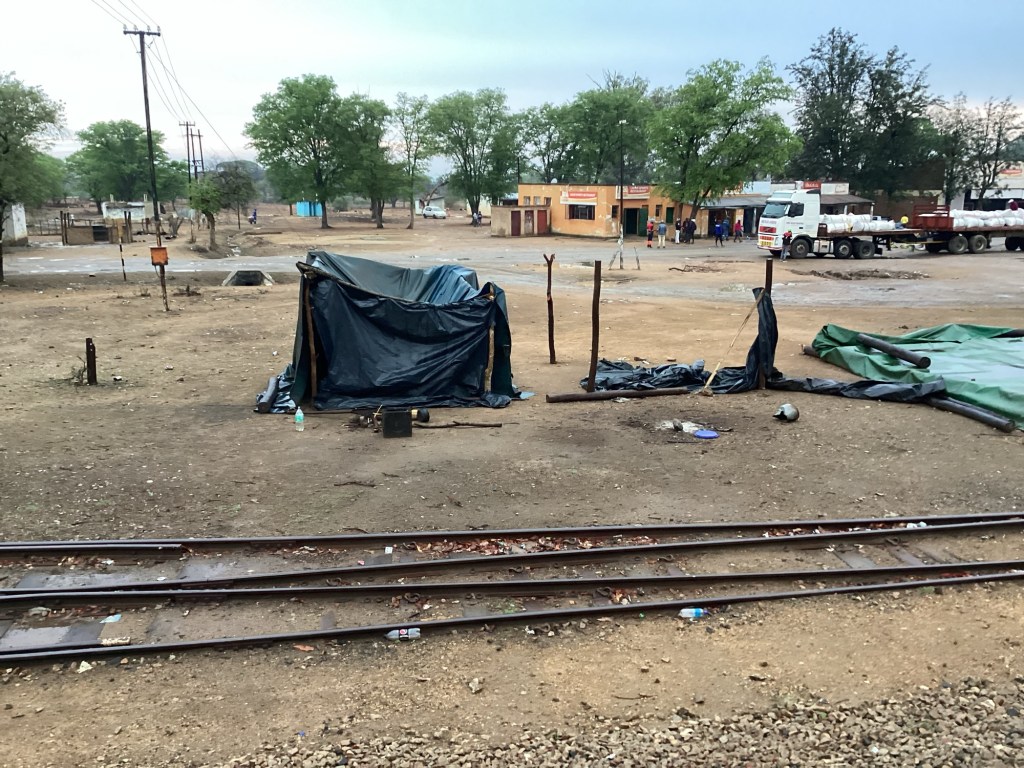
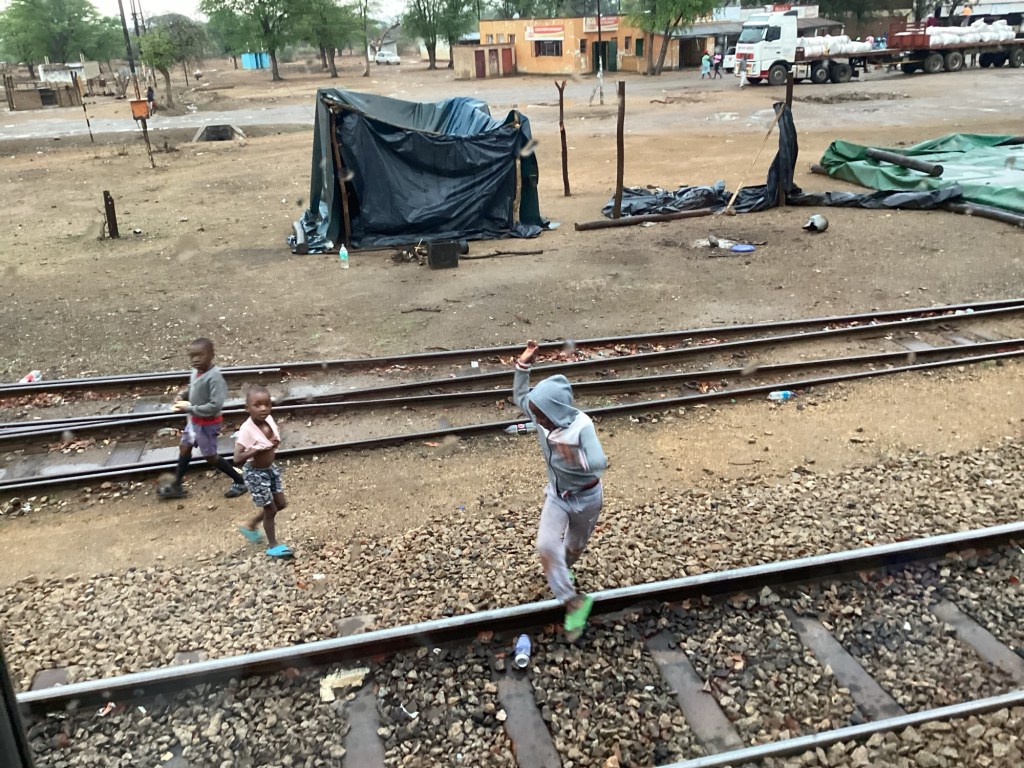
During a stopover at a small village of Gwanda…
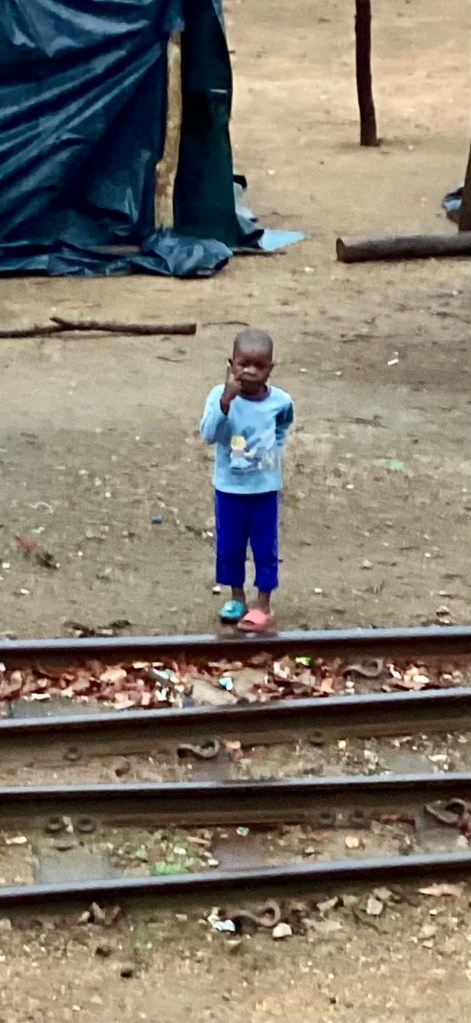
some little kids came to our window and we tossed them cookies and a candy bar:
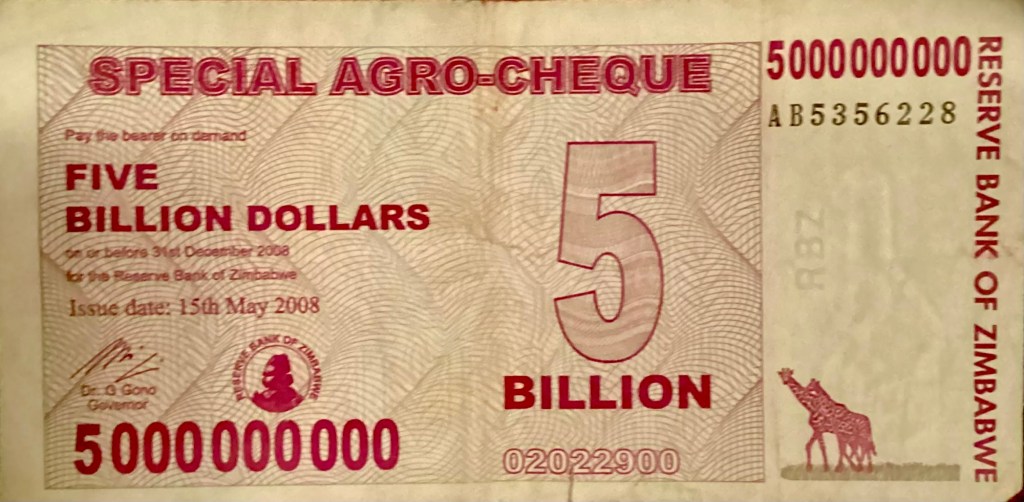
Oh, and by-the-way, I became a billionaire today. Yes, it’s true and here’s the proof:
Pay no attention to the fact I paid only $1 for it at the market we visited or the fact that the bill has long since expired, I’m still a billionaire (in my mind at least).
I understand the inflation rate in Zimbabwe 20-30 years ago rose so quickly and steeply (often daily) that the government had to print larger and larger bills just to keep up.
We shared a lovely dinner with Anita English.
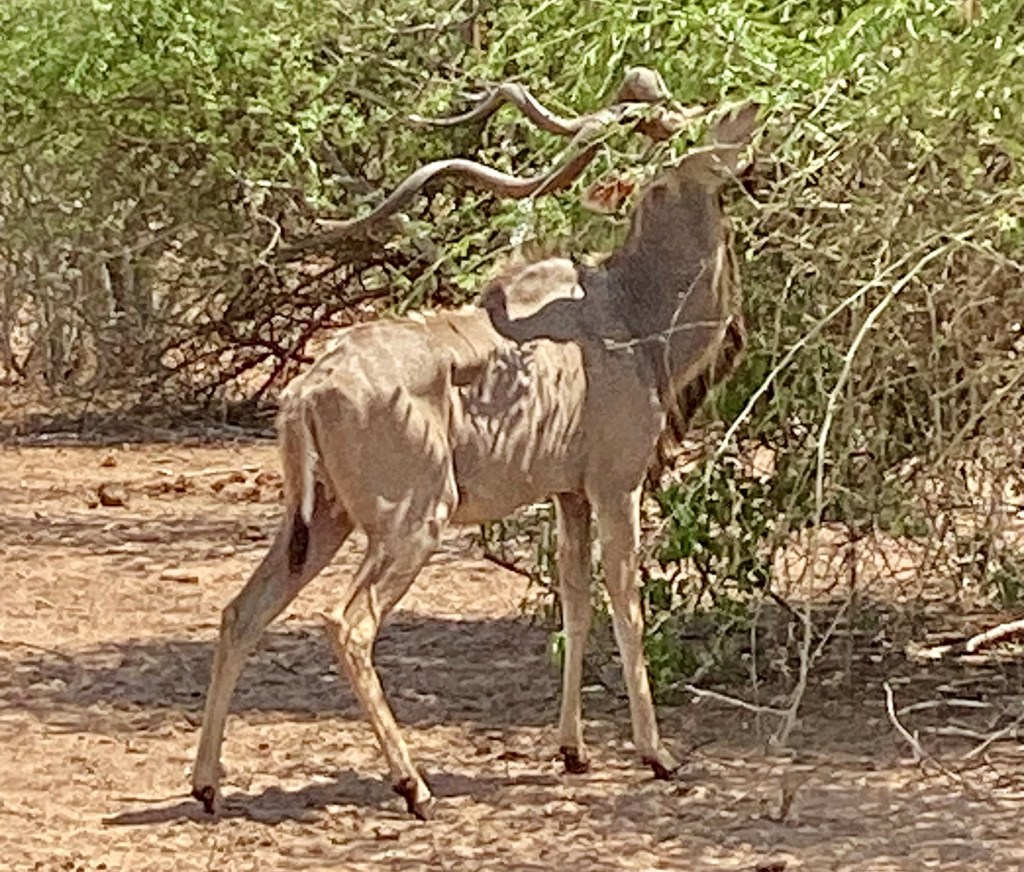
She and her husband Ramon are from Perth, Australia. He was not feeling well so she joined us for a dinner of smoked kudu (antelope family), chicken breast stuffed with sun dried tomatoes and feta cheese, Williston cheese and pineapple pudding for dessert.
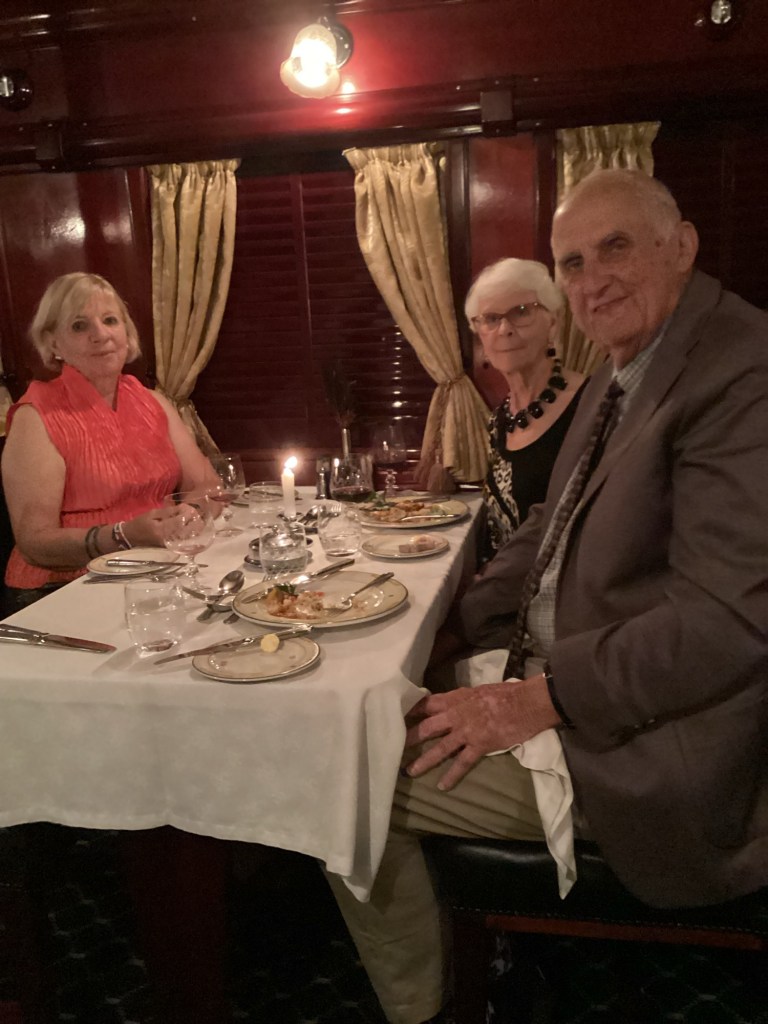
Half way through the meal the train manager informed us that during the last stop someone got under one of the cars and disconnected several cables. The repair was easy but they would have to stop the train and turn off the generator. That meant dinner by candle light and no air conditioning. The repair stop turned into a real positive as the candle light dinner was delightful, and the repair was made quickly.
Tomorrow-our last day aboard the train-would be spend traveling towards Pretoria with two stops for Zimbabwean immigration and South African immigration.
(We have written our travel blog for every day on the 4-day Rovos Rail train ride but were unable to send them due to lack of WiFi. So as we pull into the Pretoria station here they come all at once):
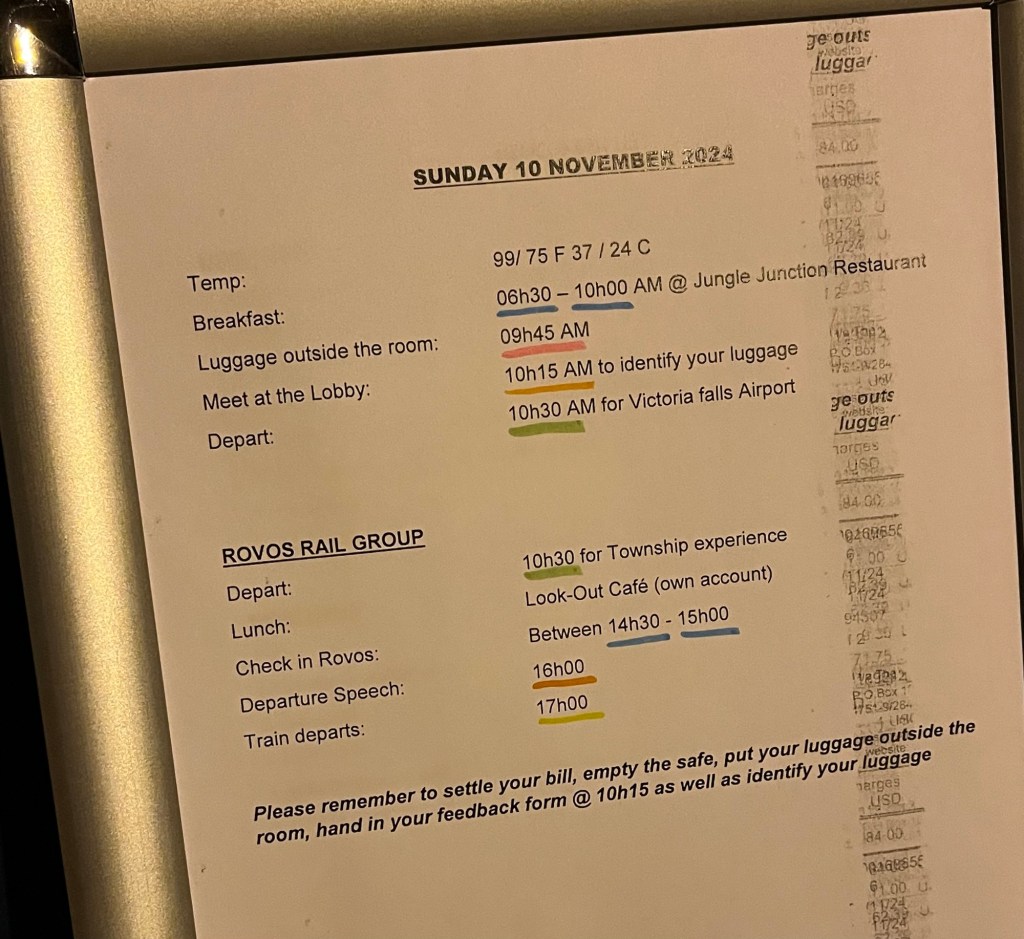
You know a new adventure is around the corner when you read: “Please place your bags outside your room by 9:45 am.”
Turns out that was plenty of time. I had packed an empty duffle bug to carry the leftovers: souvenirs, laundry, etc.
Breakfast was at 7:00 am,. Loved the fresh mango juice. Our group was straggling in for our final breakfast together so we had a chance to say final goodbyes to some.
Twelve of the original 28 tour members are boarding the Rovos Rail train for the four day trip to Pretoria, South Africa. The others are on their way to Kruger Park in South Africa, Treetops Resort suites in Tanzania, or home.
Wanted to show the “Tree of Life” of “Lion King” fame that backdropped our dinner last night:
Zimbabwe has adopted the US dollar as its official currency so I wanted a genuine Zimbabwean dollar bill before they’re all gone. They found a $10 Zimbabwe bill and told I could pay anything for it. So I paid $5 only to discover later was worth .03 US.
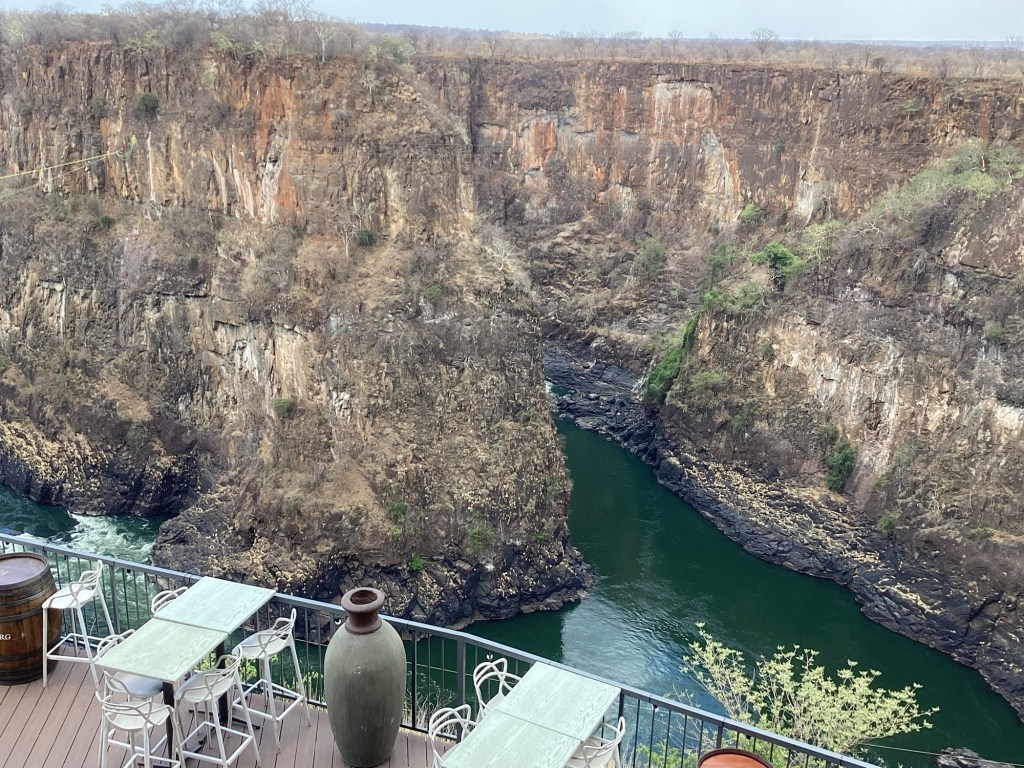
Following a guided tour of neighborhoods tourists rarely visit we had lunch at a wonderful restaurant called “The Overlook” , so named because of its great view of the Victoria Falls gorge.
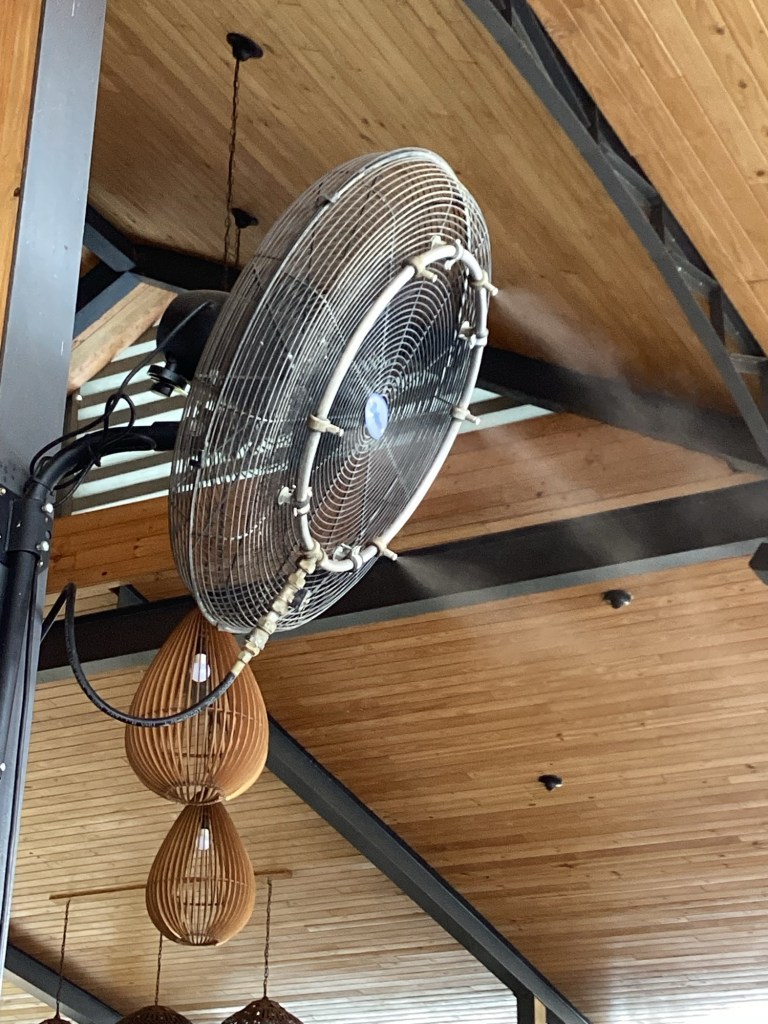
It had its own version of a mister to cool the open air room.
On the streets some kids were selling outdated Zimbabwean currency so I bought a 50 million Zimbabwe bill for $1.00.
The country’s Amarula liquore is made from a tree, the Marula Tree (Sclerocarya birrea). I passed a liquor store that sold it and bought a bottle. Now if it just doesn’t break in the suitcase traveling home.
Our tour guide told us that in Zimbabwe it is lawful to have a village wife and work wife. Or a “side salad” wife if you do decide to have a wife but choose not to pay the bride’s price to her family.
She also said men and boys do not touch bras or women’s undergarments on the clothes line.
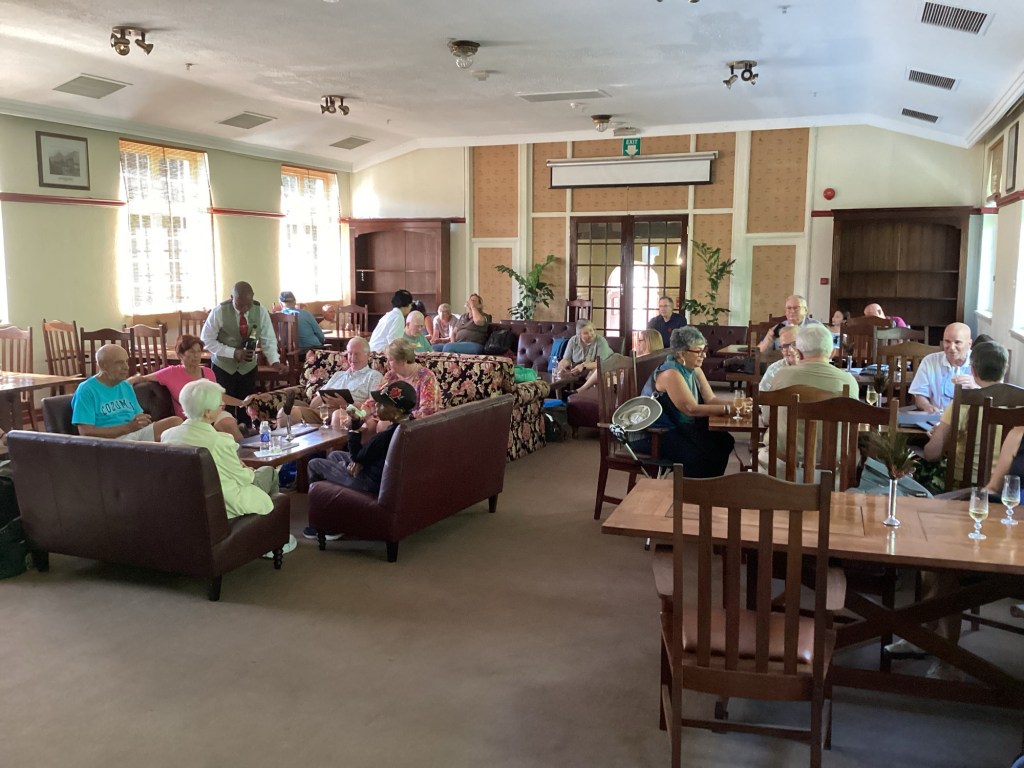
At 3:30 we checked in for the Rovos Rail 4-day ride and were shuffled to a hotel lounge be to listen to an orientation talk.
At least it was well stocked….
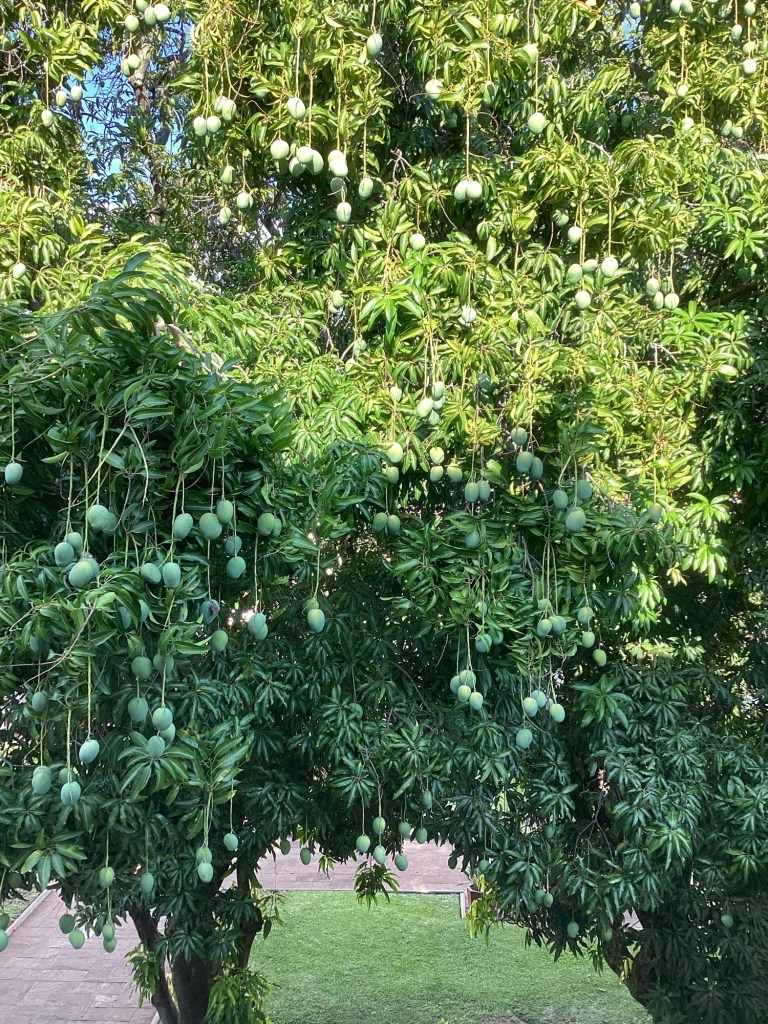
Outside the meeting room was a loaded mango tree:
Following a talk by the train manager Darren Merwe…
…we boarded about 5:30 pm.
We are in car 3199, Stateroom named Tuli. Two cars away are two dining cars followed by a lounge car. Several cars in the other direction are the observation car and another lounge car. The staterooms are cramped at 109 square feet, but nicely furnished and air conditioned. The walking aisles outside our room are sweltering hot. There is no WiFi.
We were forewarned that train tracks in Zimbabwe, over which we now travel south, are not well maintained . And we are witnesses to that statement. It had been difficult to keep our balance so we sat much of the time. Showering proved a real challenge while the train is moving.
As the gong sounded dinner was being served we quickly dressed in the required business or formal attire and walked two cars to the dining car.
Dinner was quite good. Cape Marlay samosa, rack of lamb, Kilimanjaro cheese with apricot and thyme jelly and finished with a chocolate pot de crème with berries.
Tomorrow’s game drive begins with a 5 am wake up call, breakfast until 6 am when we disembark to hop on the 4 x4 safari vehicles. We should be back on the train by 10:30 .
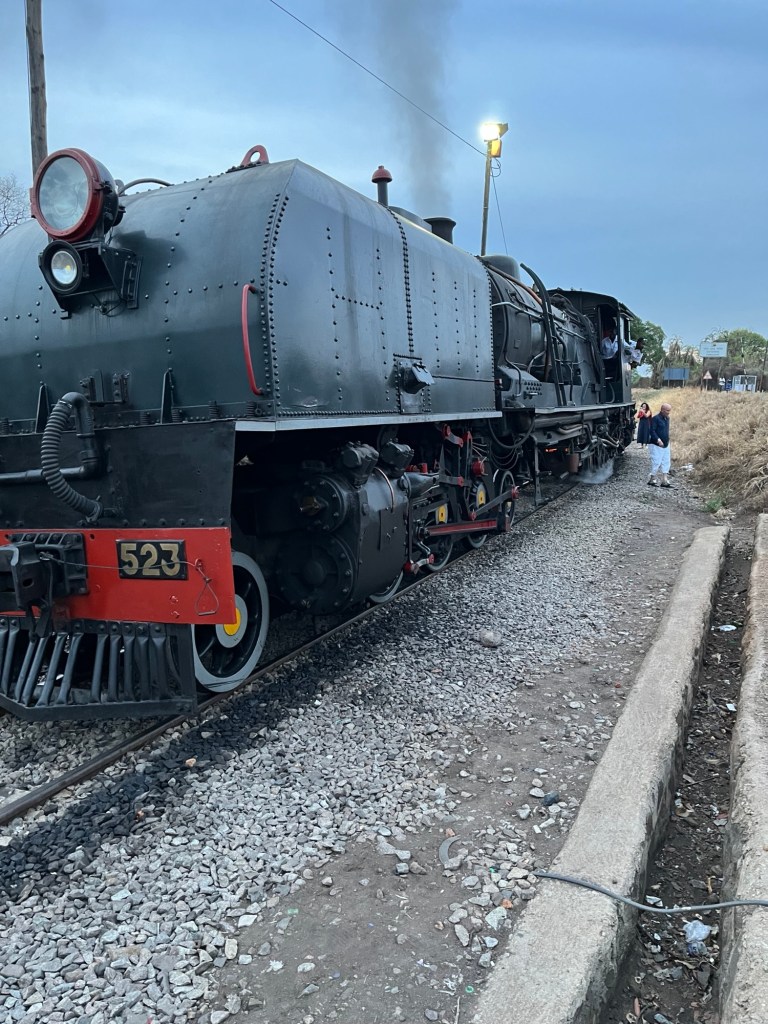
Last night’s event surrounded an old steam engine train. I forgot to bring the iPad to take pictures (that’s the way to edit the photos for the blog) but luckily pictures from my iPhone transferred over to the iPad.
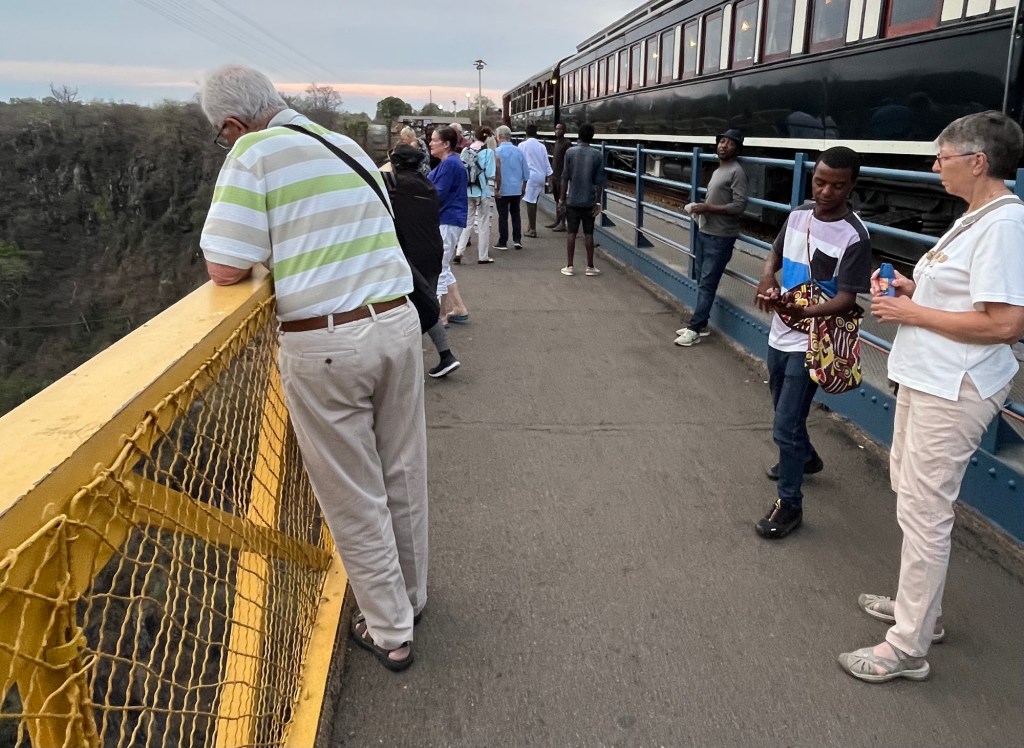
The train took us to the bridge and the Zambia part of the Falls.
As mentioned in yesterday’s blog the Falls on the Zambia side are not as impressive as the Zimbabwe side due to water diversion for hydroelectric purposes.
We walked across the bridge …
to take a look at the steam engine…
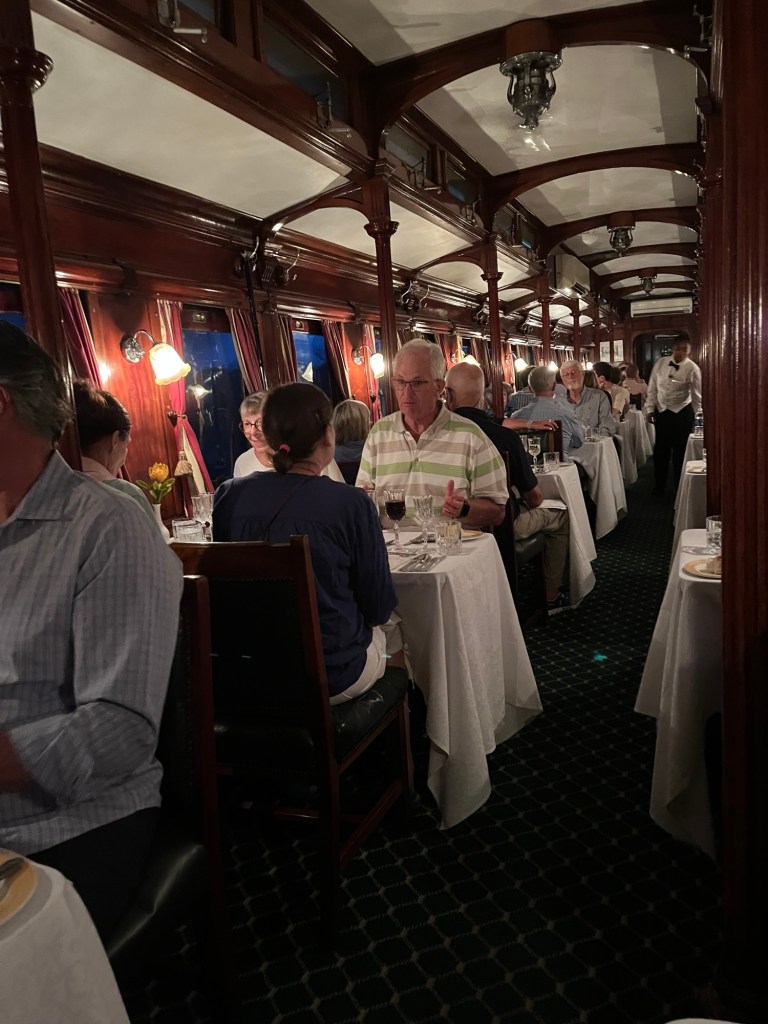
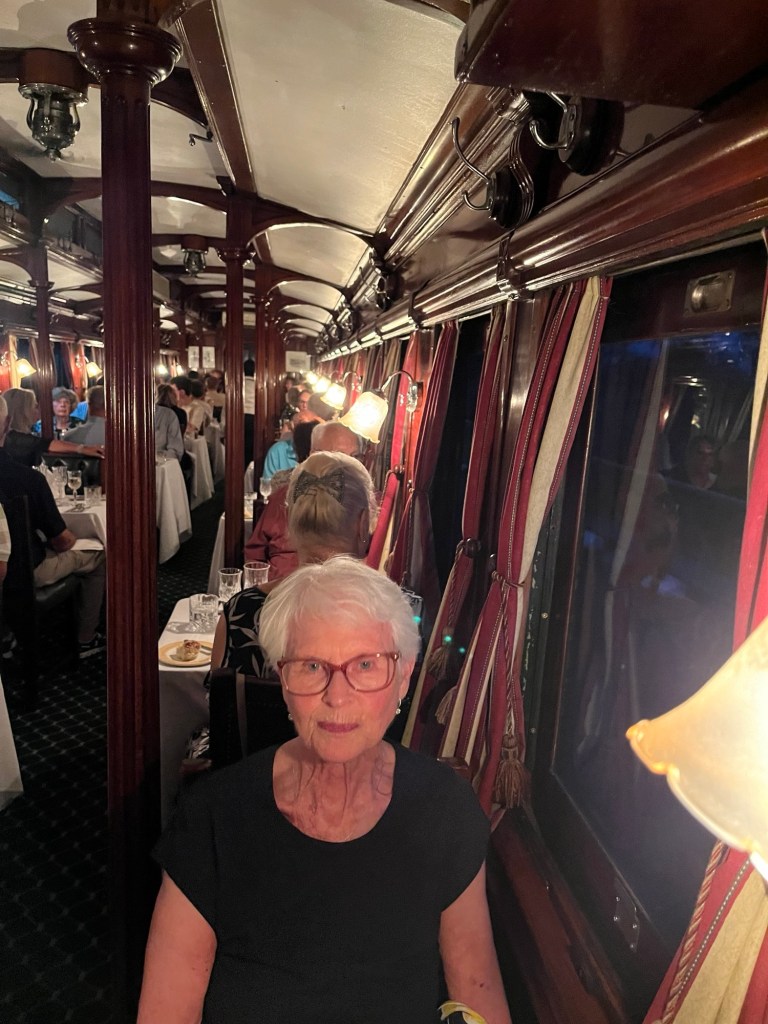
..,and thenback to the passenger cars for a 5-course dinner in an old restored dining car.
Back to today and the Falls.
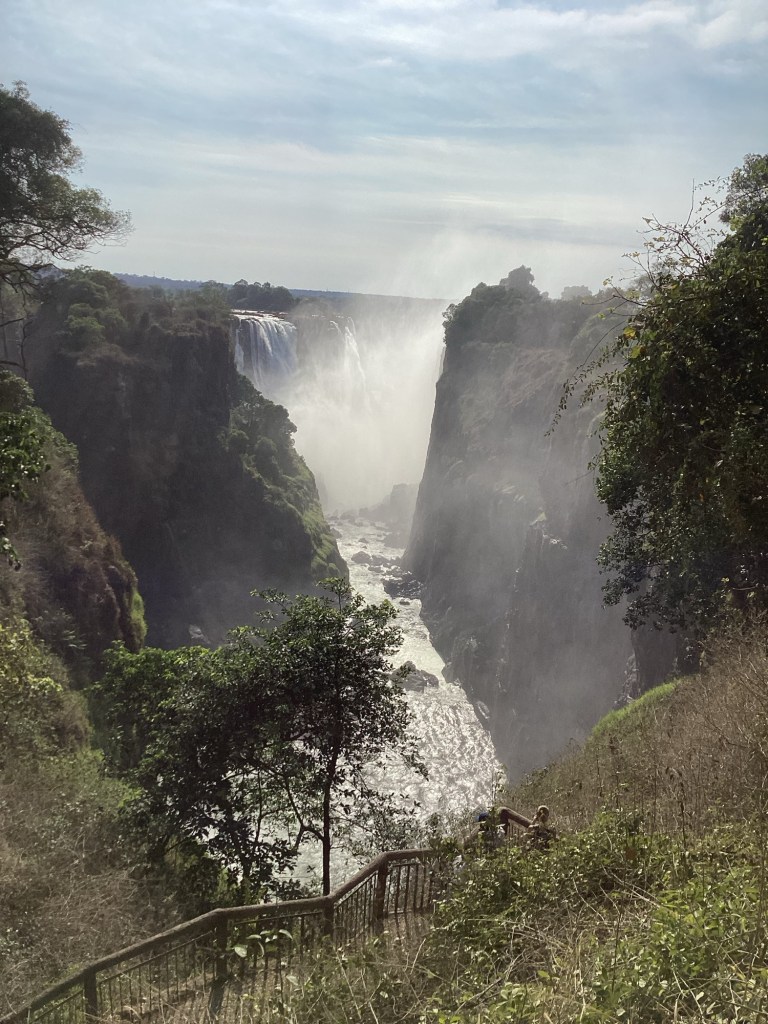
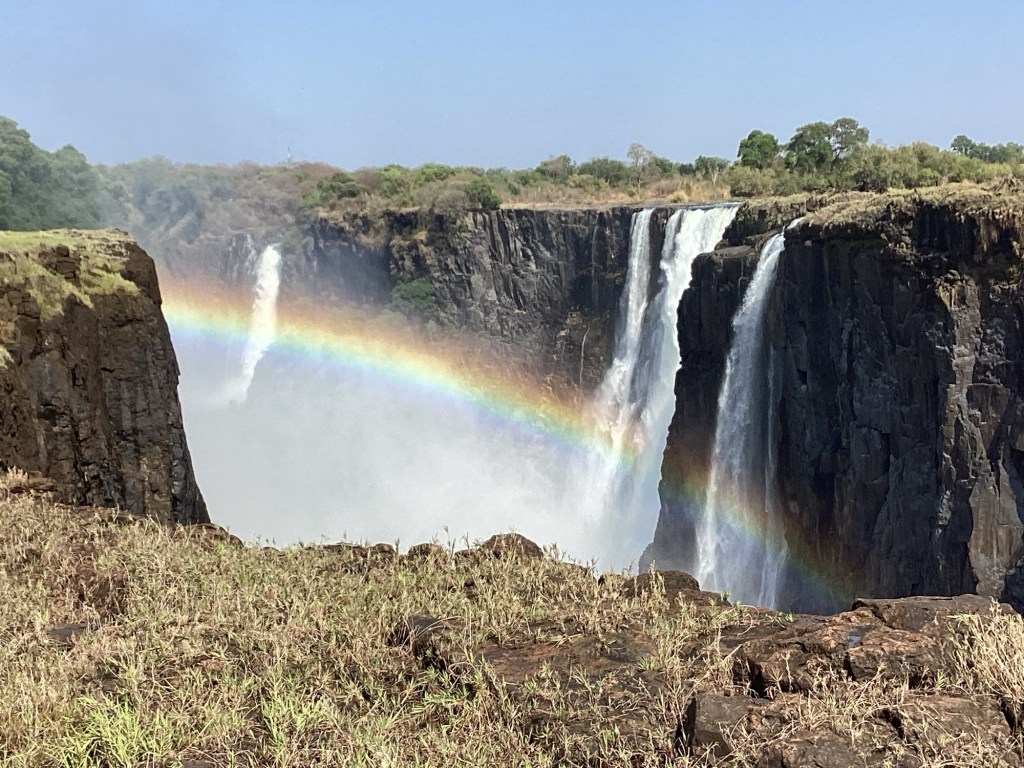
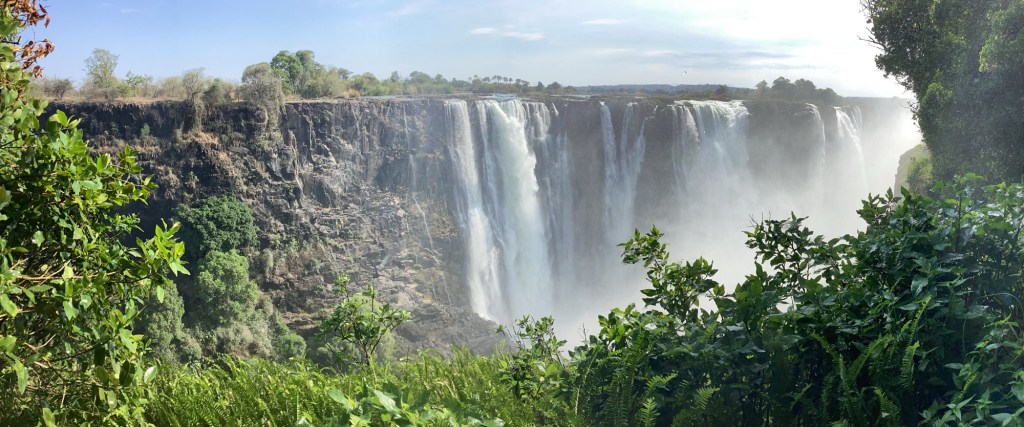
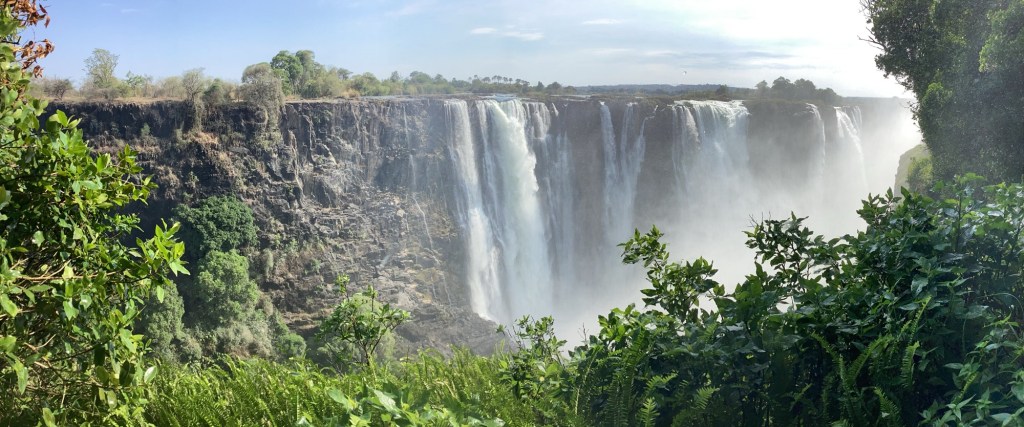
Victoria falls is the reason we came here. It is twice the height and twice the width of Niagara Falls.
This is the dry season and yet so much water spills over the Falls the resulting mist falls on the rainforest bordering the Falls.
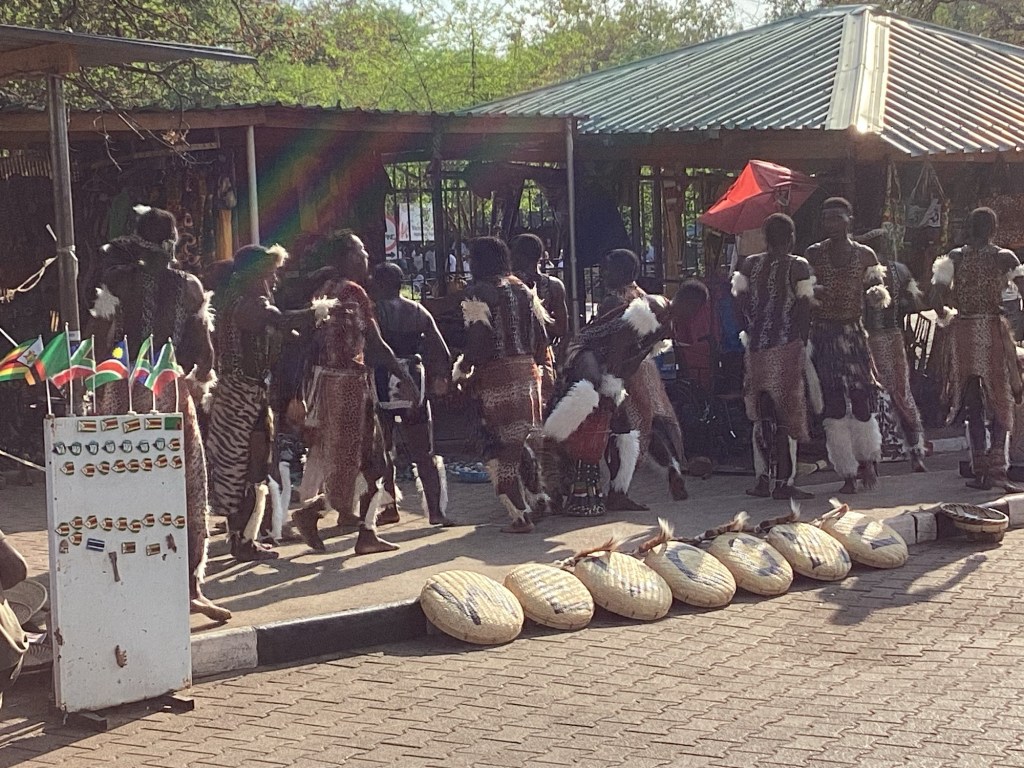
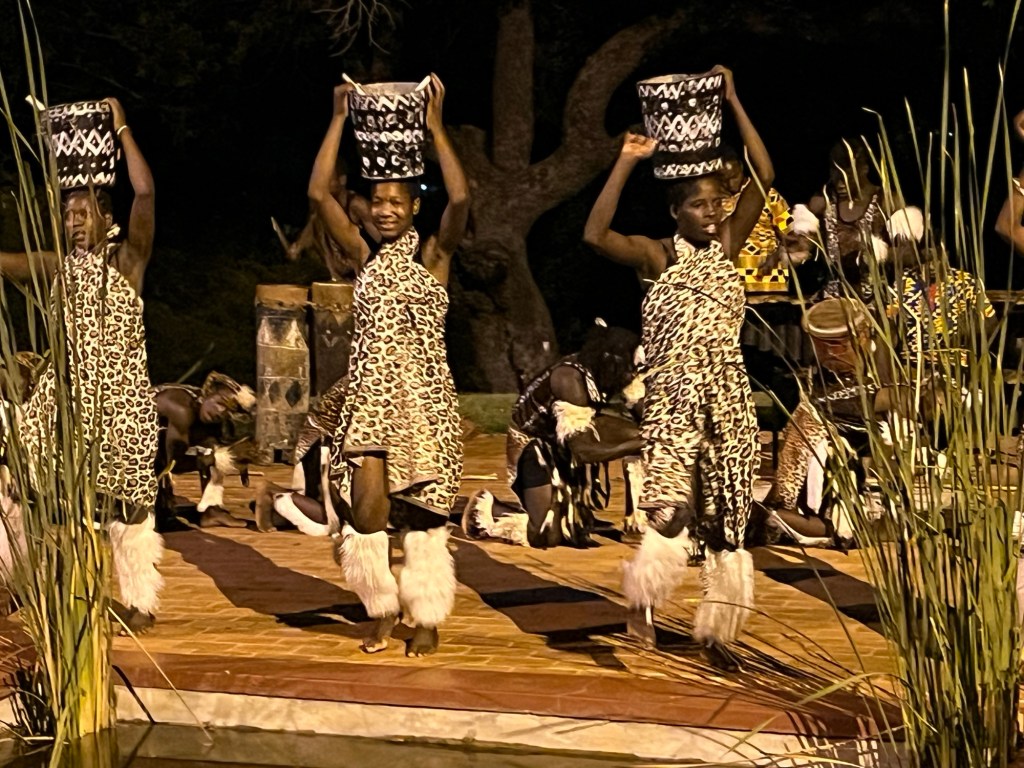
When our bus arrived at the Falls after a short 5 minute drive from the hotel we were met with men and boys dressed in native leopard skin costumes dancing and singing for tips.
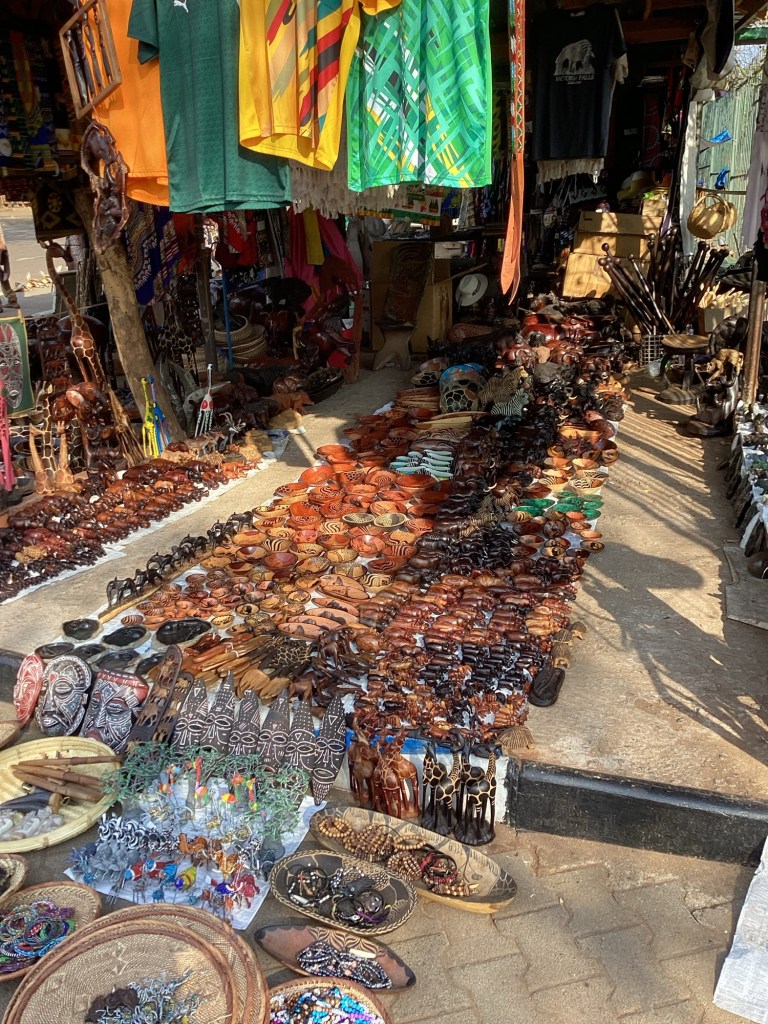
The usual handicrafts were offered for sale on every corner,
Dr. David Livingston, the first European to “discover” the falls in 1855, is honored at the entrance.
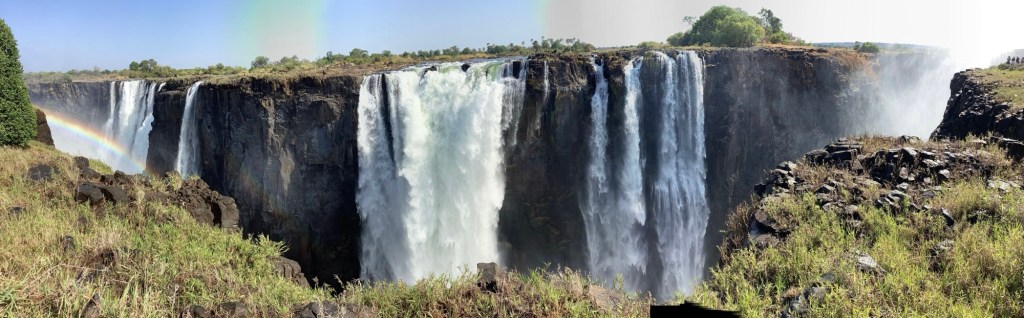
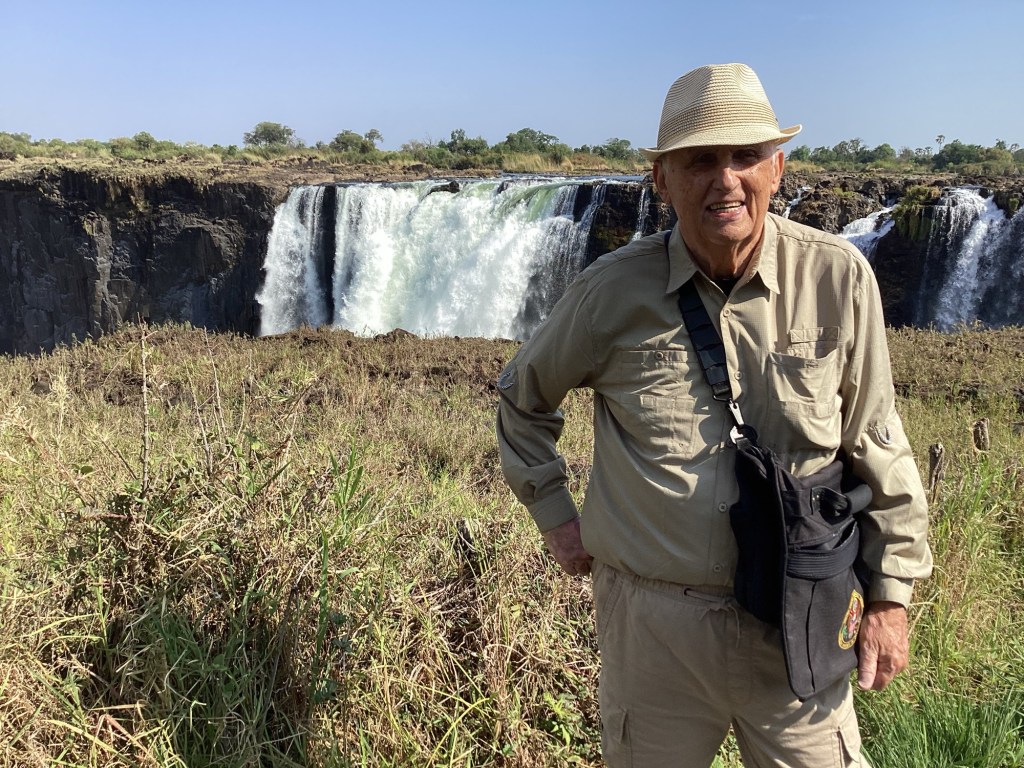
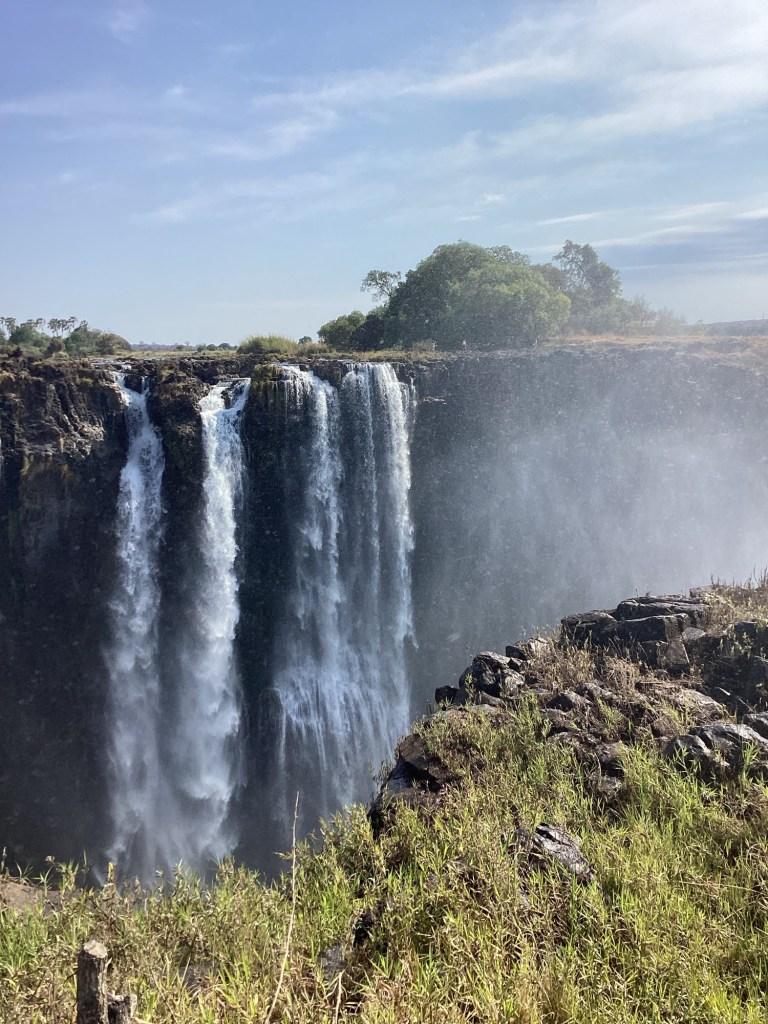
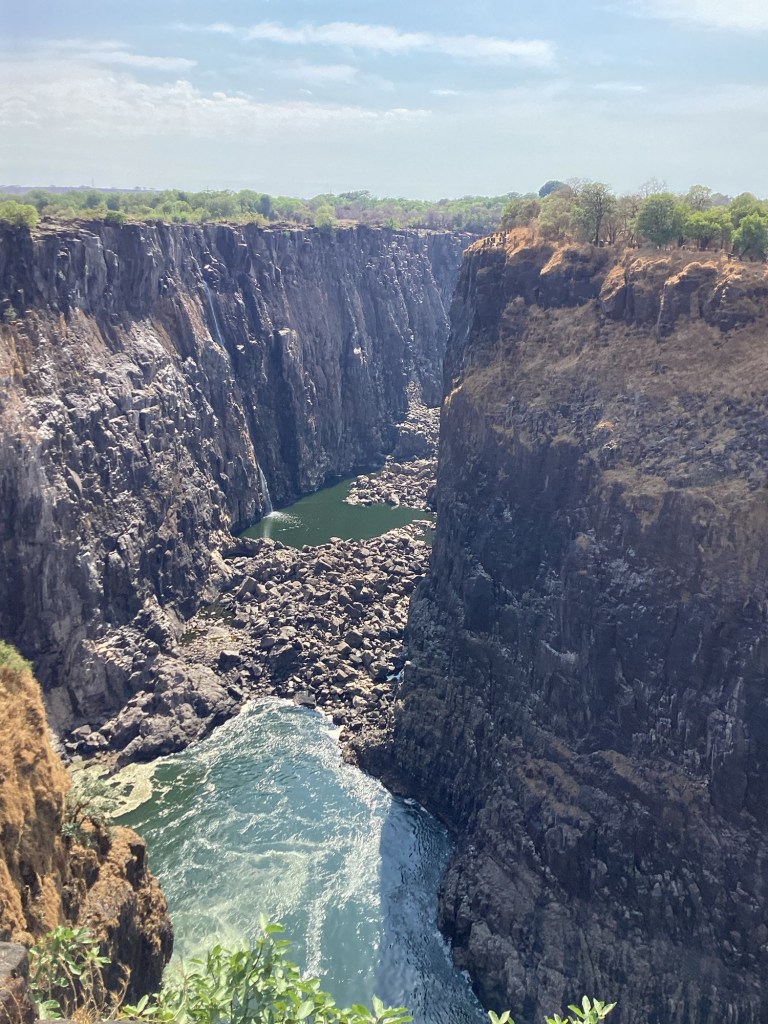
Even in the dry season they are spectacular…
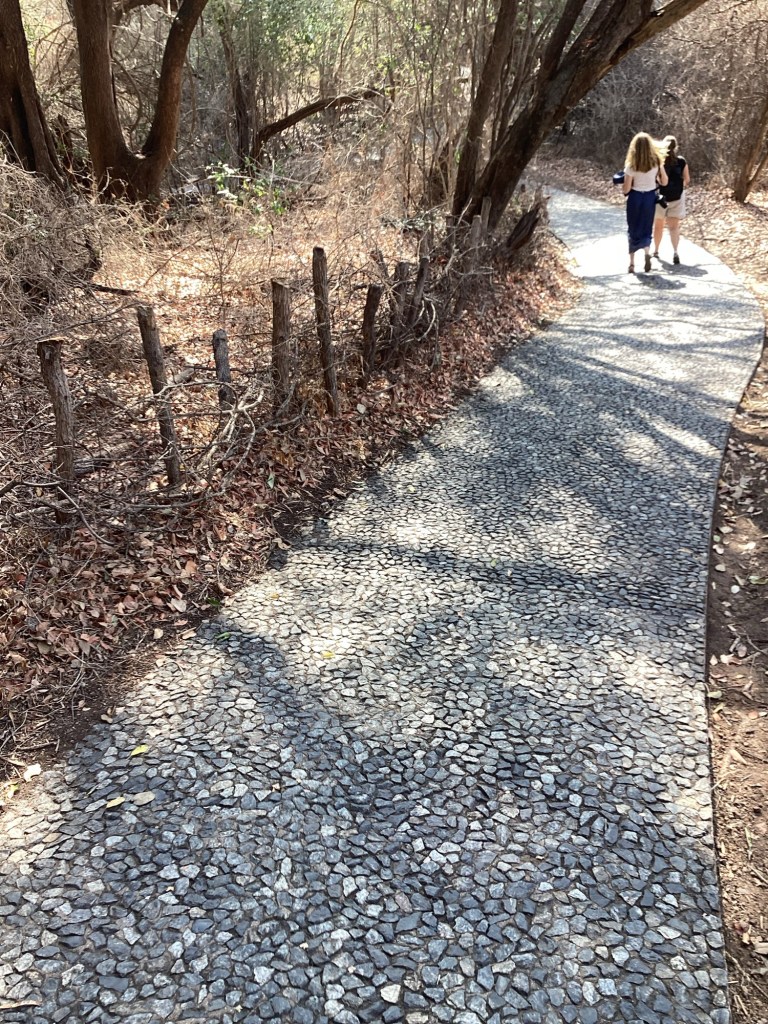
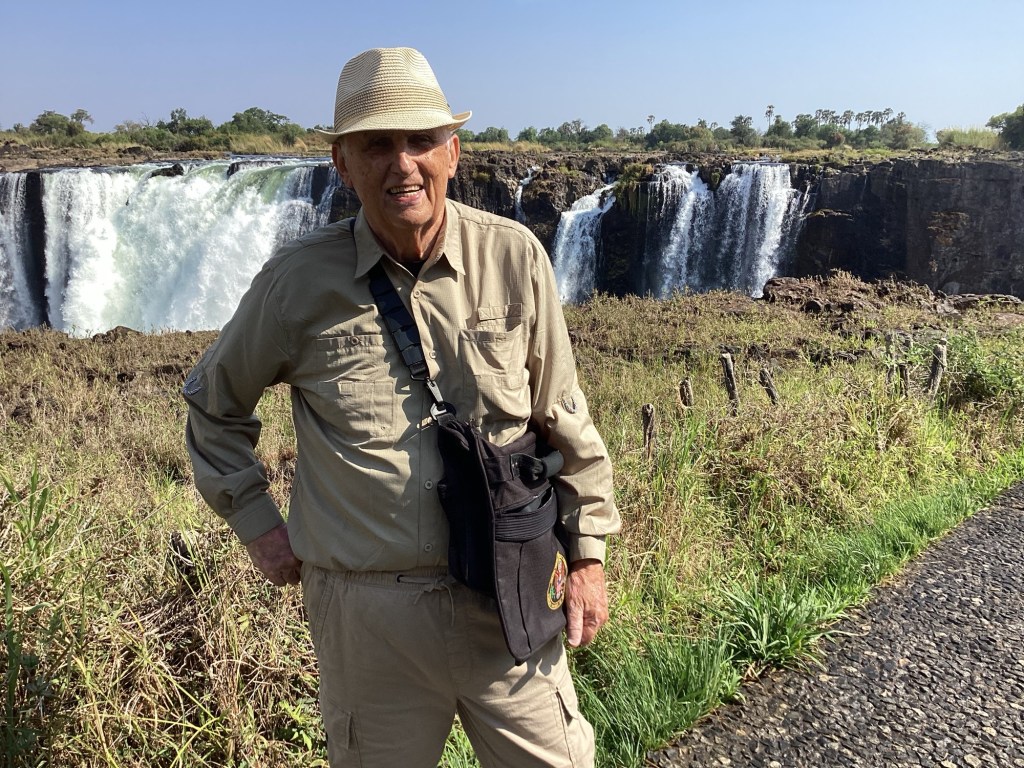
As our group walked the cobblestone path the width of the Falls…
the views got better. A rainbow is unusual in this spot.
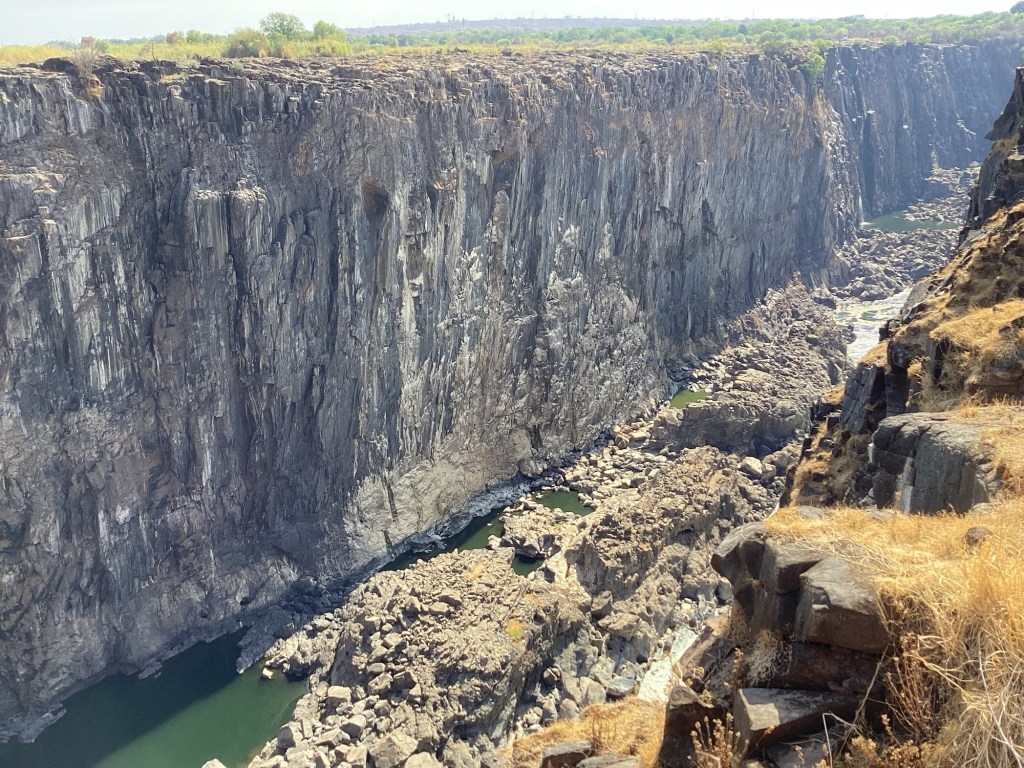
And they are deep. I was impressed.
These are the “main falls”:
As we got closer to the main falls the falling water turned to mist which rose and fell back on the rain forest…and me.
In the wet season these gorges would be full of water.
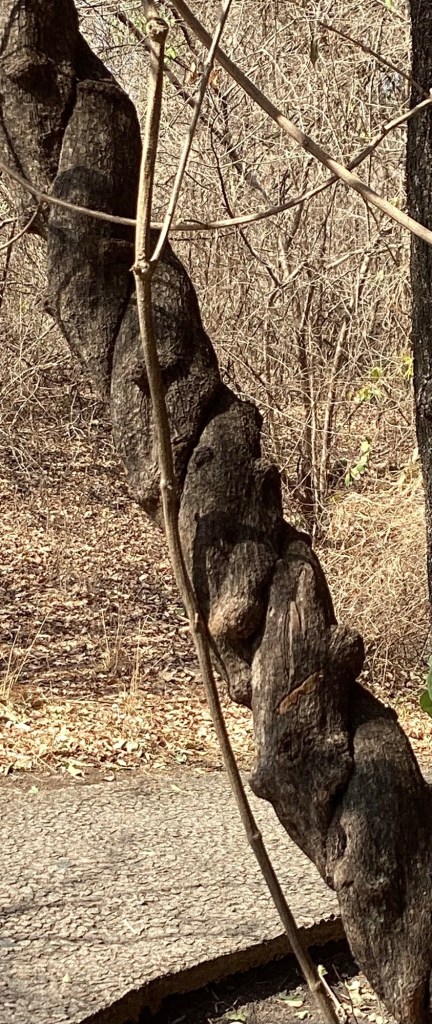
I share this last photo of the Falls Park just because I like the shape of the tree truck:
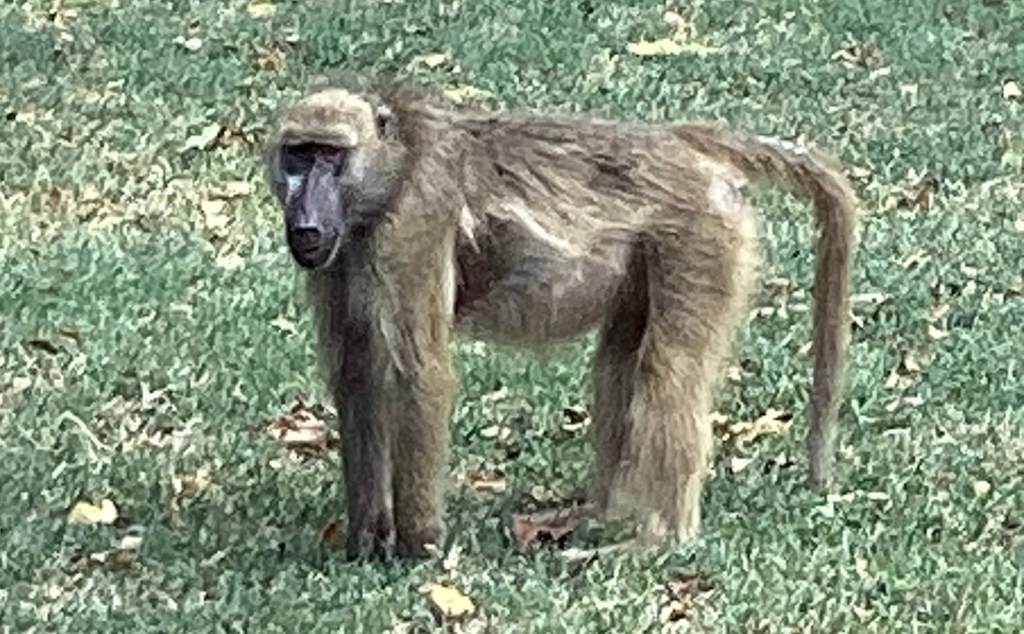
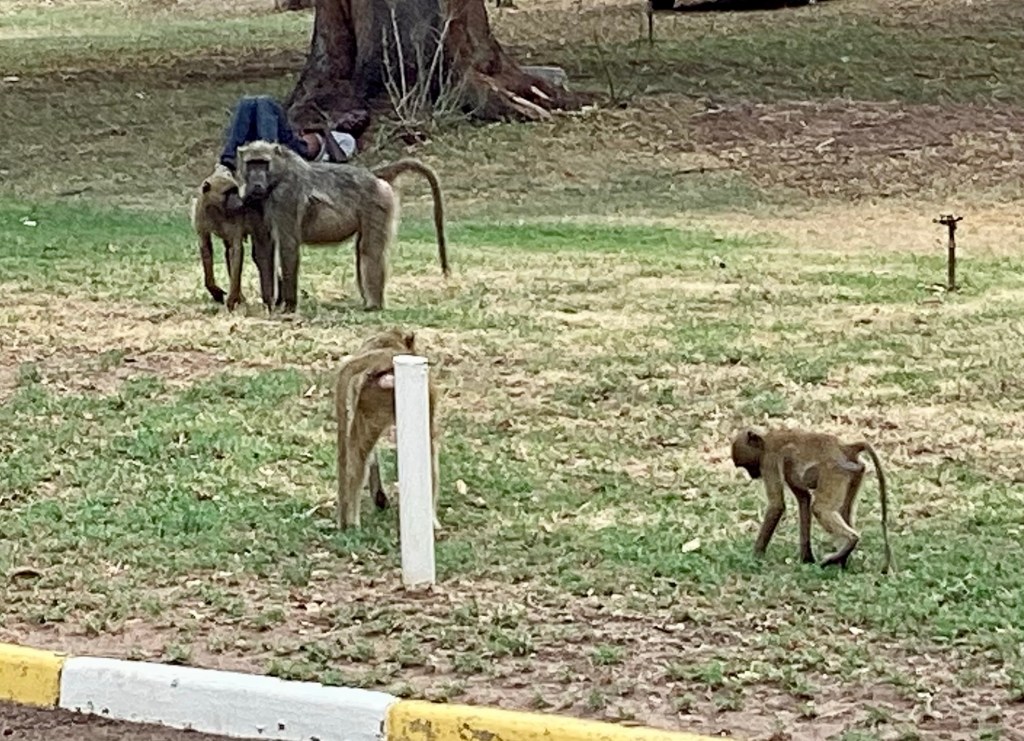
After lunch I took a walk to “Elephants Walk” shopping center, passing wild baboons…
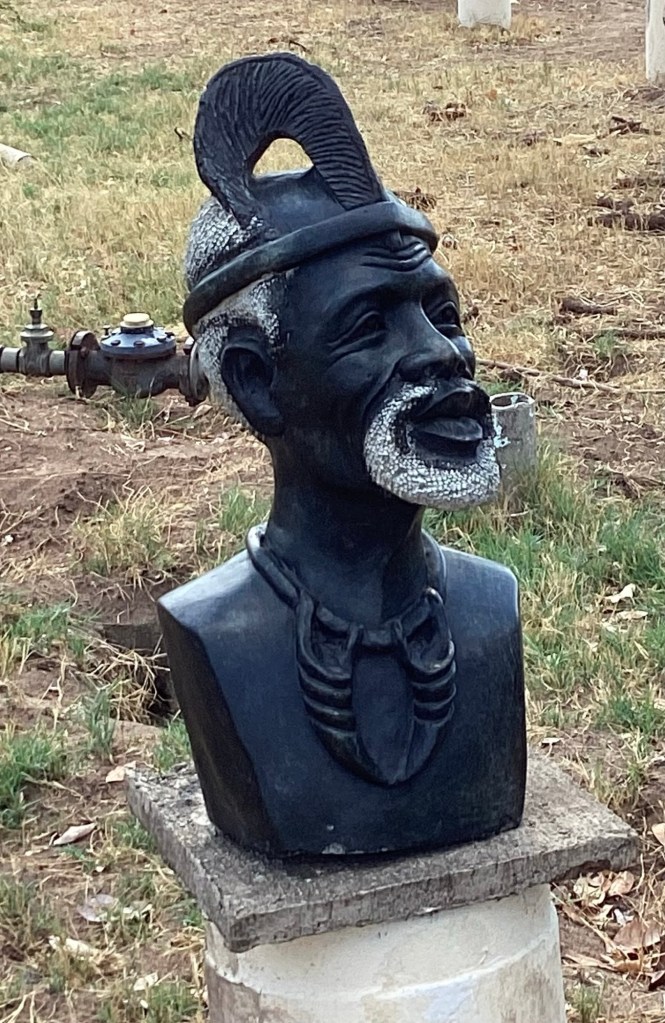
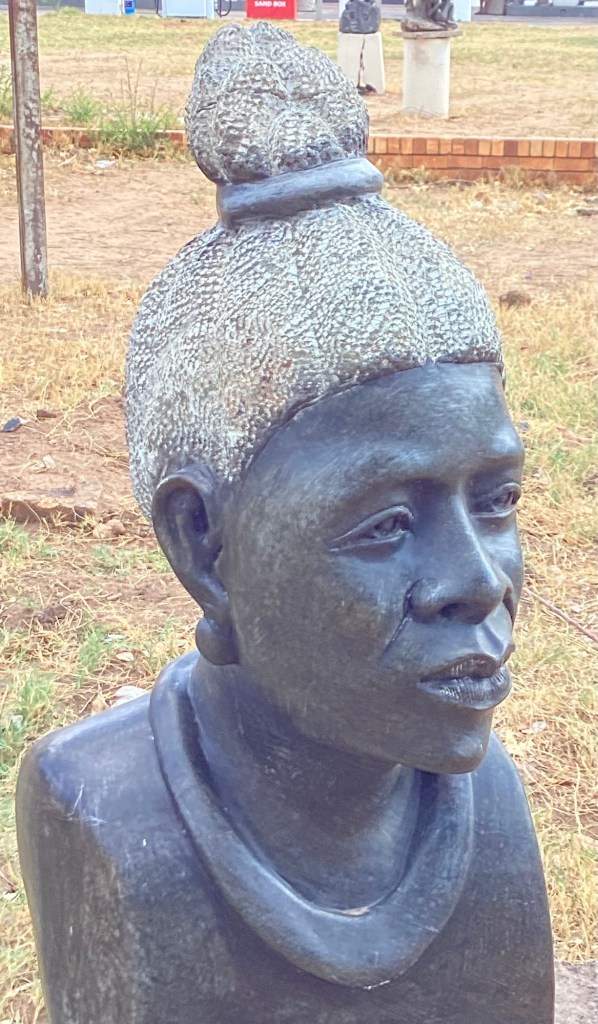
and a sculpture park..
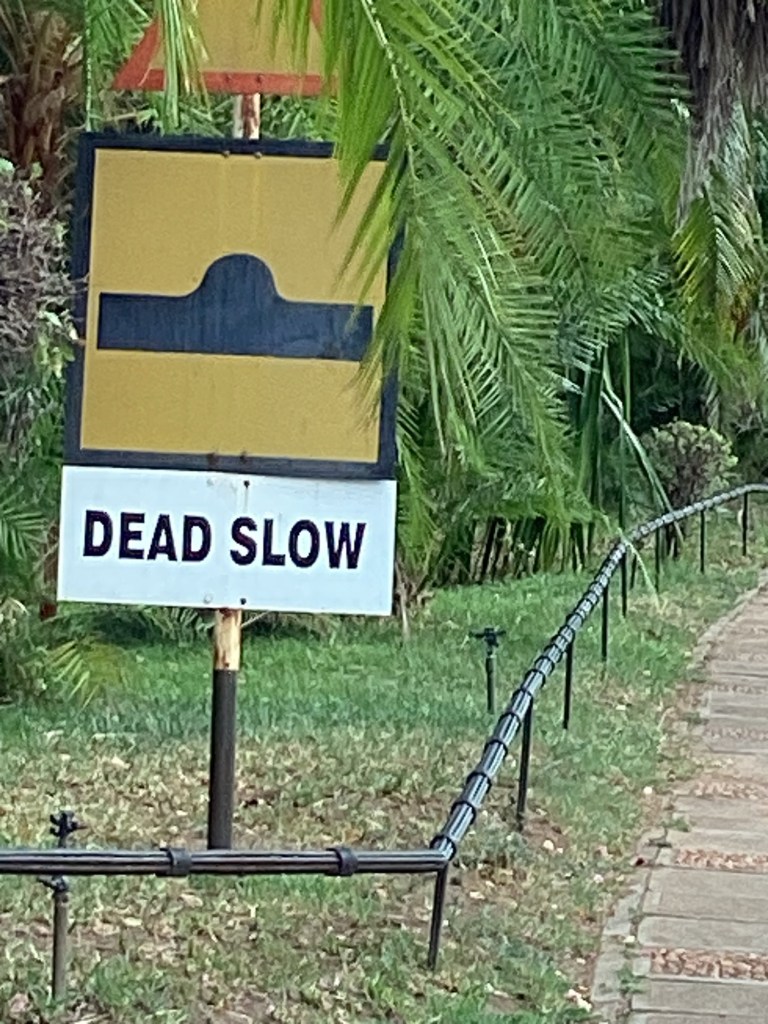
The way back was slowed by these signs. I inserted this for Tony: we have a shared appreciation for “interesting” signs.
Tonight is our final dinner together as a group. Some-like us-continue on the 4-day Rovos Rail train trip, others head for Kruger Wildlife Park and some to Tanzania.
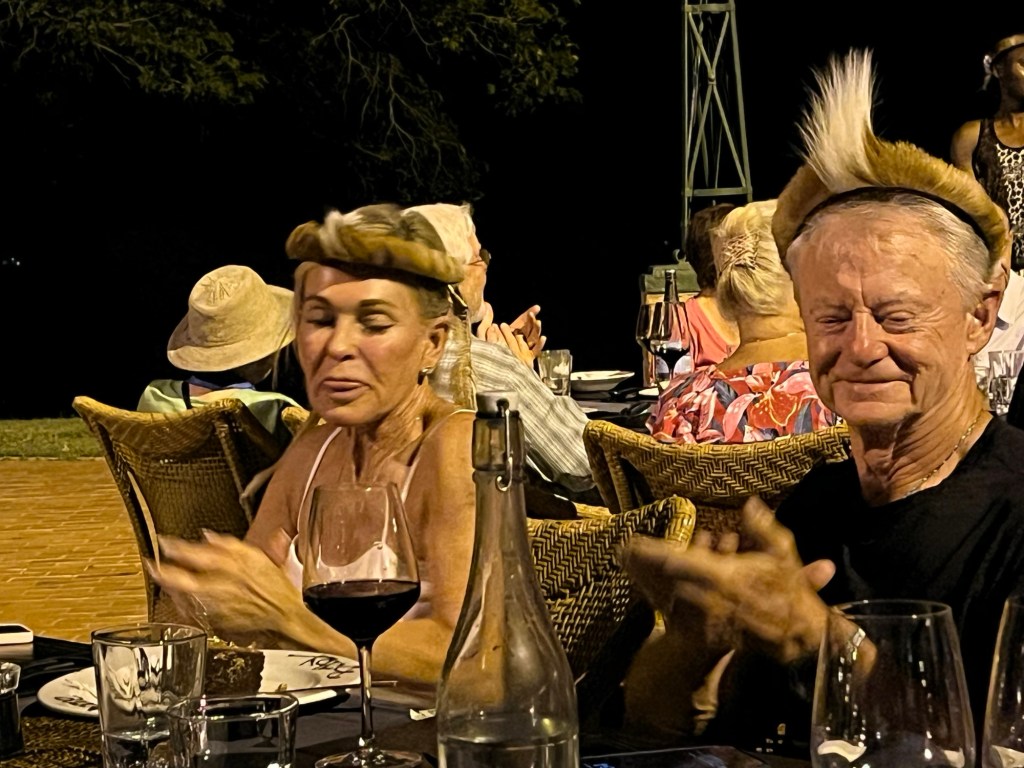
The final dinner was wonderful. Three different groups of Zimbabwean singers and dangers entertained us throughout the evening.
They even sang a happy anniversary song to one couple and helped another celebrity the birth of the grandson yesterday. Luke is the new grandson of Darryl and Susie. The head ornaments were supplied by the dancers.
Tomorrow we leave on the final segment of our trip: four days and nights on the Rovos Rail train, a 1930s train that has been remodeled with bedroom suites, a dining car and an observation car.
How did we end up taking home five bags when we arrived with only four? Simple: your carry back stuff multiplies. It’s the rule of travel. So we always pack an extra lockable duffel bag to hold the overflow.
Such as four bottles of wine protected in special cushioning wine bottle bags. Like gifts for family and friends. How about dirty laundry you don’t want to mix with the clean guys before you launder them at the next stop.
The rule for this morning: Namibian immigration “leaving” document to be filled out and given to tour director Delia McBride along with our passports. Ship’s bill settled and crew gratuities taken to the business office. AMA comment card completed. Breakfast at 7:30. Bags packed and locked by 9:30 am. Leave the ship at 10 am.
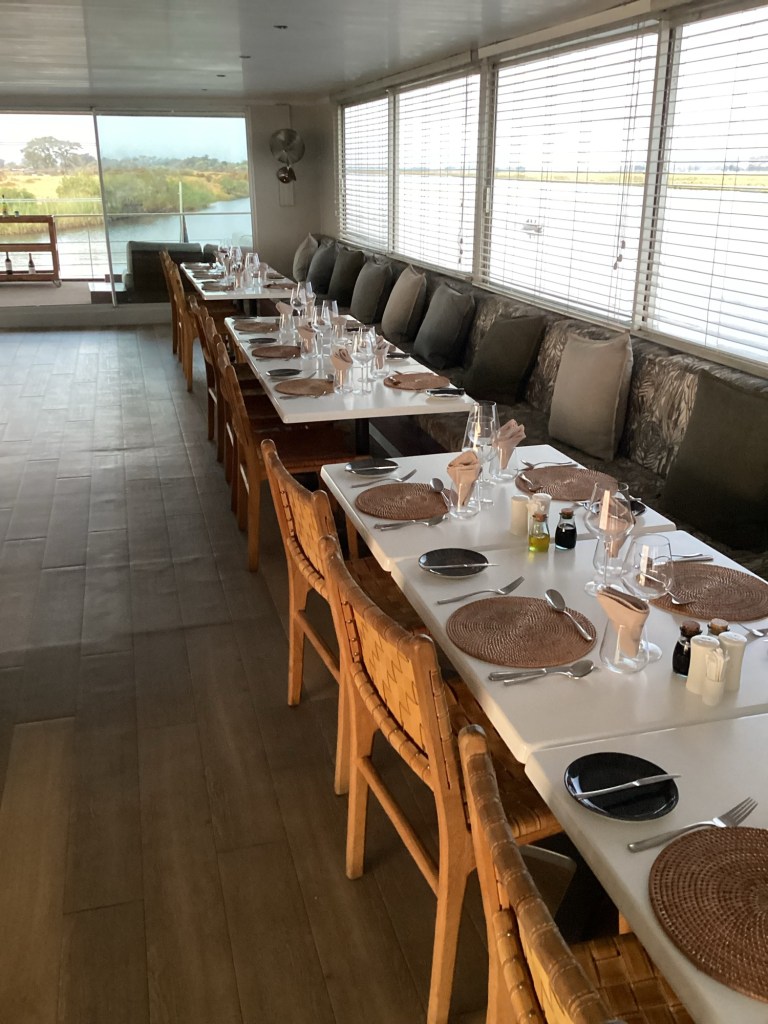
The dining room is empty now but will soon be filled up
I will never forget one bit of advice we were given on the first day aboard ship: if you fall overboard DO NOT yell or splash in the water. That noice and vibration will draw in the crocodiles.
Yesterday two passengers on a tender ride spotted two very large crocs eat a Cape Buffalo. One croc ate the body while the other tossed the Buffalo head up in the air and eventually swallowed it whole.
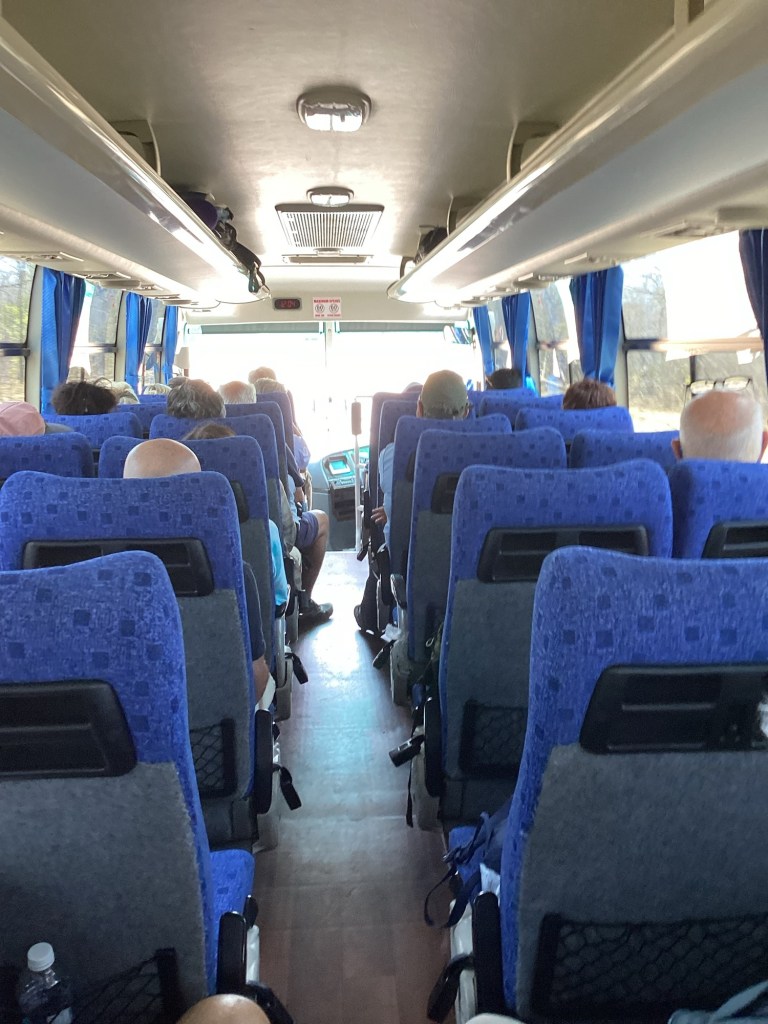
Out on time and within an hour we had our passports stamped at three border crossings: Namibia, Botswana and Zimbabwe. We are all in one bus:
Less than an hour and we’ll be at Lake Victoria Hotel and can’t wait.
We talked about why we scheduled this trip: we unpack and repack four times. We spend no more than four days in any one place. It has been over 100 degrees and dusty outside and inside the AC works some of the time.
But we think that question answers itself. During what other 18-day period can we see and do so many very different things:
—Cape Town with its penguins, urbane city life, food for all tastes, a funicular to foggy Table Mountain and paragliding.
—The Zambezi Queen river and its excursions to see the wild animals of Africa, to visit a local village and the opportunity to meet some really delightful fellow passengers.
—Victoria Falls to see perhaps the most spectacular water falls on earth
—The Rovos Rail because we’ve never spent 4 days and nights on a train, especially one traveling through the African savanna, super especially one that has an observation car and dining car that requires business attire.
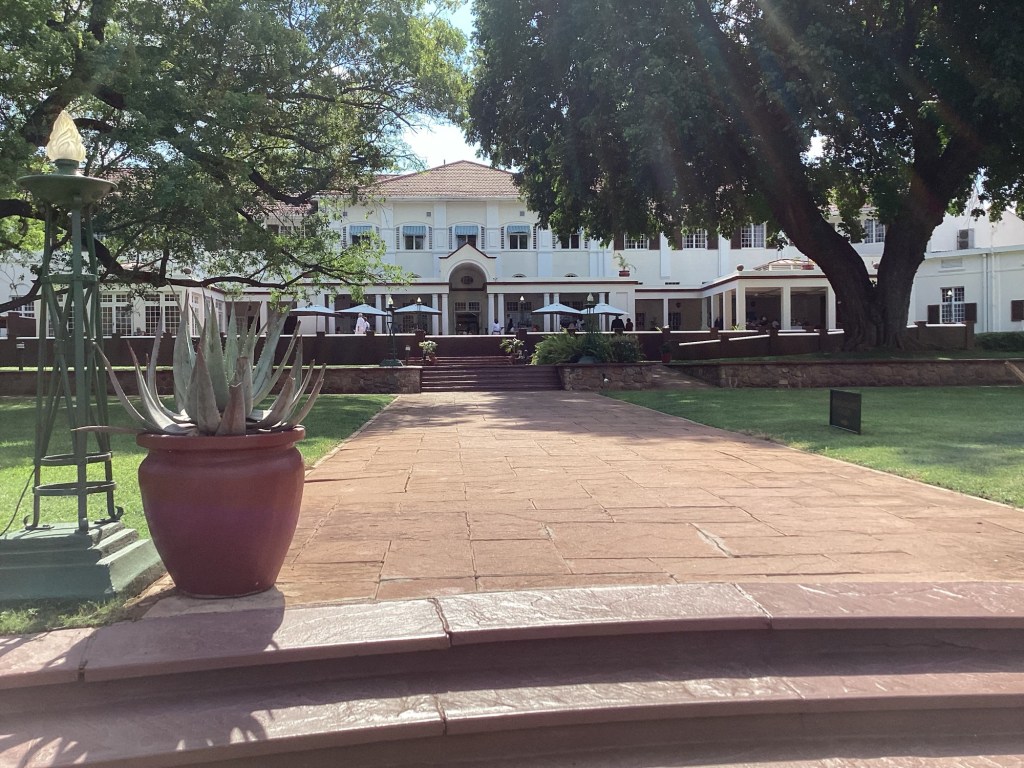
We arrived at the Victoria Falls Hotel in time for lunch. The hotel is something like “Out of Africa” with photos the English royal family on the walls. Referring to it as “grand” is an understatement. It just looks grand.
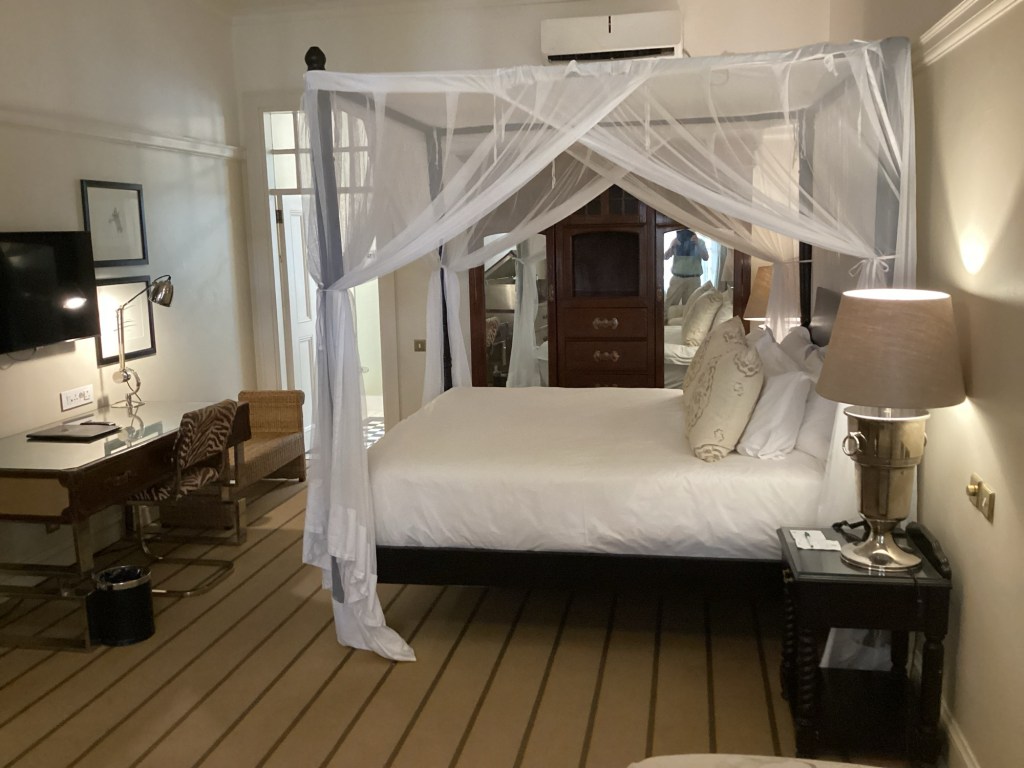
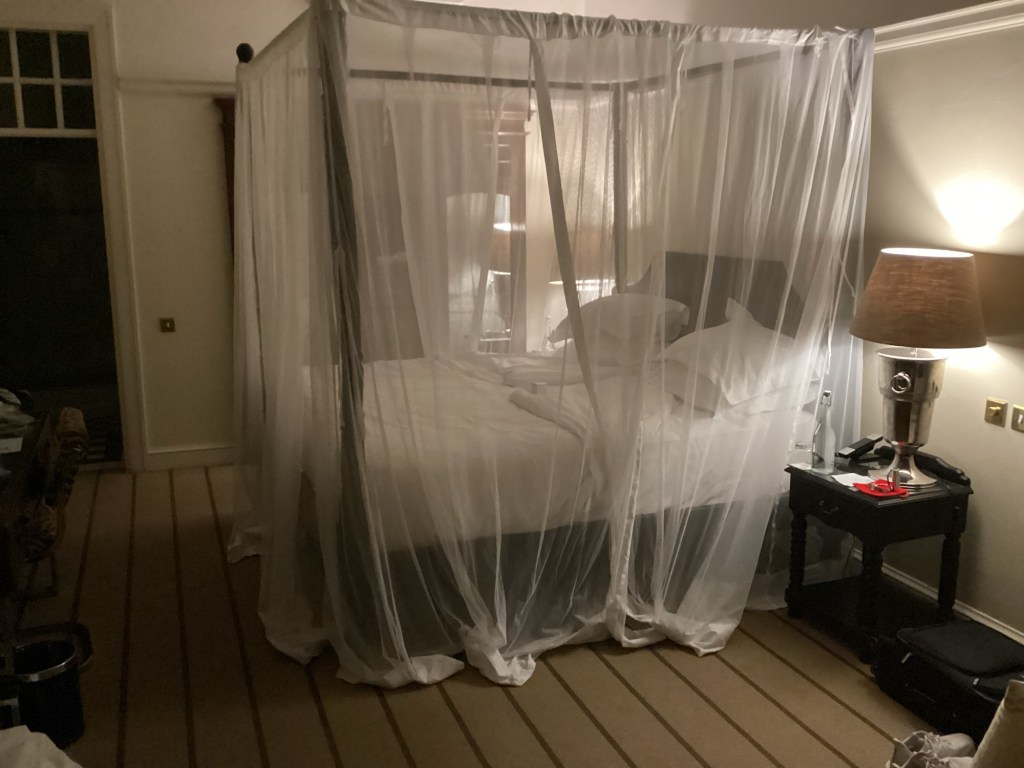
The room is gorgeous.
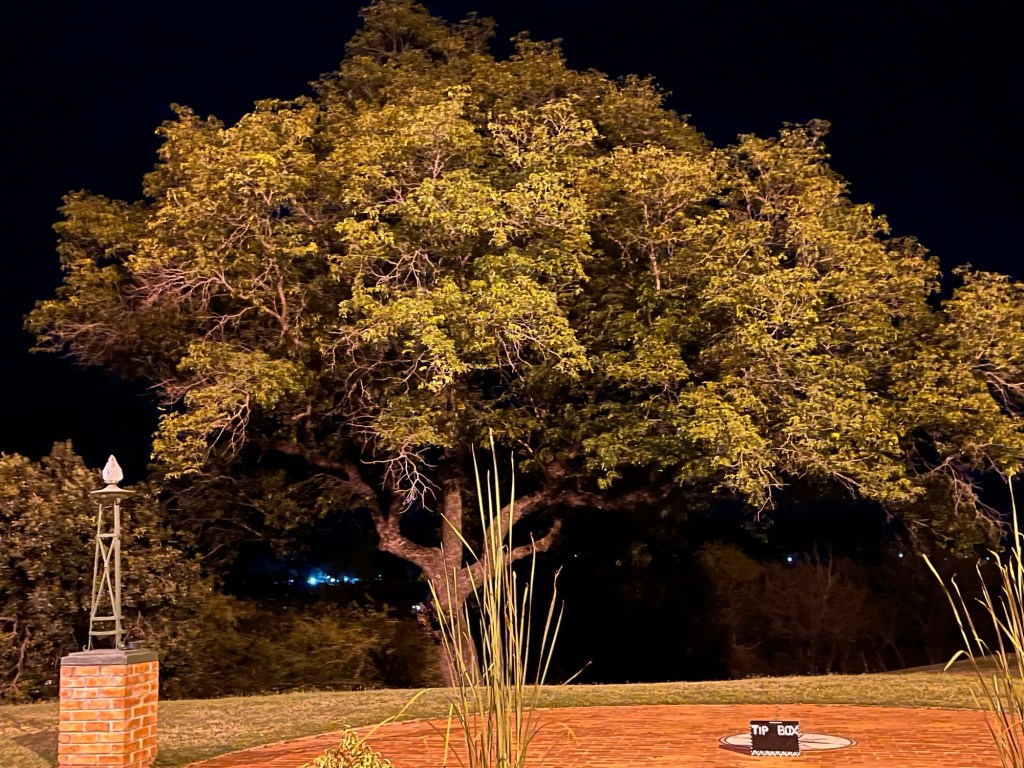
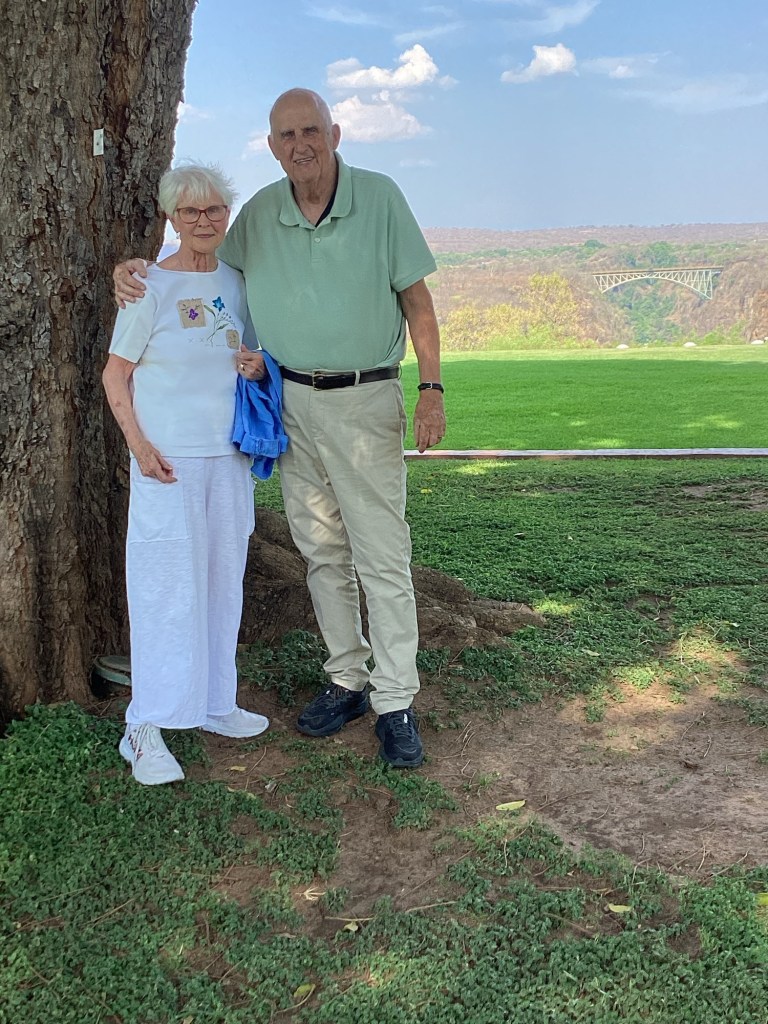
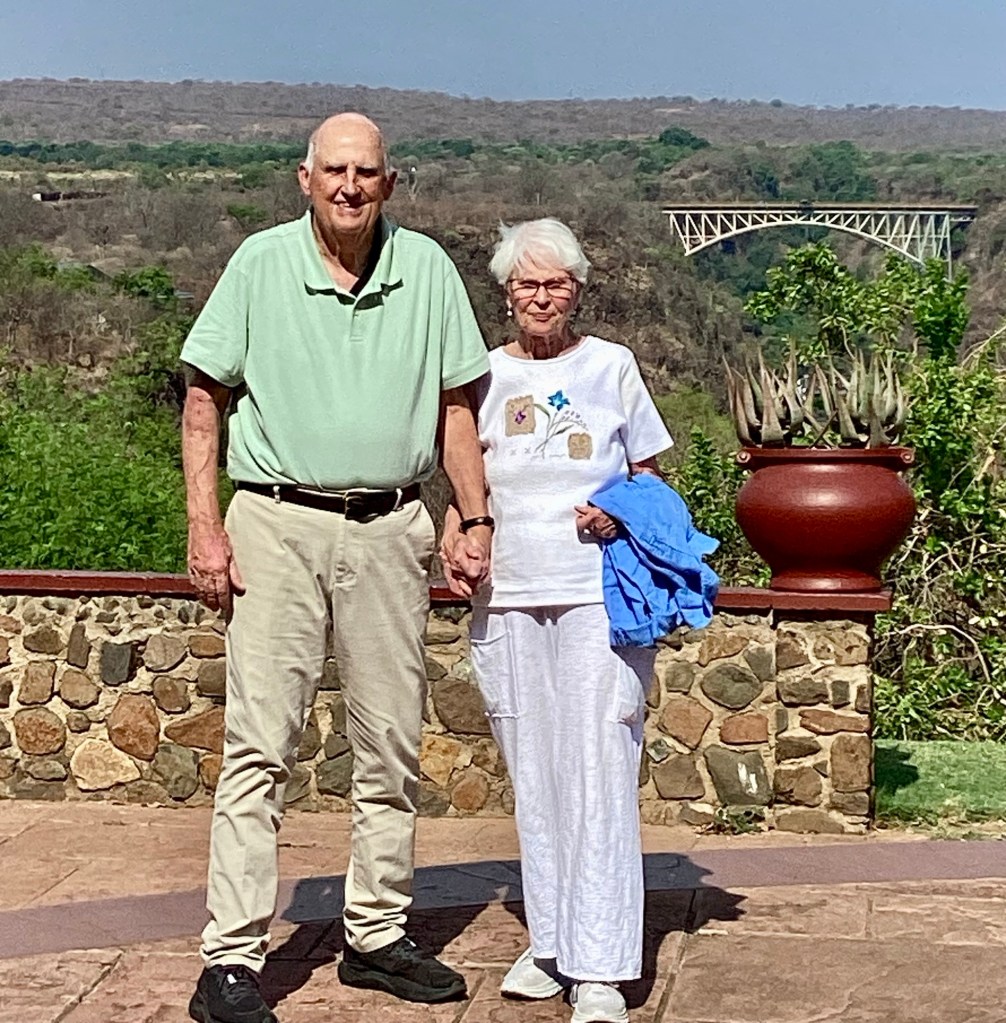
While exploring the grounds we stood next to a giant mahogany tree with the Victoria Falls bridge in the background.
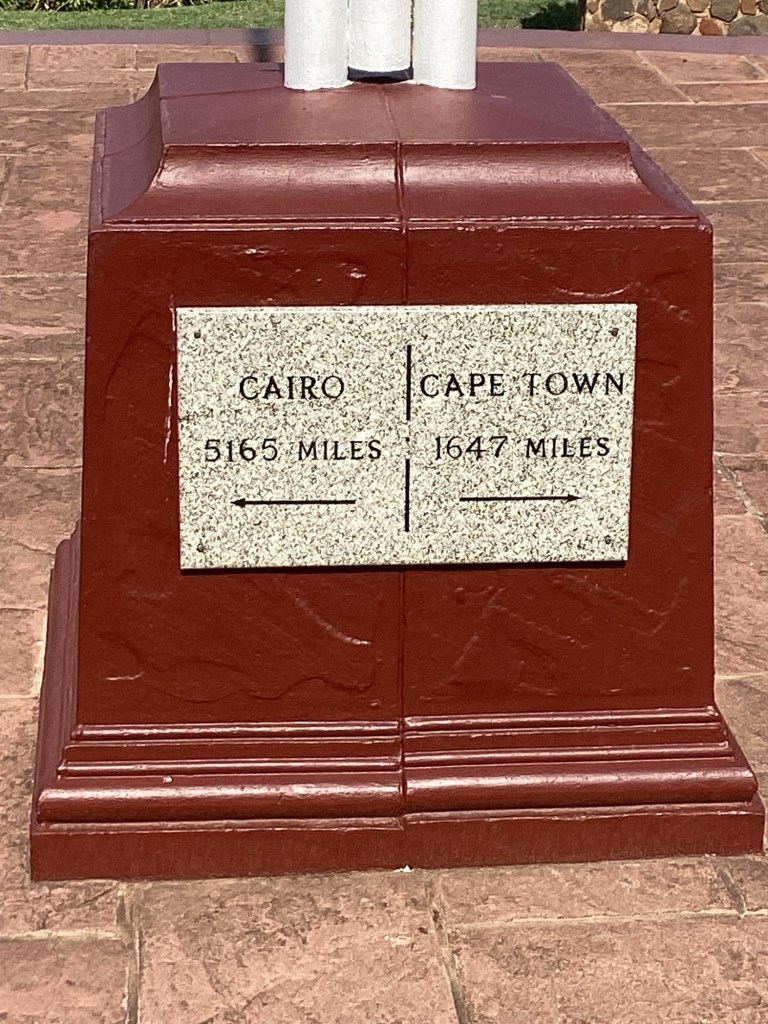
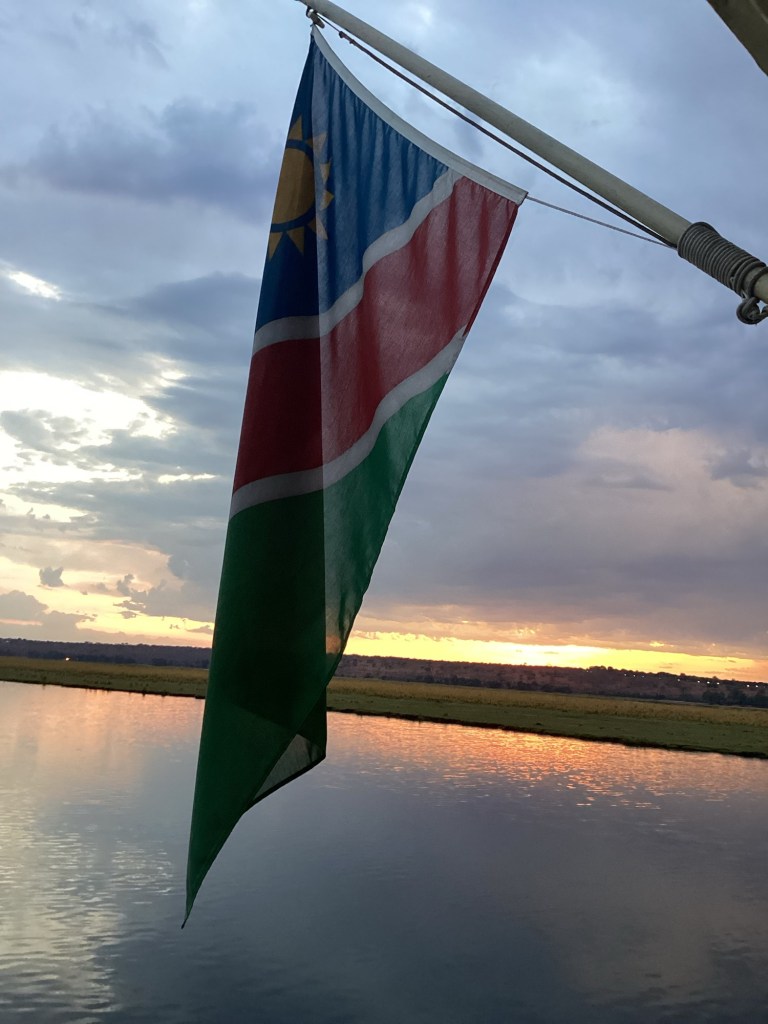
The base of the flagpole shows us where we are.
A closer look at us and the bridge that we will visit shortly
This evening’s program was riding a steam engine-pulled train to the middle of the Victoria Falls bridge where we got out to view the Zambia side of the falls. Not as spectacular as the Zimbabwe side that we will see tomorrow. Zambia diverted its water to hydroelectric turbines to generate electricity. However that diversion reduced the water falling over its side of the falls.
The excursion almost didn’t happen as I misheard the departure instructions and guided us to the opposite end of the hotel. A hotel employee turned us around and took us to the real departure…just in time.
Barb here: Niles had gotten directions. I should had paid more attention. We walked what felt like a 1/2 mile in the wrong direction until we saw a hotel employee who took us all the way back to where we started. The others had gone on to the restaurant. Our guide had stayed behind waiting for us. She commandeered another bus that took us to the train station where everyone was waiting for us. It was a lovely evening.
Niles: we started in the lounge car of the train, sipping drinks and listening to a local singer/guitarist. After walking over the bridge we got back on the dining car for a 5-course dinner.
Driving through the city gives the impression half of the merchants sell handcrafted items to tourists: carved wooden African animals, reed baskets, colorful cotton materials. We’ll find out tomorrow when we walk around.
When we got back to the room this evening here is what we found:
This morning two passengers (Art and Mark) went fishing at 6 a.m. Yesterday four went fishing and caught a large catfish that they gave to a local village.
Most of us left at 9 am to visit a village, meet the elders and chief, talk with the school children and buy handicrafts at their market. Barb stayed on board to recover from the long day yesterday on safari. Niles toured the village but skipped the school.
The village is known as “Itongo” (eye-ton-go) and means “abandoned village”. Our guide there was a young educated woman of the village named Anid. The people of the village belong to the “Masubia” people which is also the name of their language.
Anid…
…led us around the village.
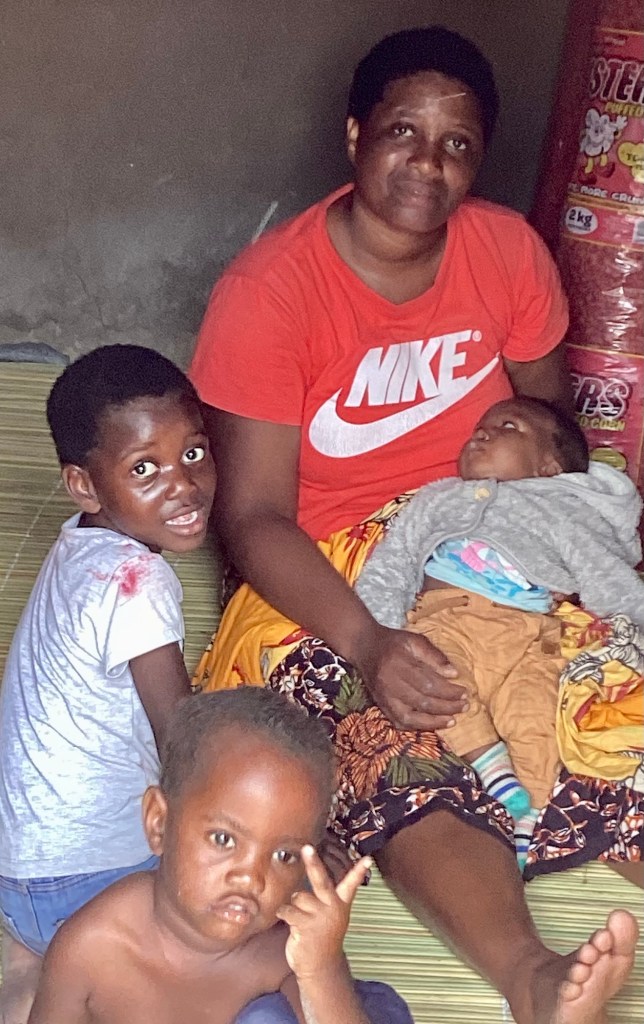
She introduced us to a young mother…
…with five young children
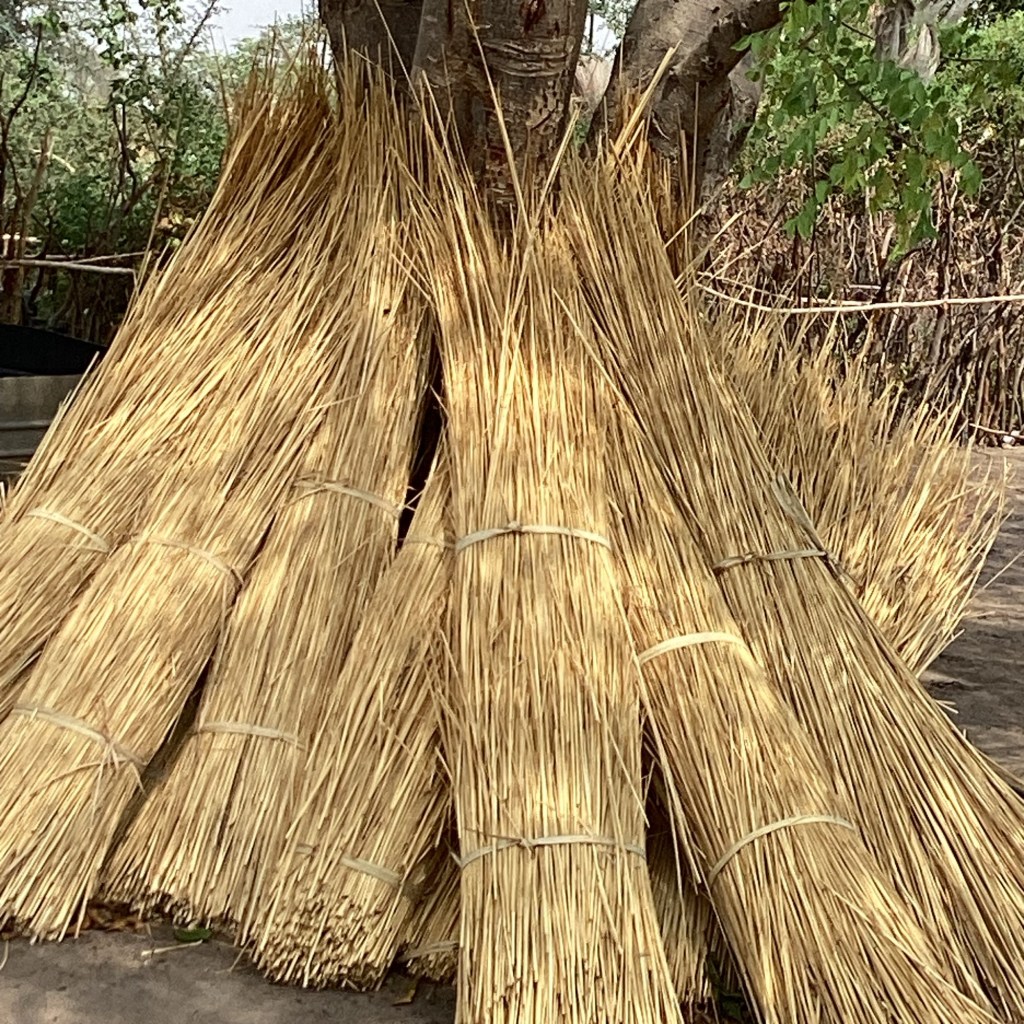
The houses are made of mud packed around thin tree limb supports. The roofs are made from reeds…
which are dried and attached to tree limb supports with twine.
The bathroom is another area out back..
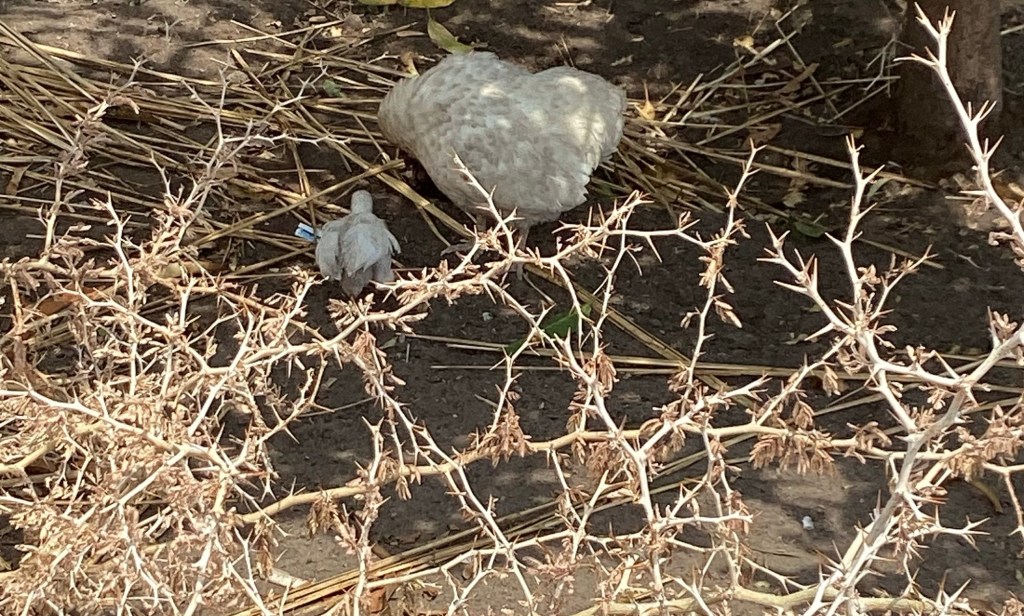
Chickens roam freely…
…except when enclosed with thorny vine fences.
Anid showed us where the people make local beer from leaves and berries from an “elephant tree” which if left too long to ferment can reach 85% alcohol.
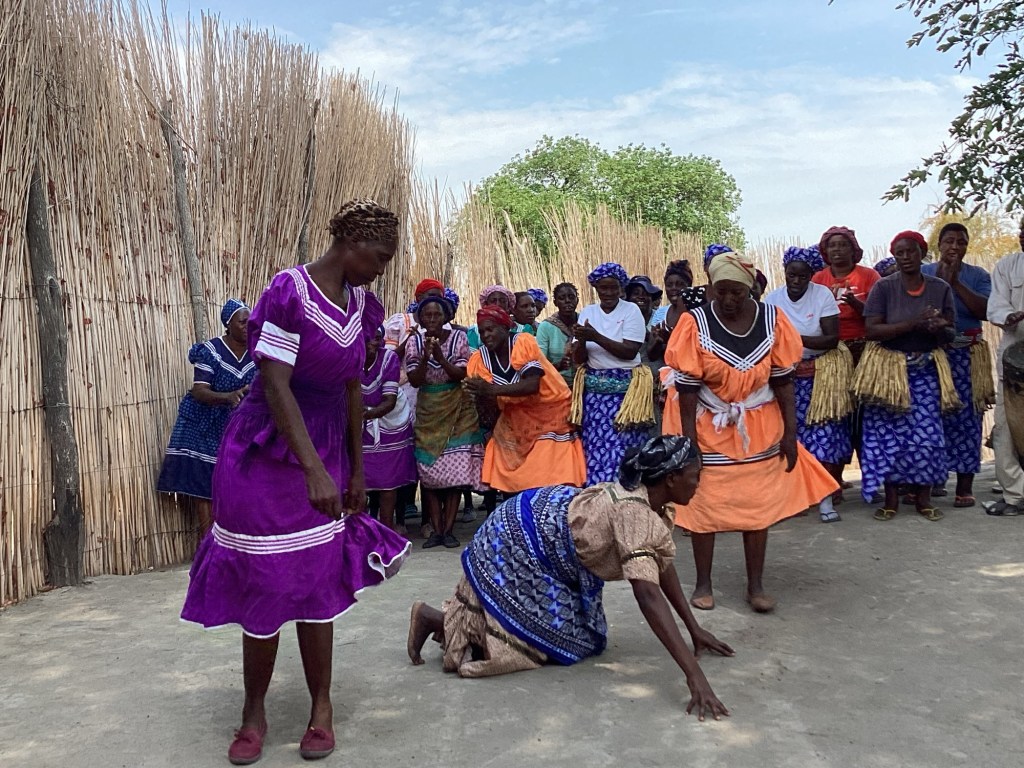
The sound of drums brought all to a nearby reed-enclosed area called a “Boma”.
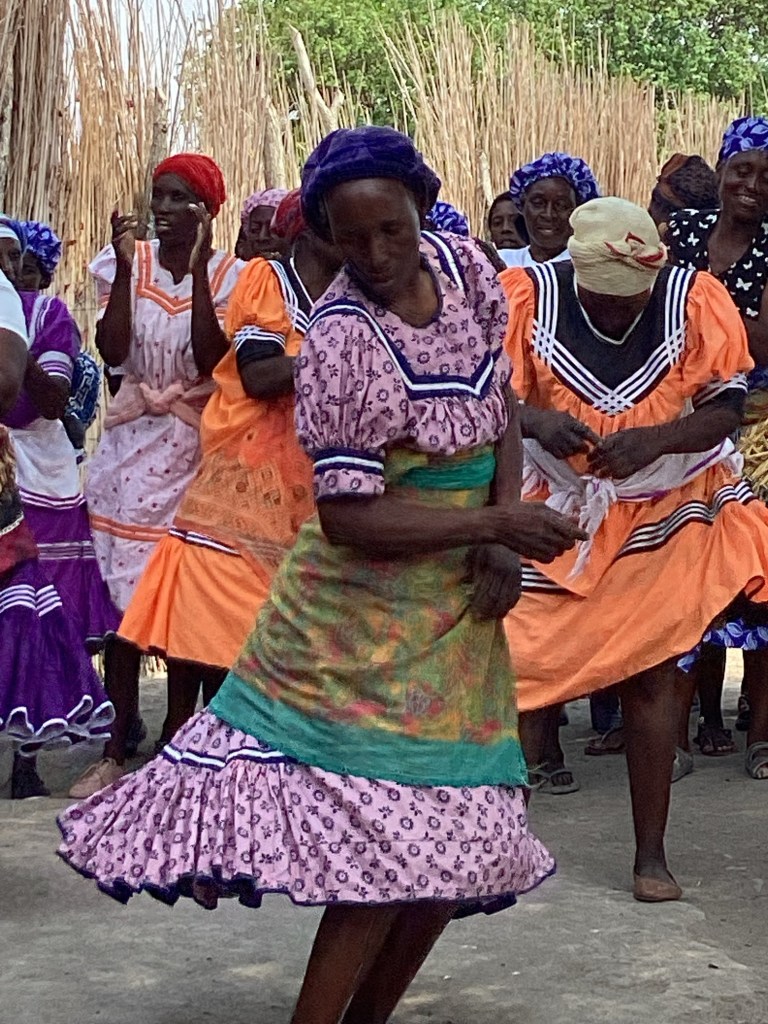
Several dozen village women danced and sang traditional cultural music.
The marketplace followed the boma: the reed baskets were made by the village women; the other handicrafts came from other villages.
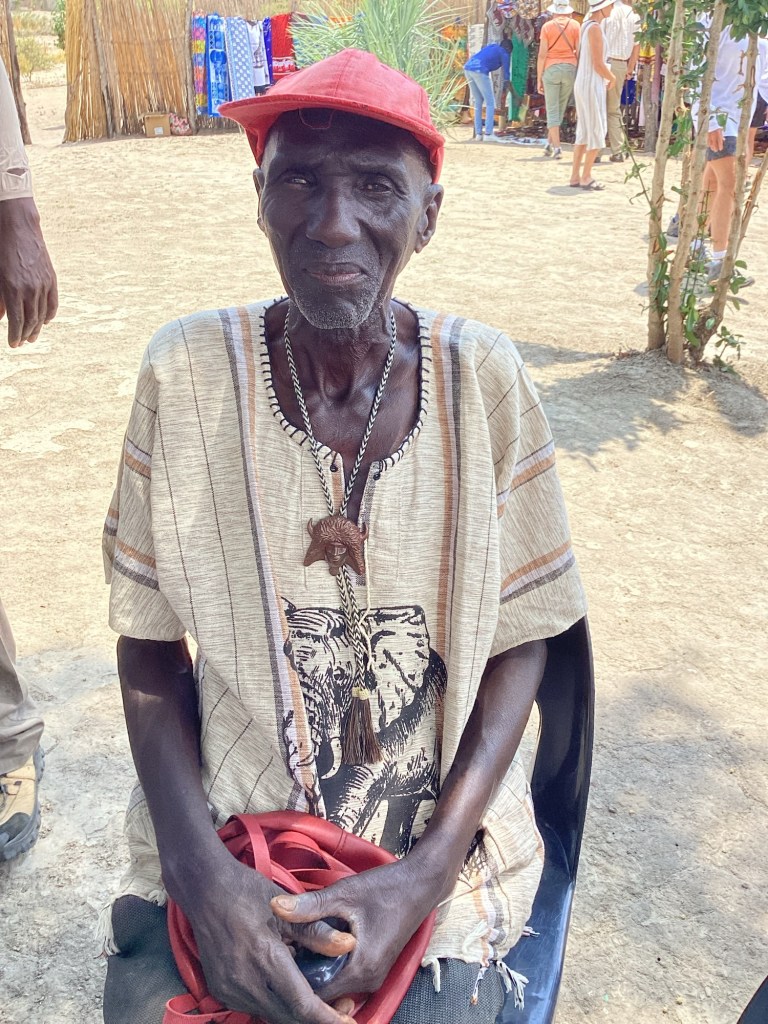
After the dancing I met the village chief and presented him with a bolo from The National Cowboy and Western Heritage Museum in Oklahoma City.
A very friendly gentleman he and I posed for a photo as he continued to thank me for the bolo.
I skipped the visit to the school…just too hot.
Those who did visit the school reported energized students and teachers but a library with no tables or chairs and few books. A class room with no electric lighting and either openings for a future window or slats to let in the air. The students had raked and tidied up the grounds. The students and staff were welcoming and delighted to have visitors. Many passengers brought gifts for the school: books and games. The school superintendent said they have plans to build another 5 school rooms to meet the demand from nearby villages. Cost: $30,000. A dollar goes a long way in Namibia.
After returning to the ship I rested, had lunch and worked on John Grisham’s book “Rogue Lawyer”.
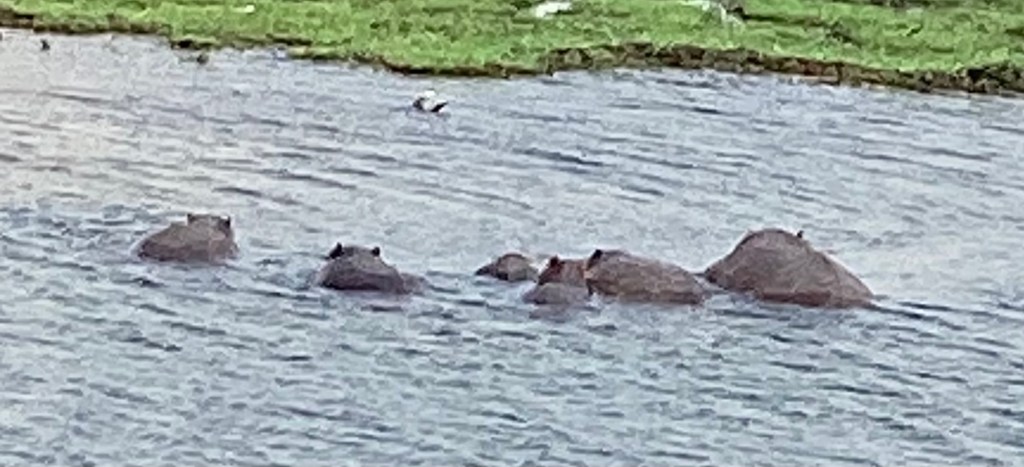
Cruising the Chobe we saw a pod of hippos by the riverbank:
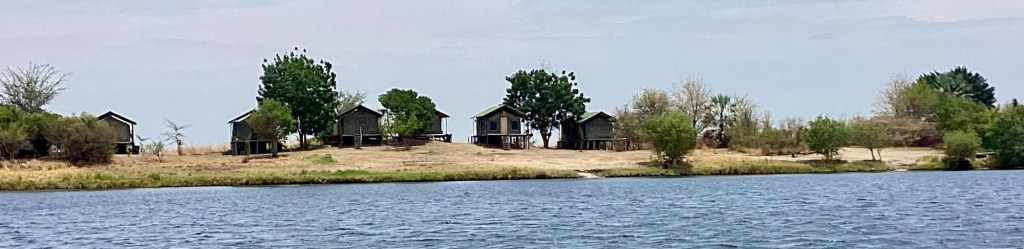
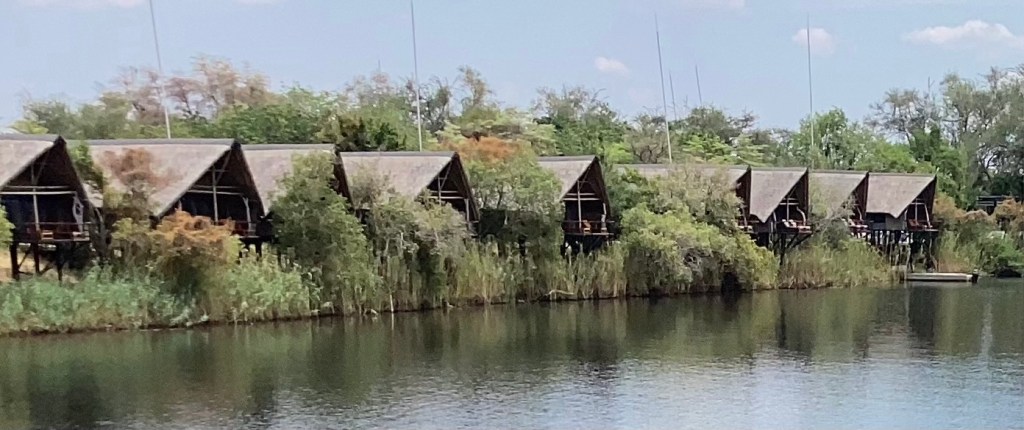
…and housing for the Zambezi Queen boat staff and nearby government workers.
The Queen is a lovely boat and is on the Chobe River but hardly cruises…usually back and forth for short distances but most often anchored in the middle of the River. Turning to head back the other direction involves maneuvering back and forth many times in this narrow river.
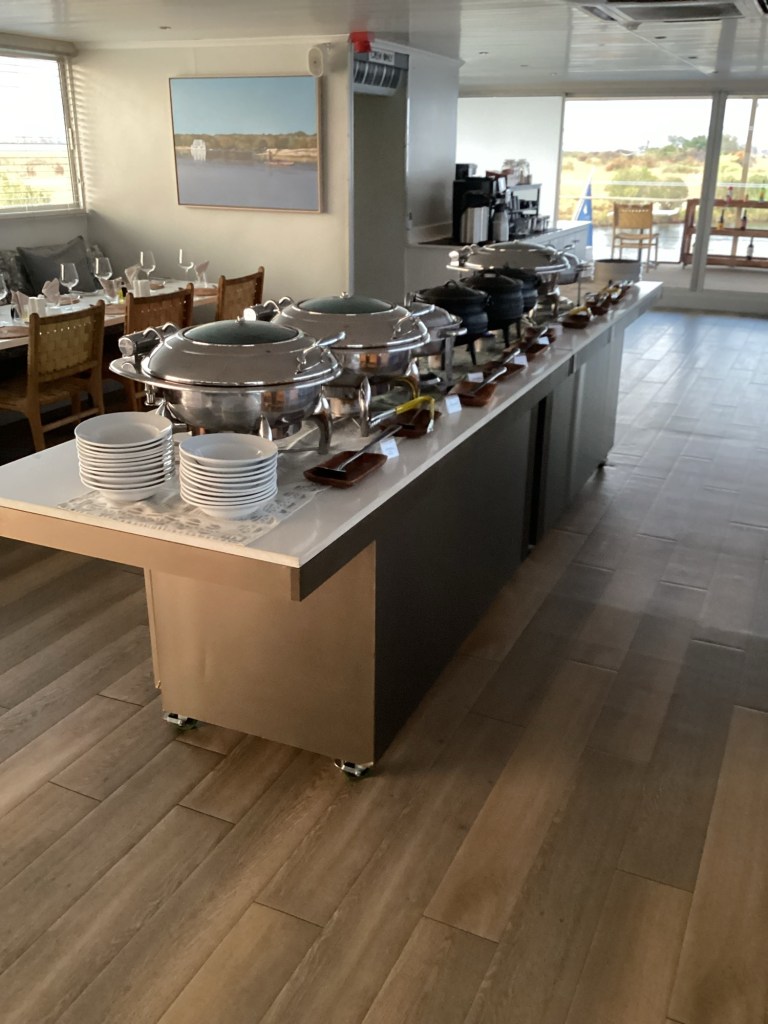
Tonight is an African-themed dinner. The buffet dinner was wonderful as usual…
After dinner the Namibian staff entertained us with traditional dancing and drumming. Barb joined right in dancing while wearing a long tasseled belt, each tassel ending with bottle caps to create the rhythm as she danced. The staff ended the evening by singing the Namibian national anthem.
Tomorrow we are out of our rooms by 9:30 am and head for Victoria Falls
Note to self: Carolans instead of Bailey’s
Barb: I stayed on the boat this morning and rested. Yesterday was thrilling with all the animals including lions (6 females & 2 males) about 10 ft from us. The heat was almost unbearable. So today I’m listening to my body and resting.
This is our last night on the boat. Tomorrow we will pass through Namibia where we get our passports stamped then onto Botswana and Zimbabwe where we will board the Rovos train for 4 days as we go through the savannah. Then overnight in Johannesburg before flying home.
One of the reasons we signed on for this trip was go on a real safari to see the wild animals of Africa in their natural habitat…for better or for worse.
Our destination was the Chobe National Park. Our method of transport was an open air Toyota 4 x 4 Land Cruiser.
The tender again took us to Namibian immigration center as we were leaving Namibia for Botswana where the park is located. The process reversed itself when we arrived back.
We had been advised to limit our intake of liquids because once we passed Botswana immigration there were no bathrooms until our lunch spot 4 hours away. Before then it was “bushy-bushy” if you needed to relieve yourself.
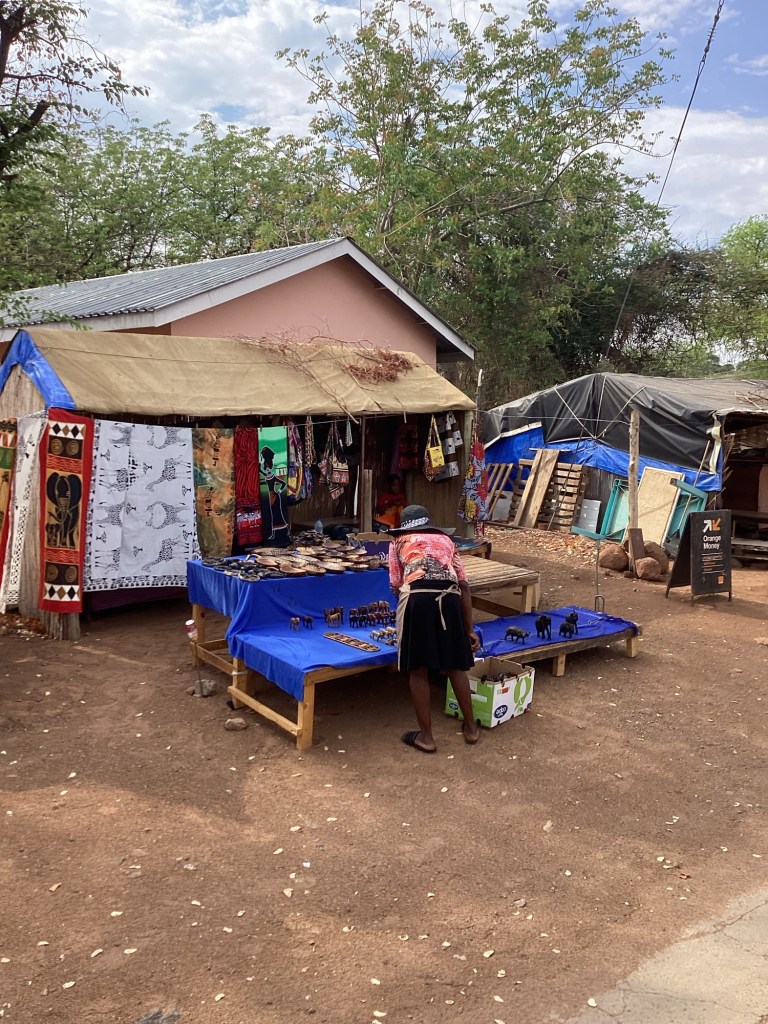
Five Land Cruisers took our group to the park. Along the way we passed several ladies setting up shop for the tourists headed to the park.
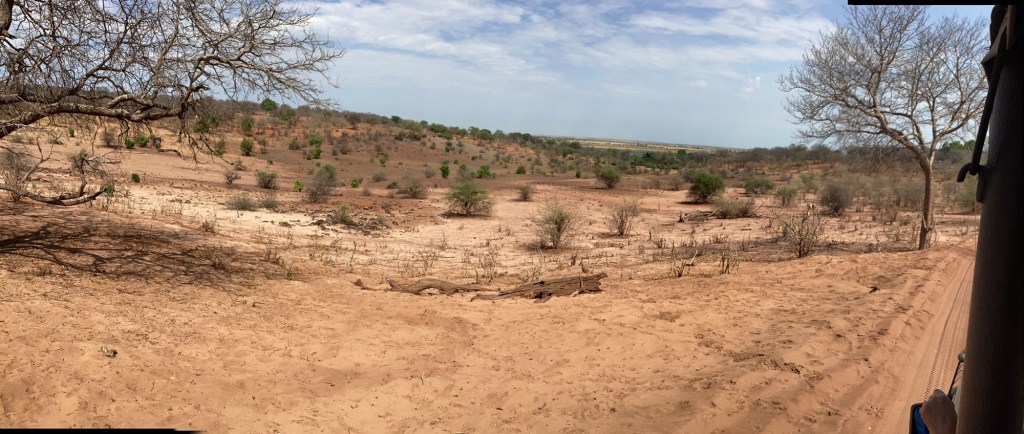
This is still the dry season so the landscape is fairly bleak.
The park roads were bumpy as the dickens. We were tossed around quite a bit and, when added to the 101 degree temperature and dust flying everywhere, it was a real challenge.
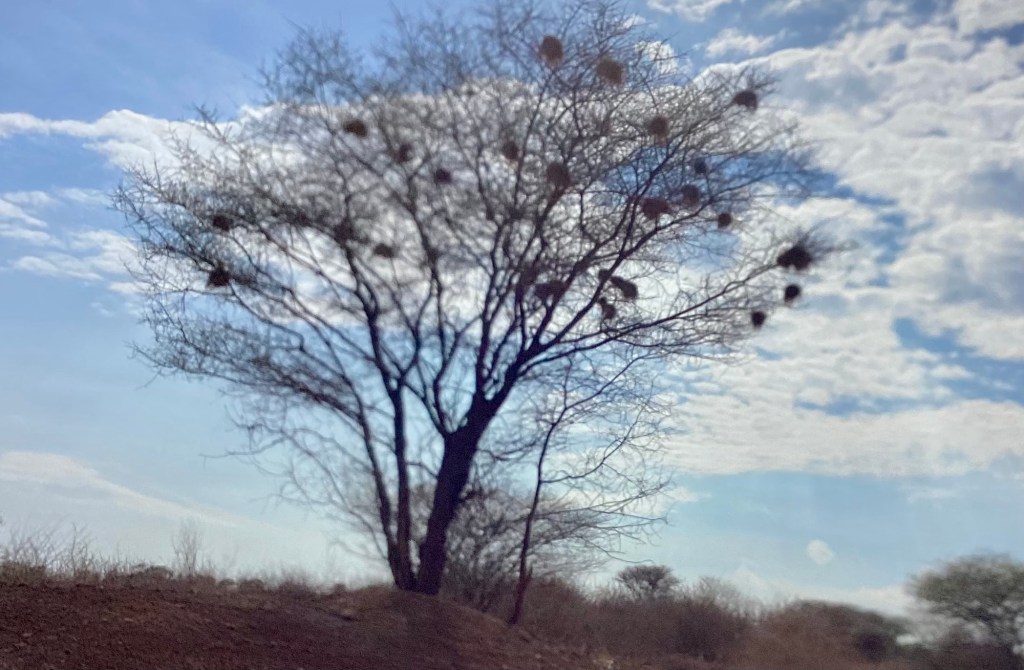
But we came to see the animals and were not disappointed. First were the nests of weaver birds that clung to the trees.
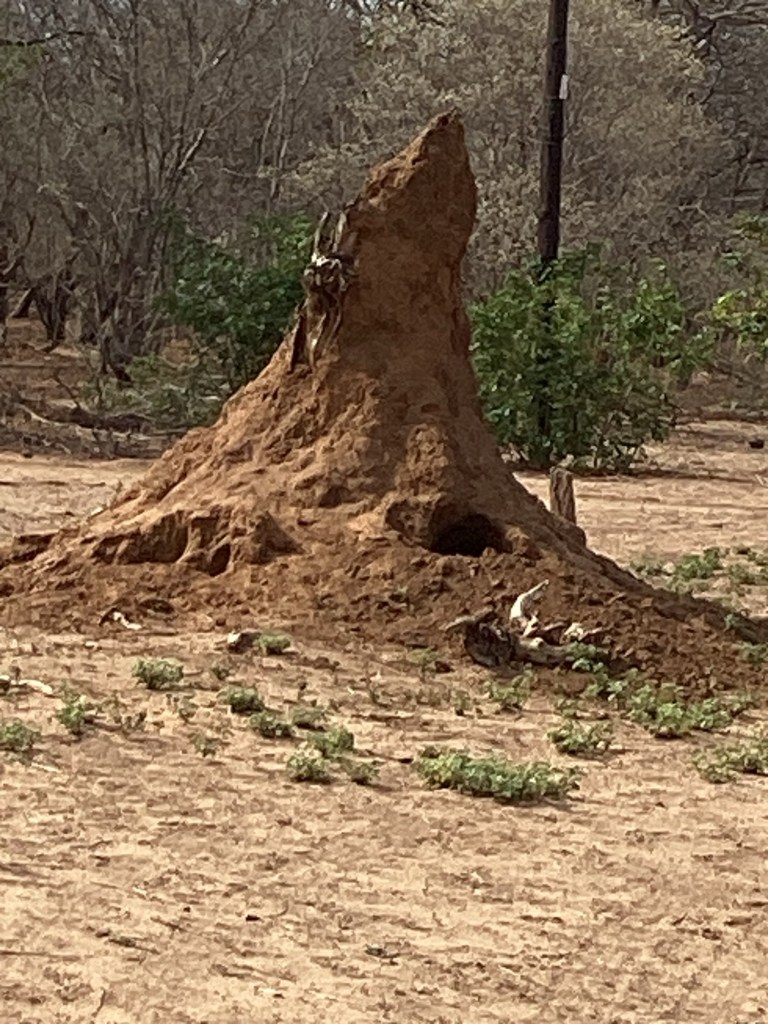
Then one of many termite hills.
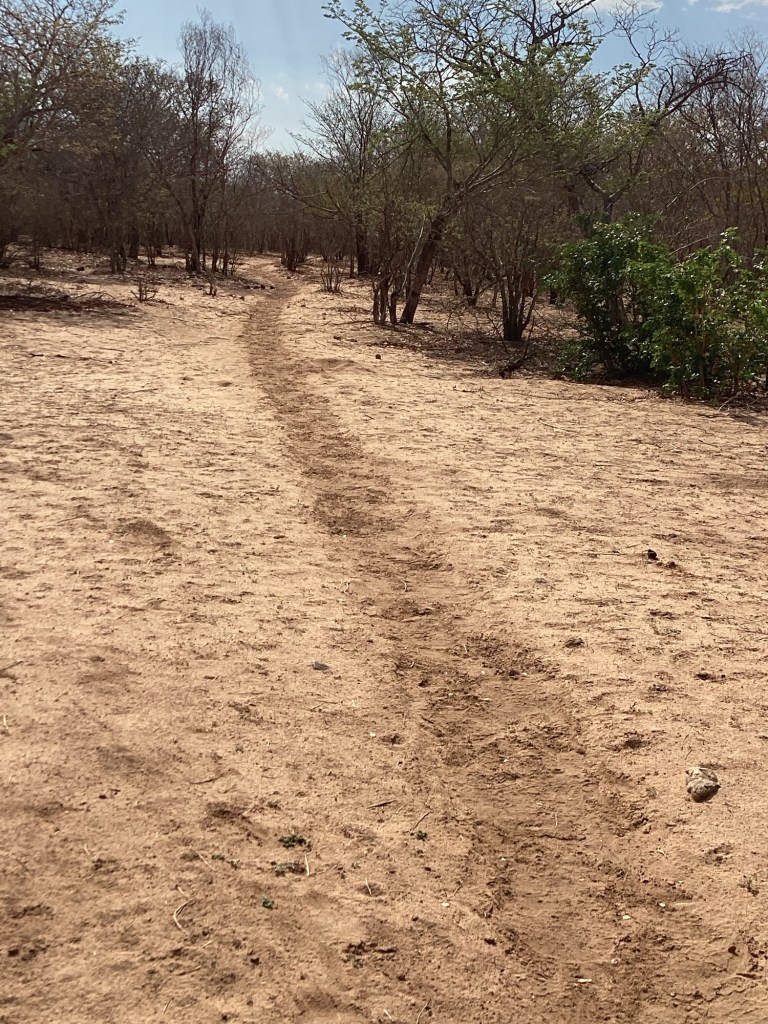
This is part of the so-called “elephant highway” that takes the large herds to and from the Chobe River. Not only is it wide, long and heavily traveled the are huge piles of elephant dung all along the way like road signs.
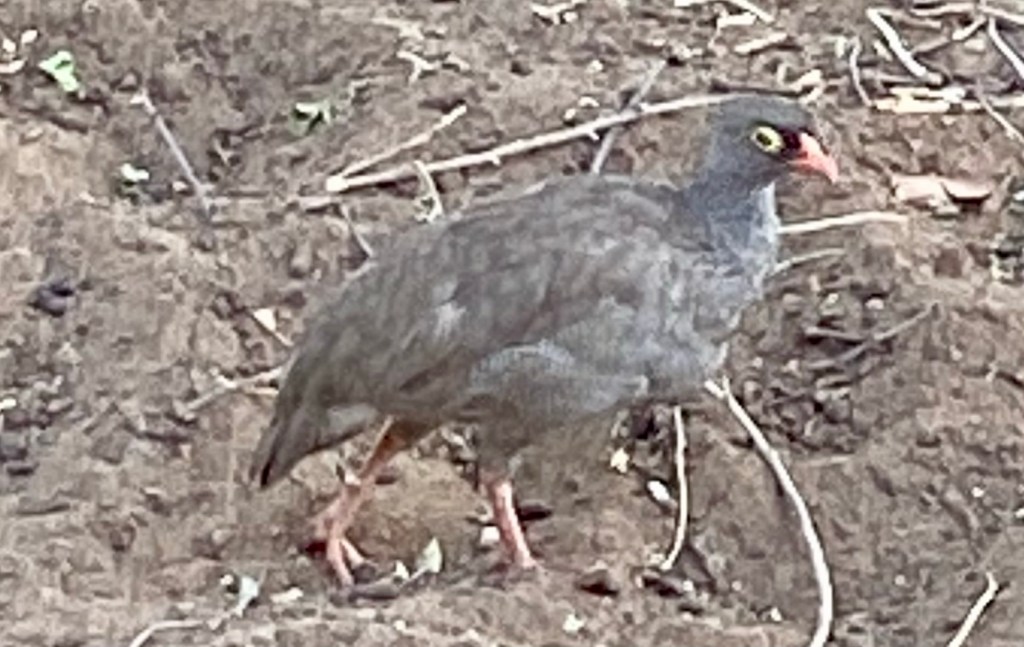
Not sure of this bird’s name but they were everywhere.
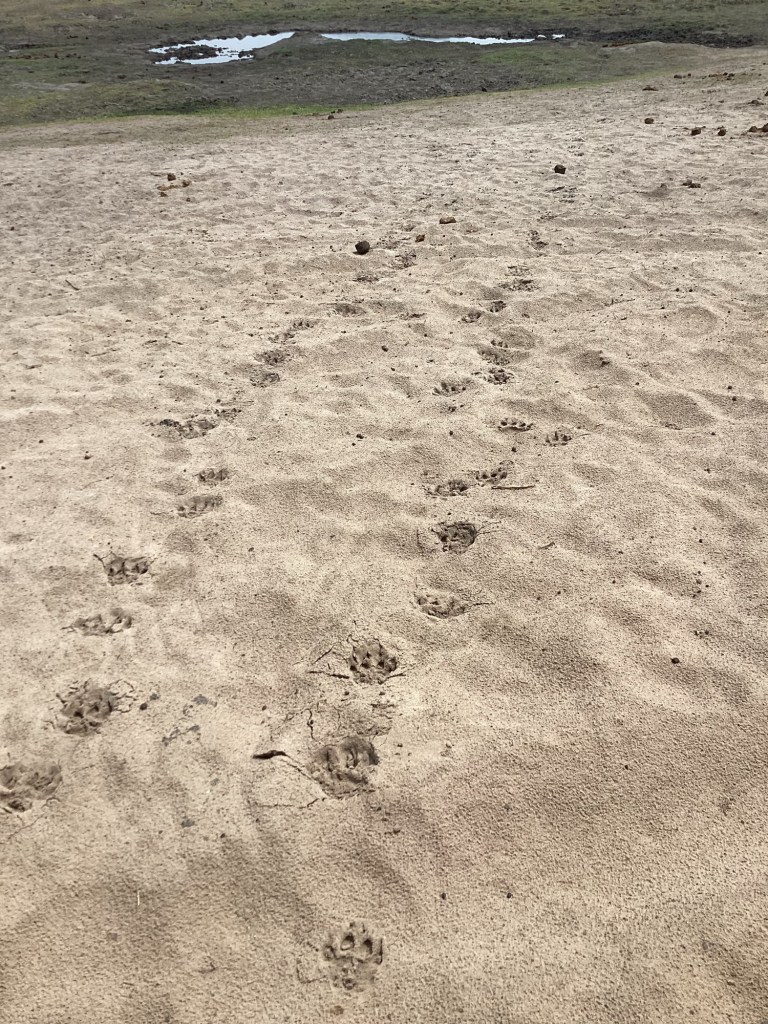
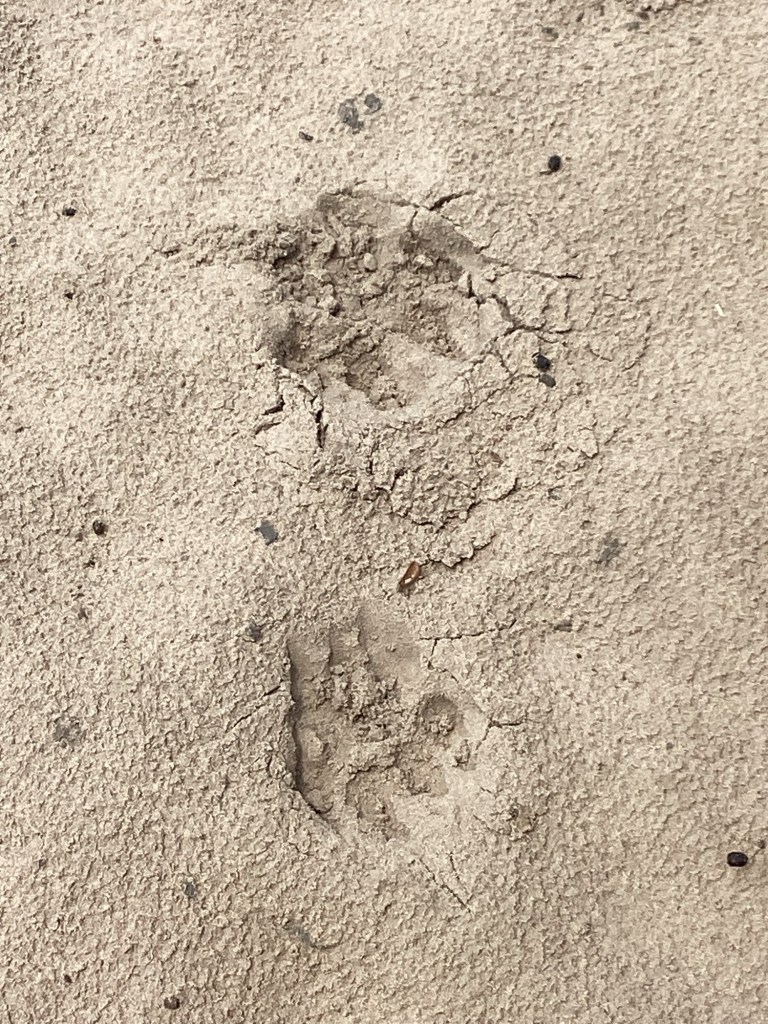
It started getting interesting when our guide spotted lion tracks.
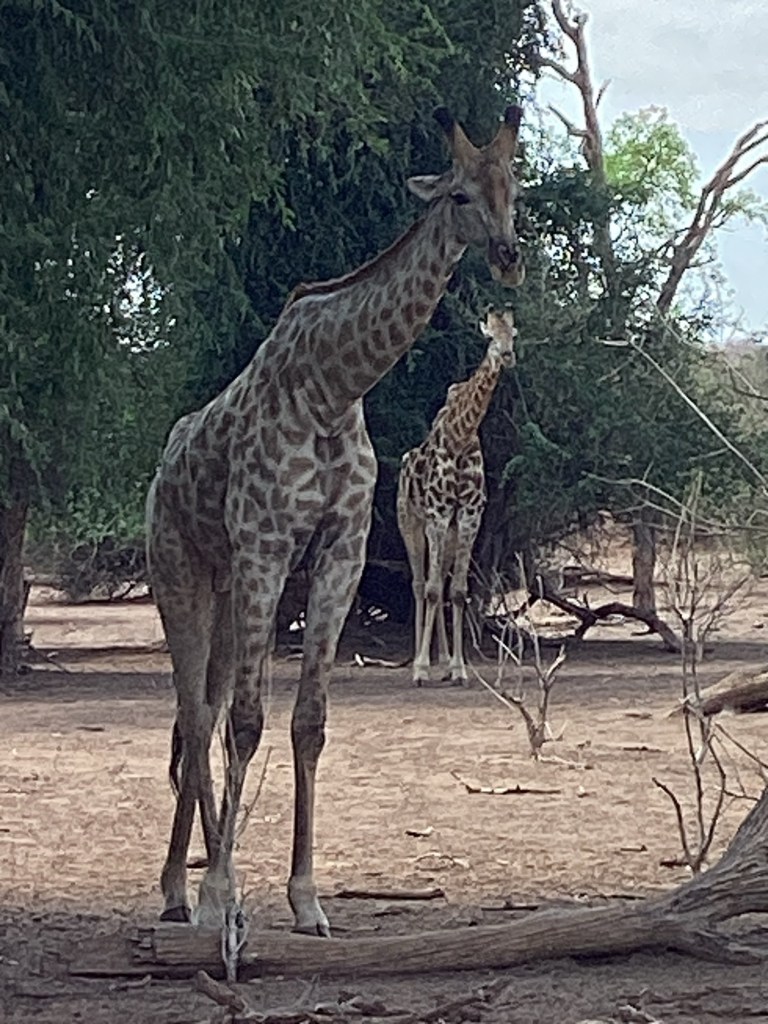
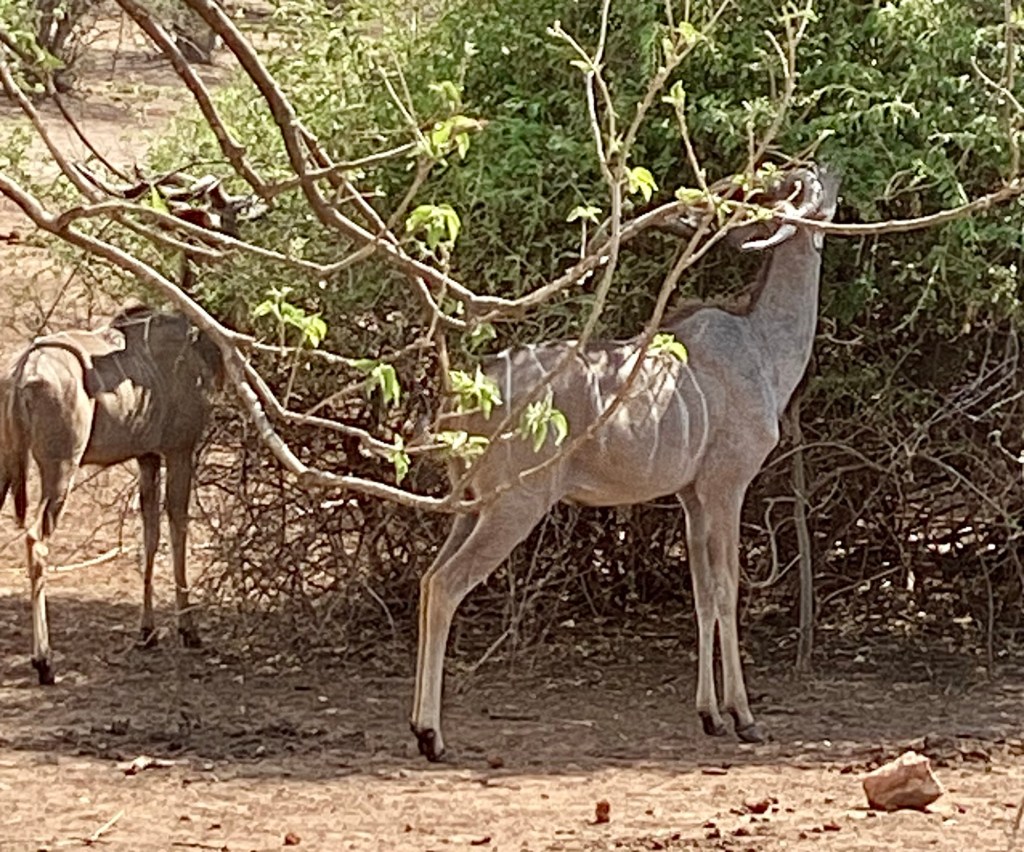
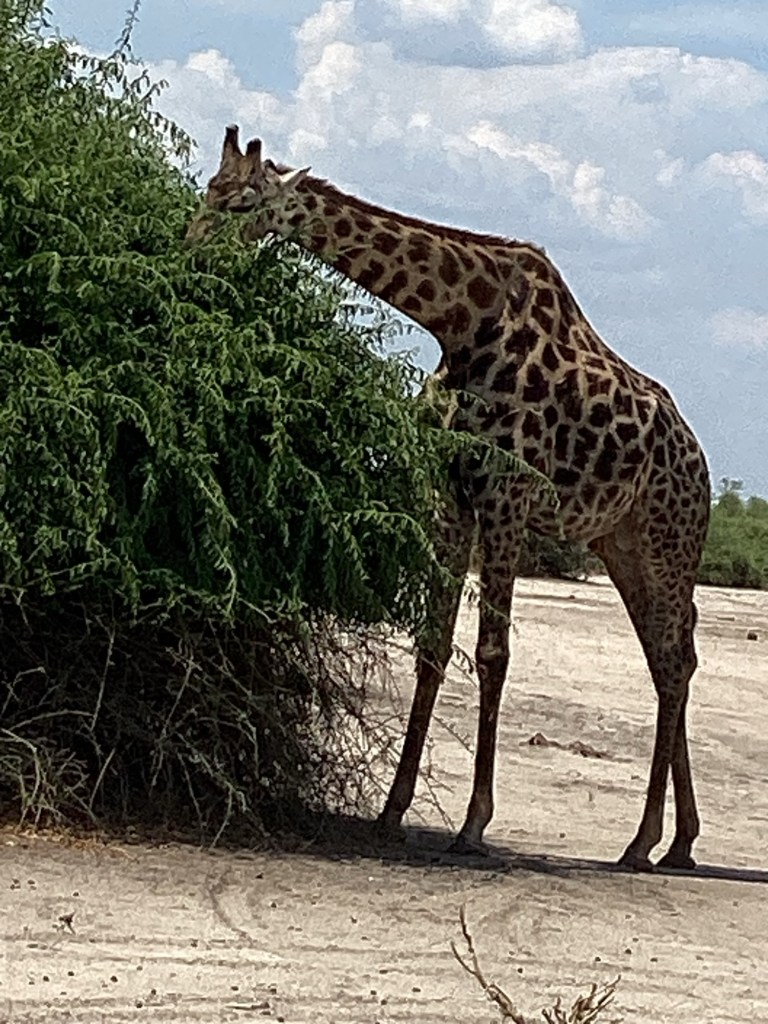
We saw our first animals when two giraffes rounded the corner.
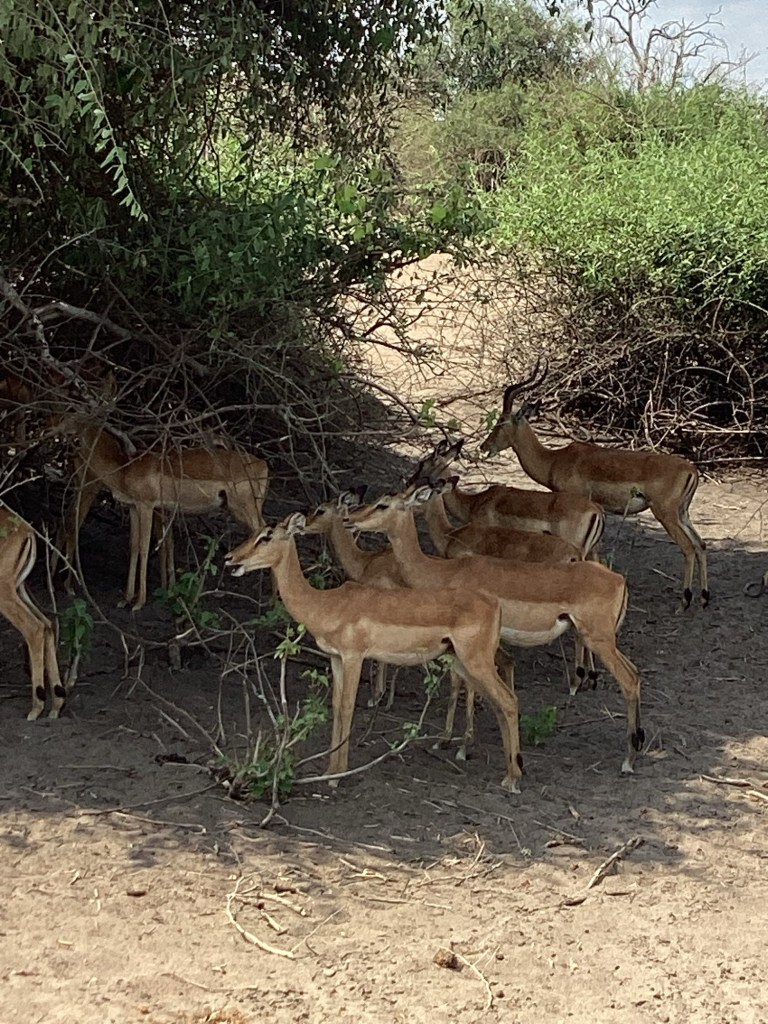
Impalas were cooling off the shade.
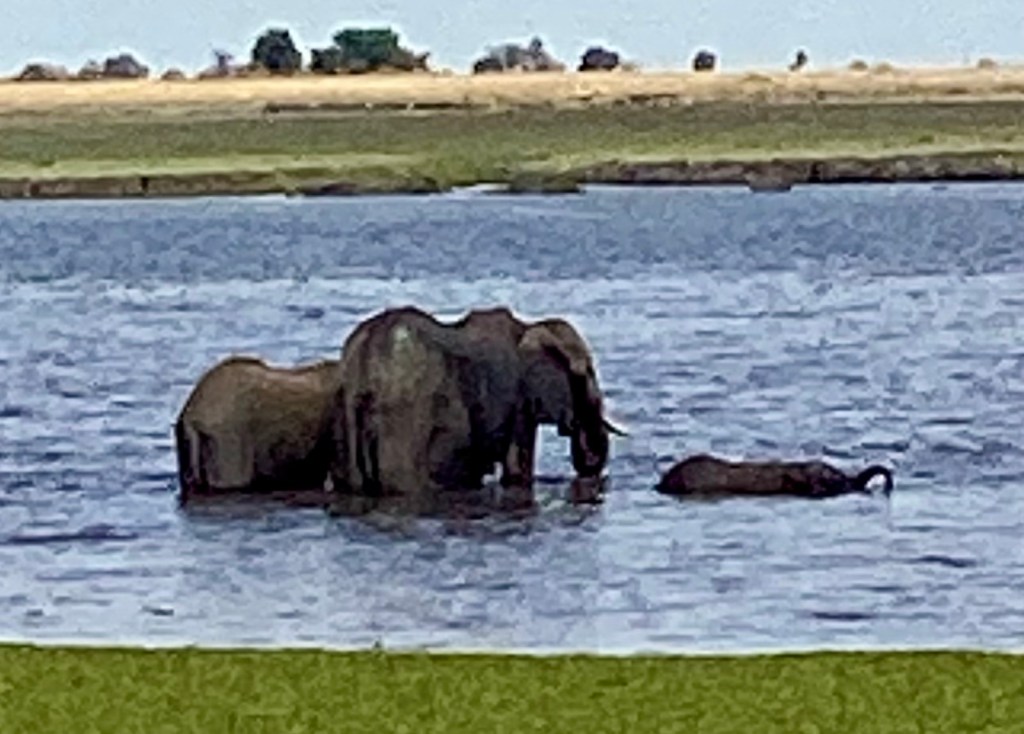
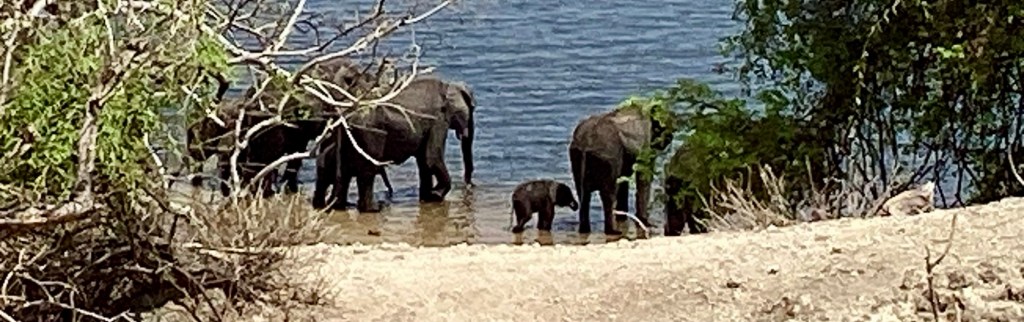
A family of elephants took the baby for a dip in the river.
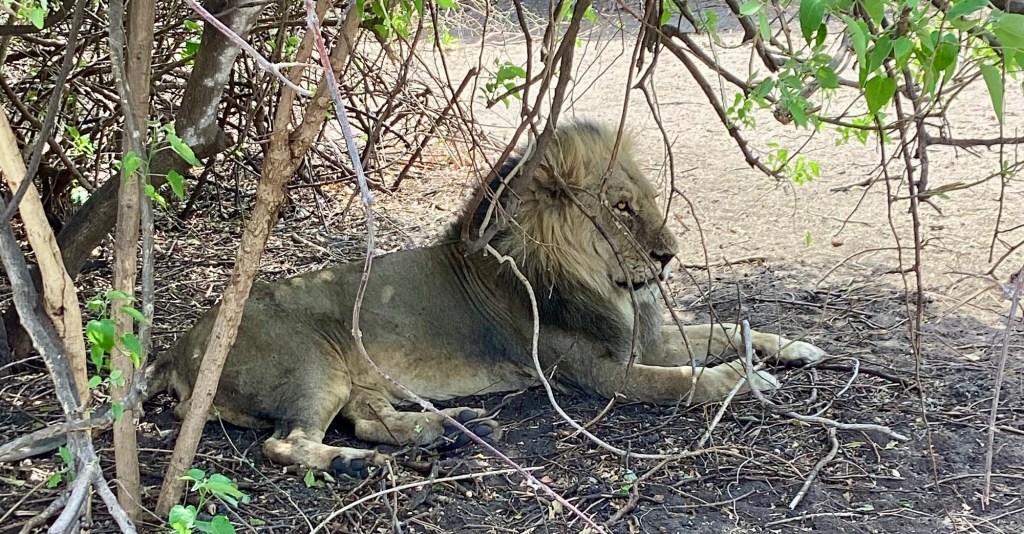
Just inland two bachelor lions without a pride. They were sleeping just waiting for the chance to challenge a dominant male for his pride.
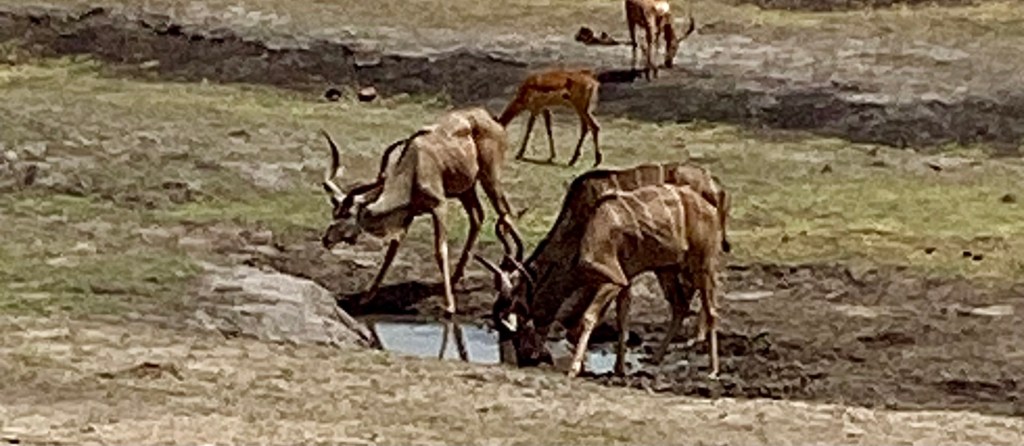
A group of impalas were stopping for a drink.
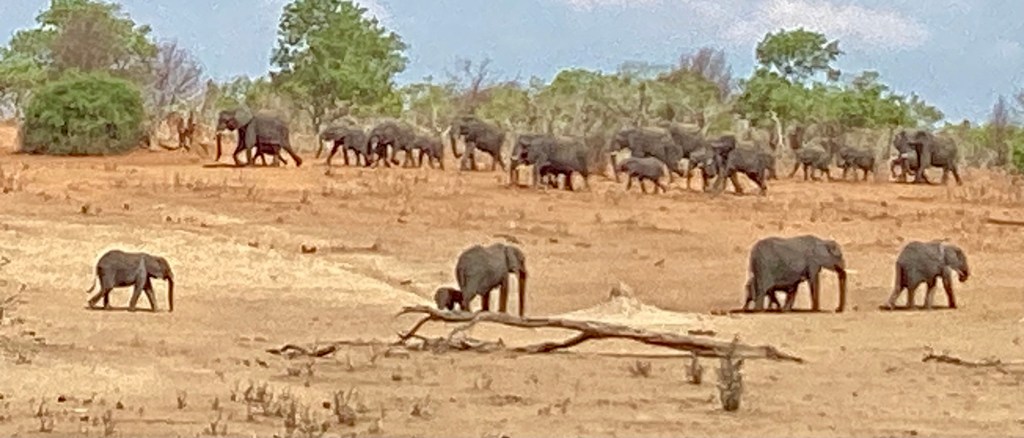
A large herd of elephants stopped by the river to drink and cool off.
An extended family of elephants were cooling in the shade,
The arid part of the park looked like this:
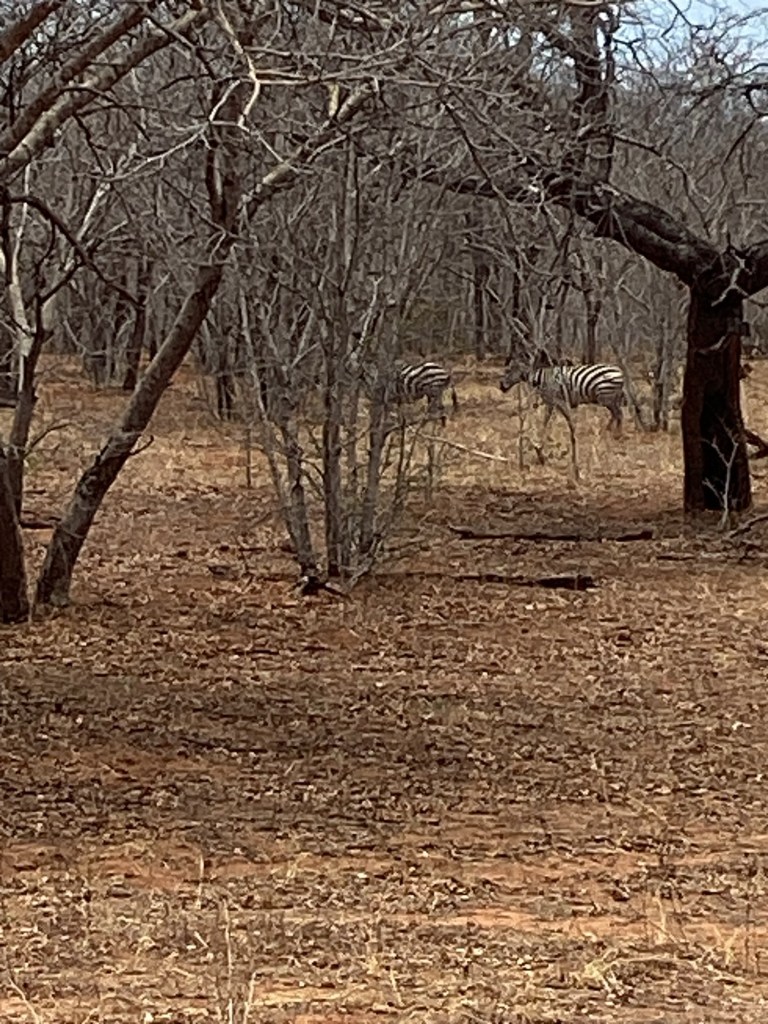
Three Zebra negotiated the wooded areas further inland…
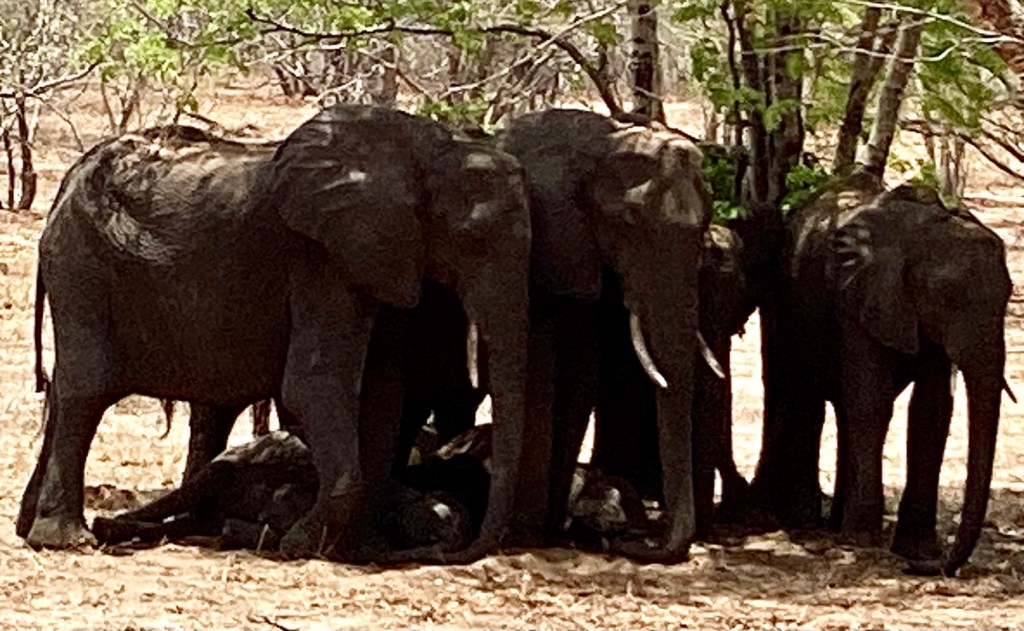
…which led to a usual site: a small herd of elephants had formed a protective circle around the young ones as they slept.
We couldn’t figure out why until a short drive later we had the answer,
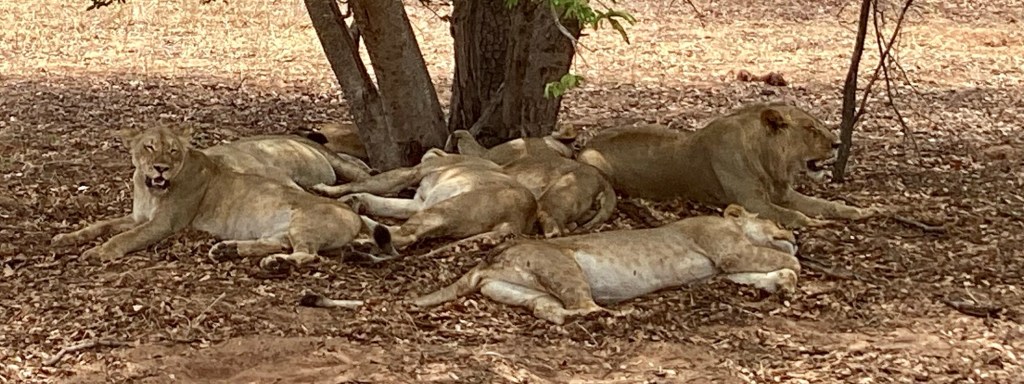
An 8-member pride of lions were resting having just made two kills:
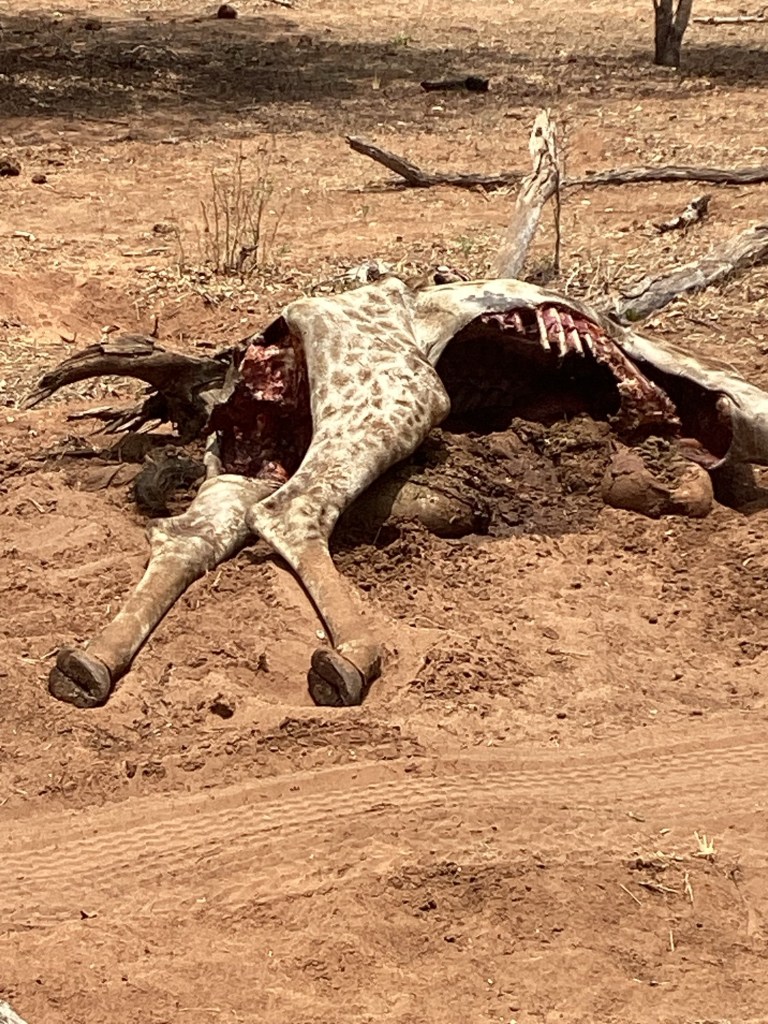
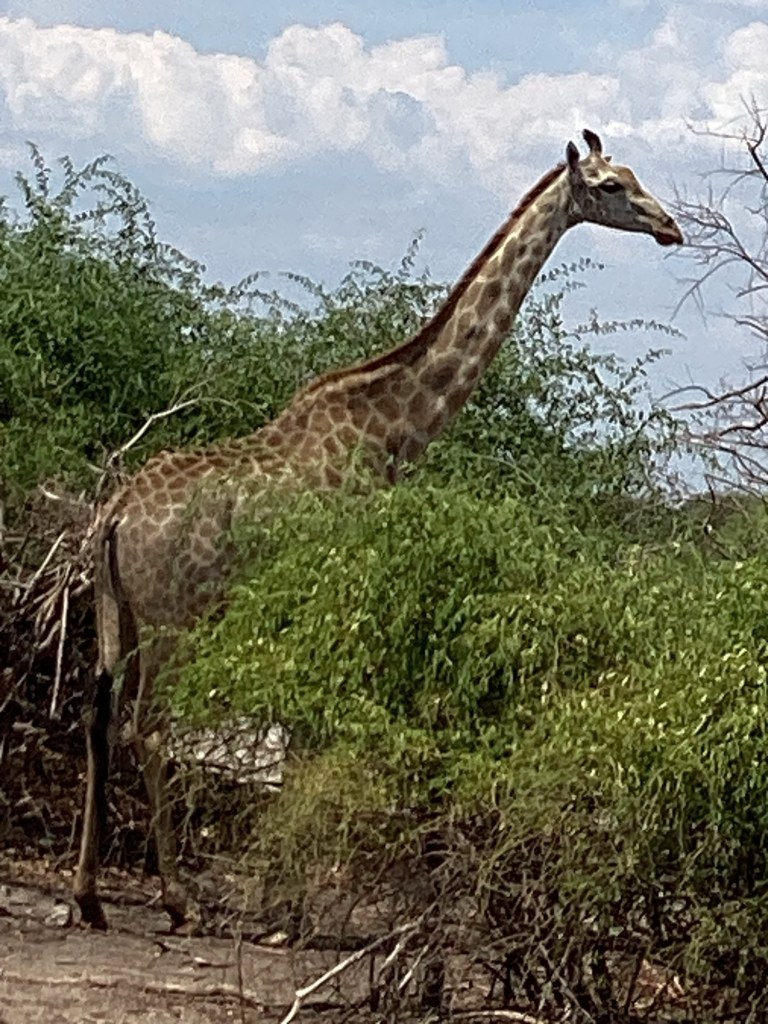
A giraffe…
Another side and not for the faint of heart…but nature is nature..
and qa baby elephant.
Our guide told us it takes an entire pride of lions to take down an adult giraffe because of the strength of the giraffe’s legs and hooves.
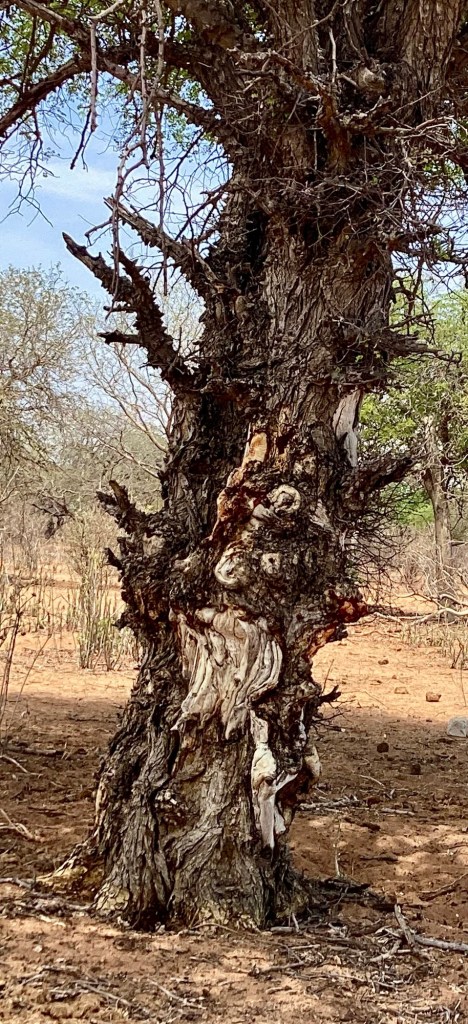
As we headed to meet the others for lunch we passed a knot hole tree…
…and reminders of an elephant and Cape Buffalo.
When we arrived at the lunch picnic spot we got the bad news the Park bathrooms had no water and were closed. So most everyone utilized the “bushy-bushy” method: find the nearest bush with a bit of privacy and hope for the best.
The picnic lunch spot had a wash up area with ice cold water, soapy water and cool washcloths.
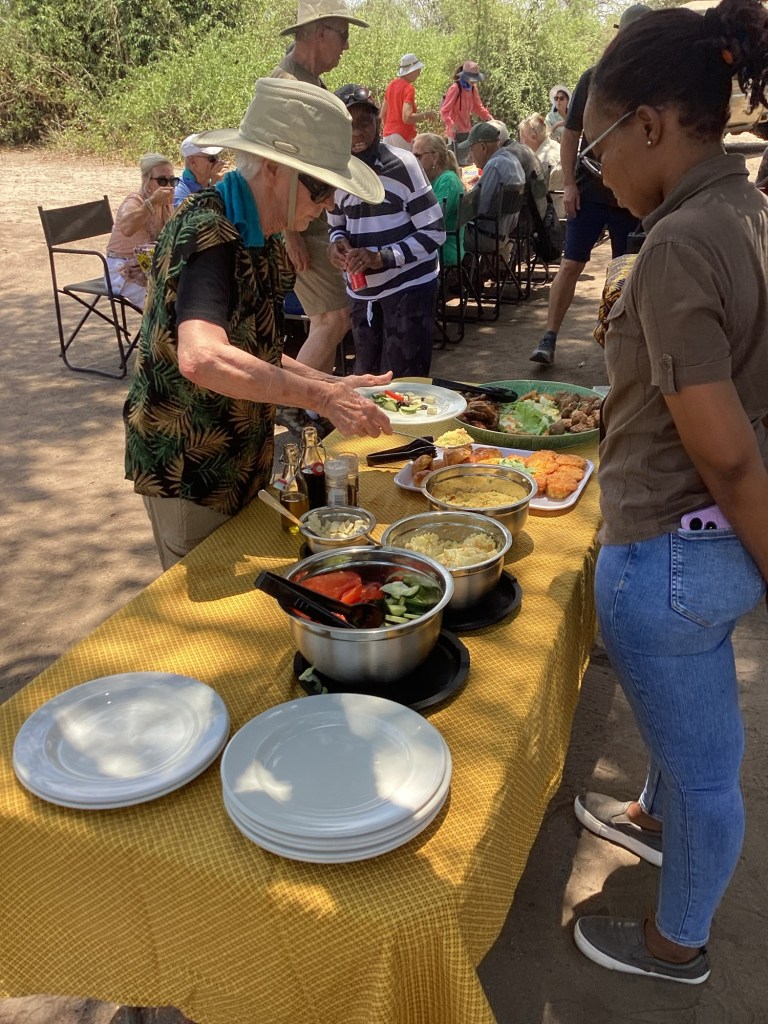
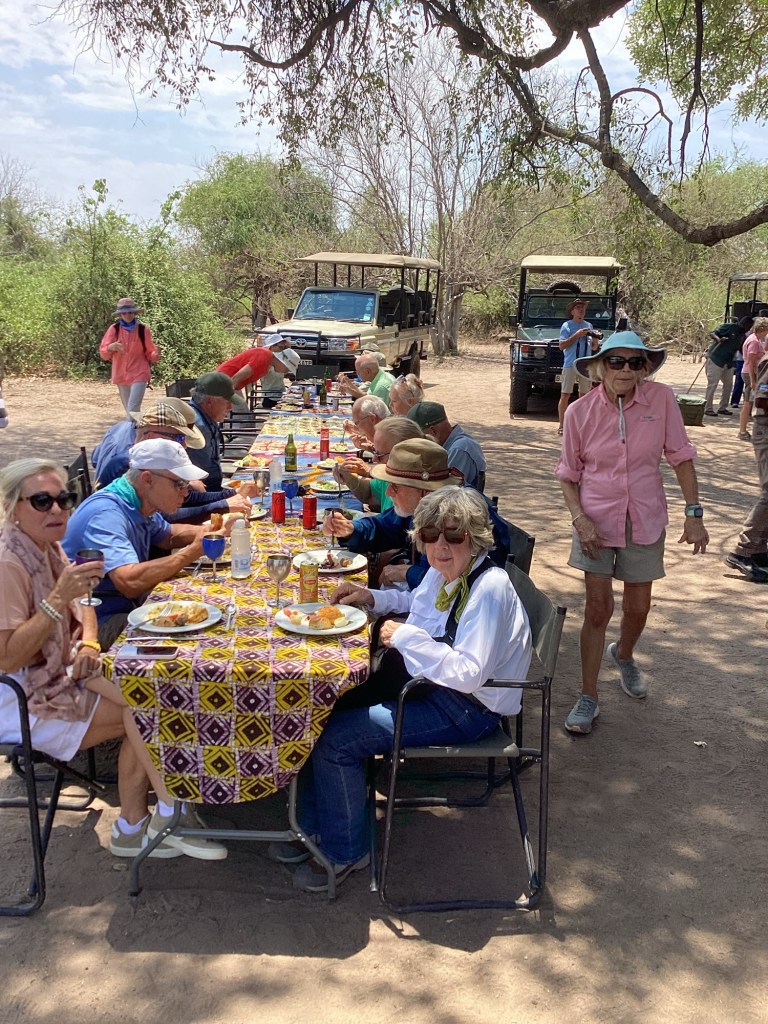
Lunch was cold potato salad, samosas, salads, finished with chocolate cake and apple crumble pie…
…as we sat at long tables…
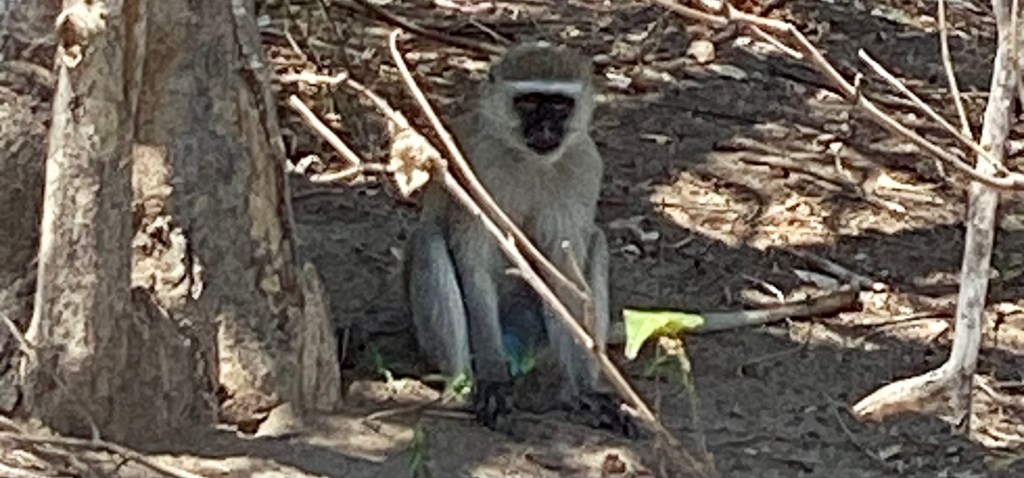
…as several guards tried to keep a monkey from jumping in to steal our lunch..
Shortly the sound of crashing dishes told us the monkey had sneakily joined our picnic and made his getaway.
The game drive continued with impalas
…giraffes…
..before watching two herds of elephants passing each other, one leaving the river, the other headed to the river..
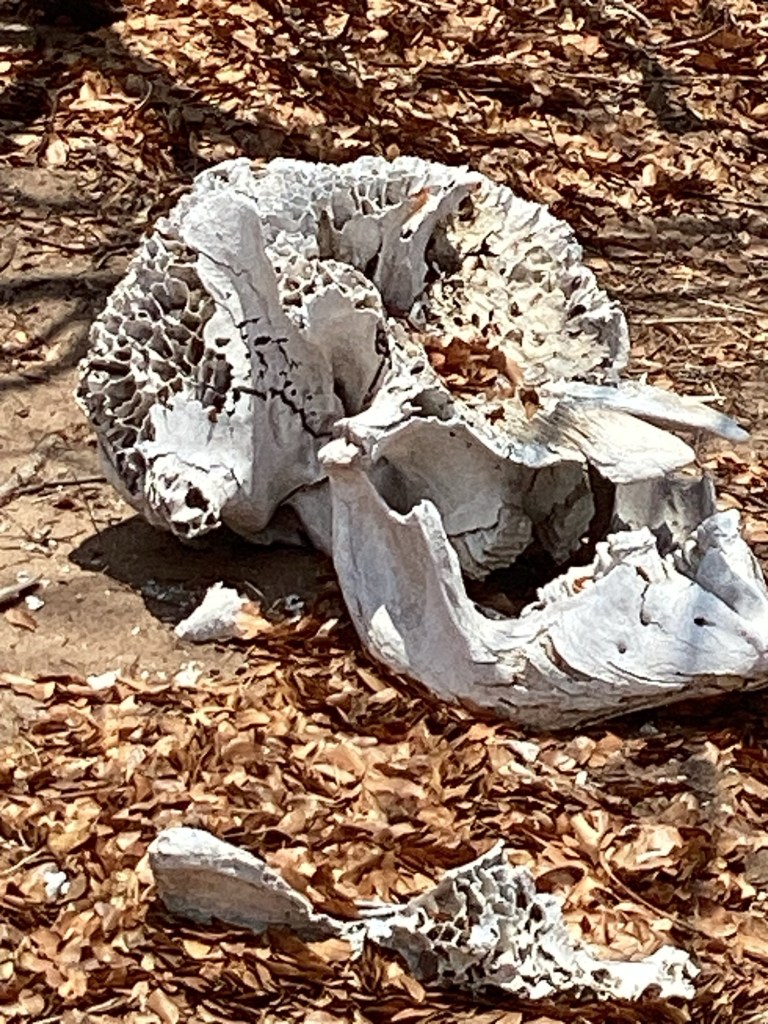
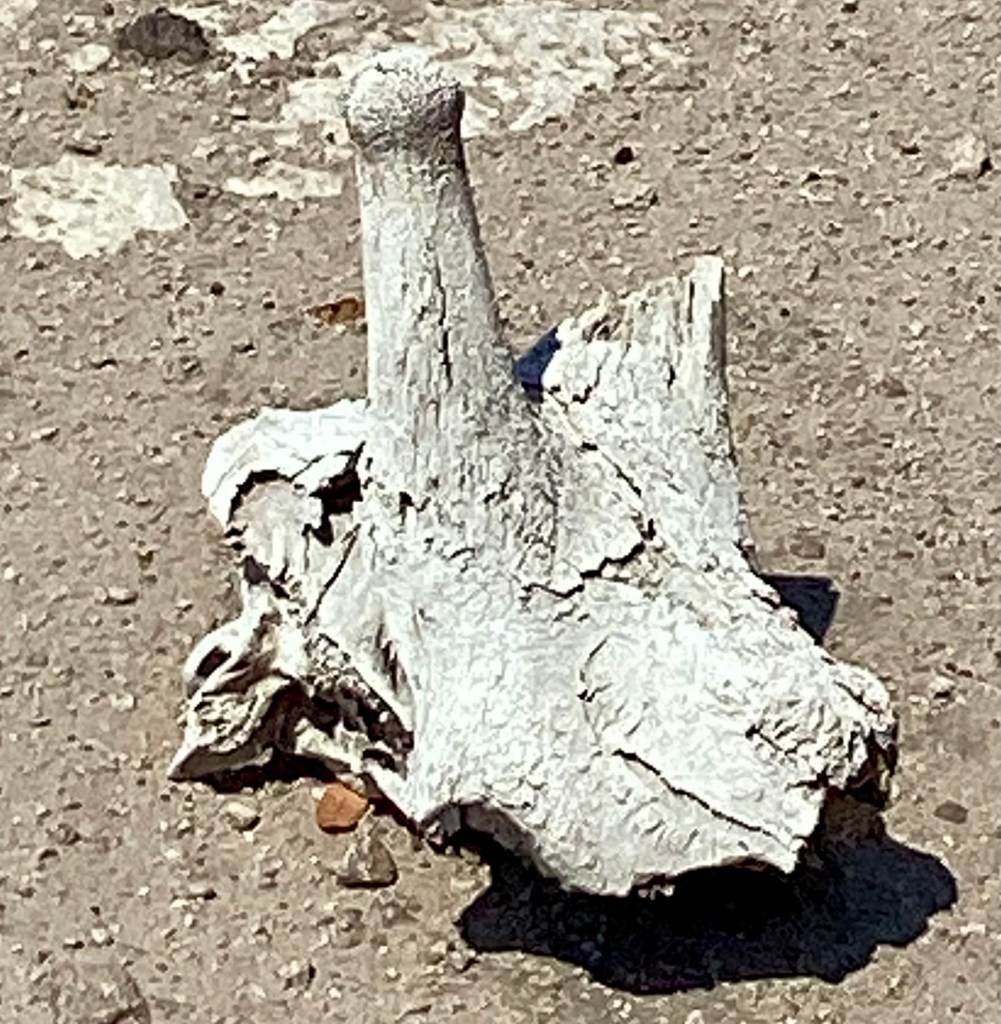
We spotted an animal skull as the guide asked what animal is was: we had learned a thing or two by that time so it was easy to recognize the skull of an giraffe by the rounded horn on top.
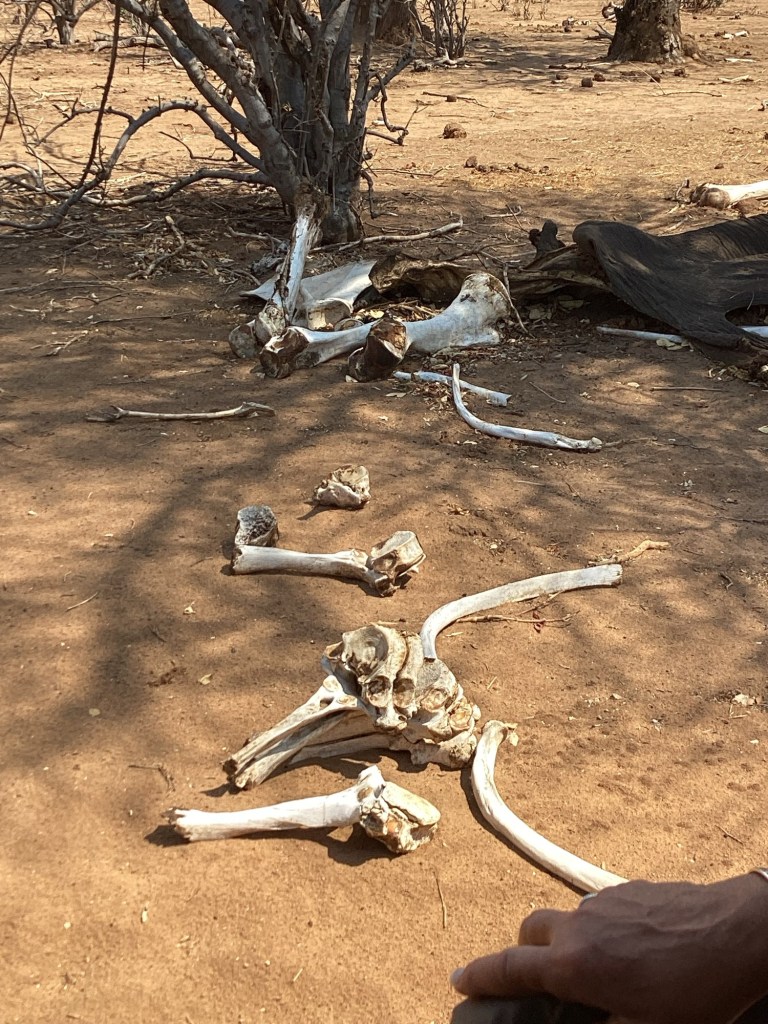
Final a nearly complete skeleton of an elephant
As we headed to the pickup point for the tenders to return us to the ship we kept passing other animals…
Lion tracks…
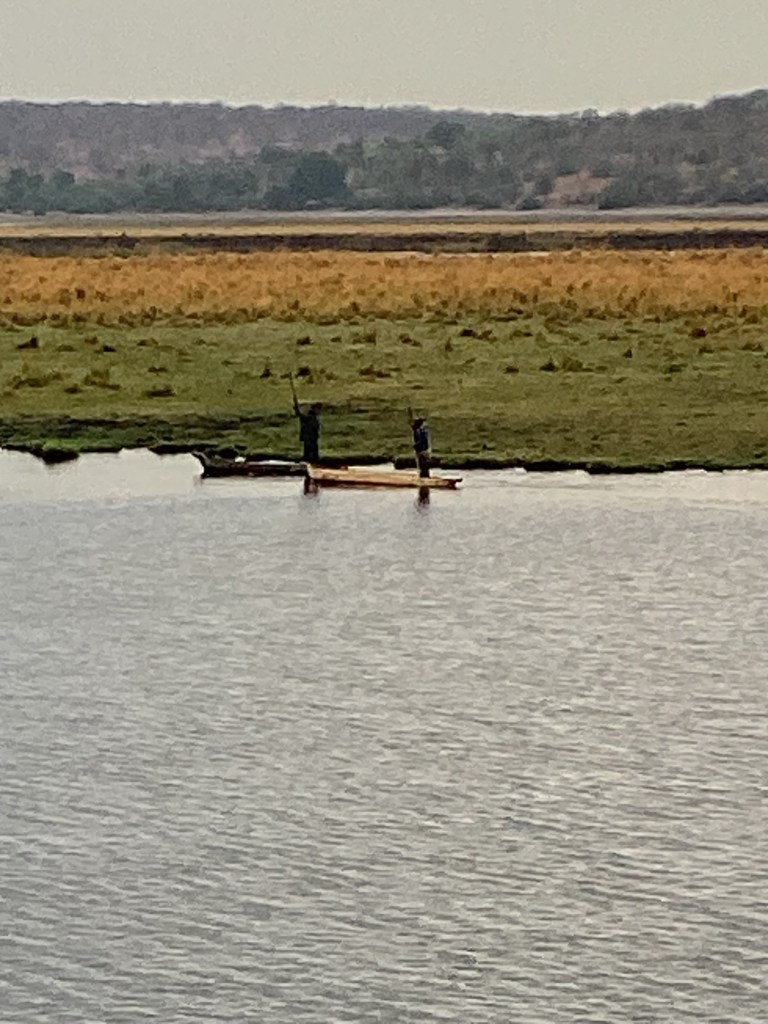
before arriving back in the ship to see two men poling a boat
Tomorrow- our last full day on the Zambezi Queen—we will visit a local village, talk with the chief and elders, visit their local market of handicrafts, then visit a school.
Barb’s two cents:
I came to Africa to see the wild animals. Today did not disappoint.
Lions, giraffes, elephants, wart hogs, zebras, impalas, gazelle, and more. Up close and personal. But the heat was overwhelming. 101 degrees and no a/c. It gets this hot in Oklahoma but we stay inside. Today I will stay on the boat …….
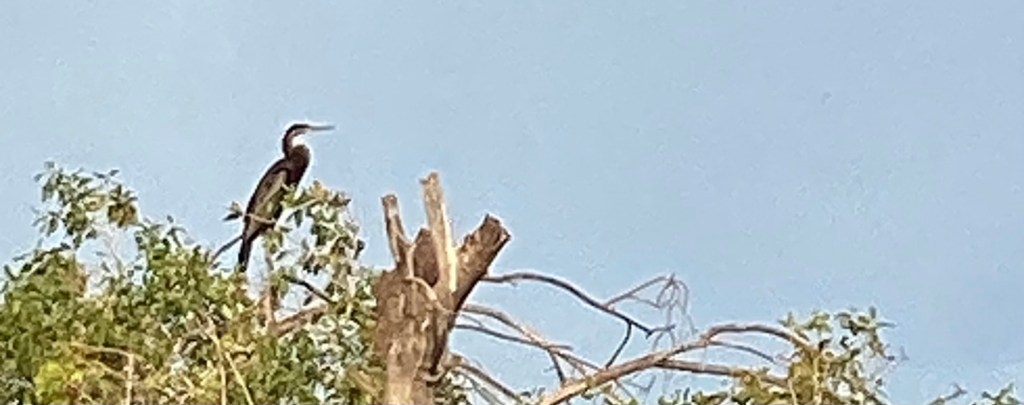
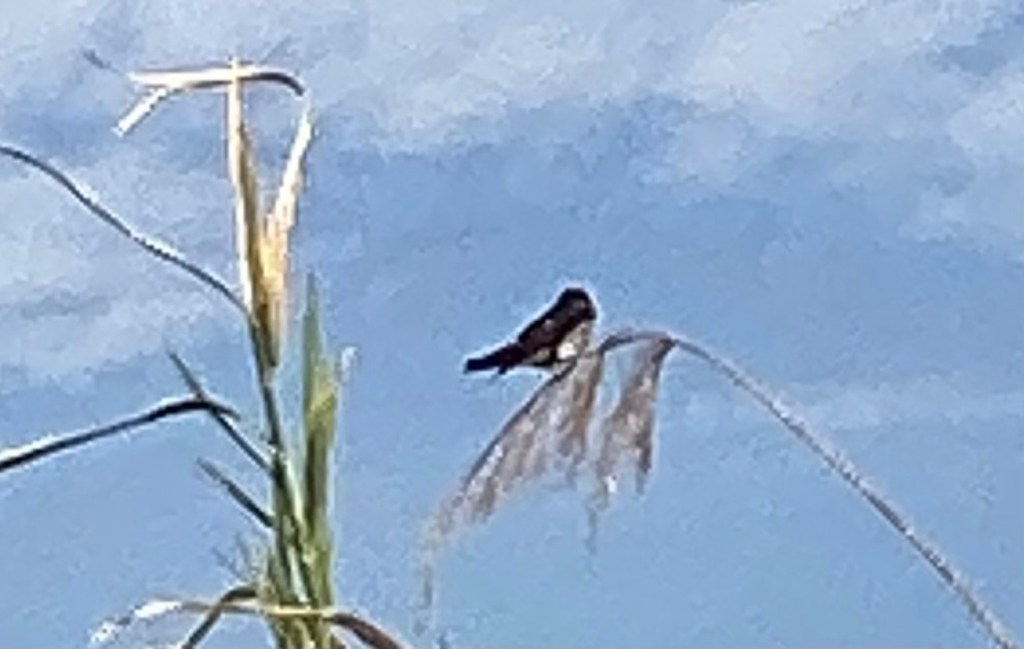
Before cruising several of hopped the 6:30 am tender boat to go bird watching.
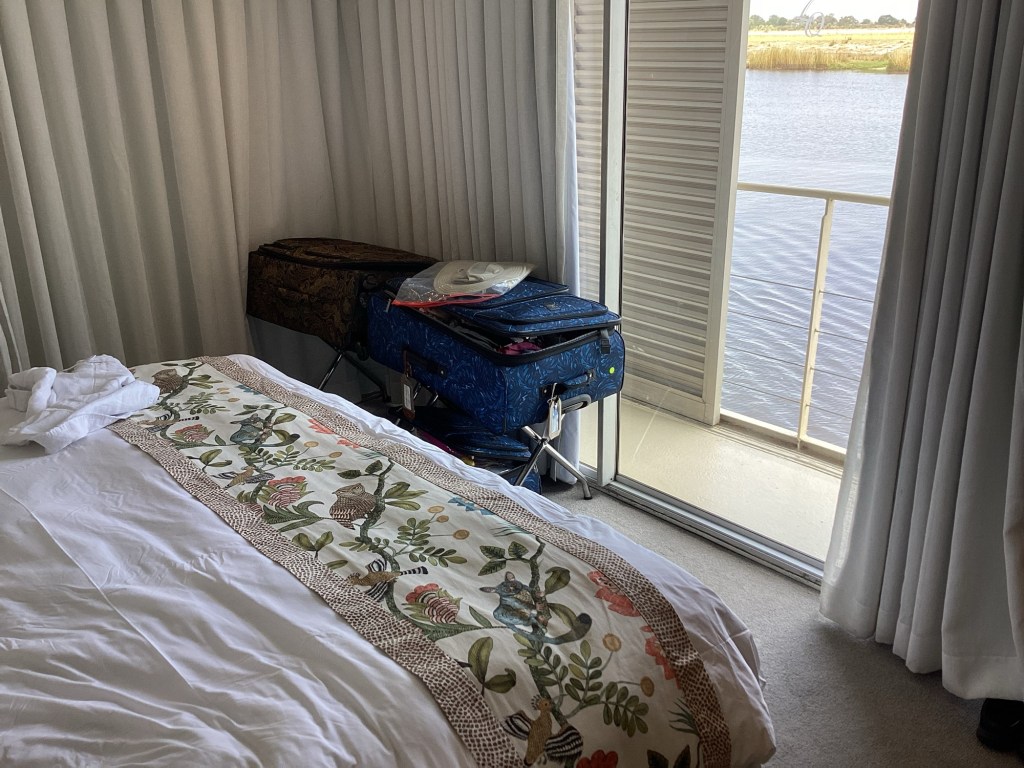
The Darter CormorantThere goes the crocThe Bee Eater (2nd smallest bird in Africa) Video of quick crocElephant family and swimming hippoWater reeds used to make sleeping matsPurple HeronThe Chobe RiverbankChobe Water VillasOur cozy cabin # 28
Another tender excursion at 9:00 am but we stayed aboard to rest for upcoming events: an afternoon tender excursion and an all day land safari on 4 x 4 Range Rovers tomorrow.
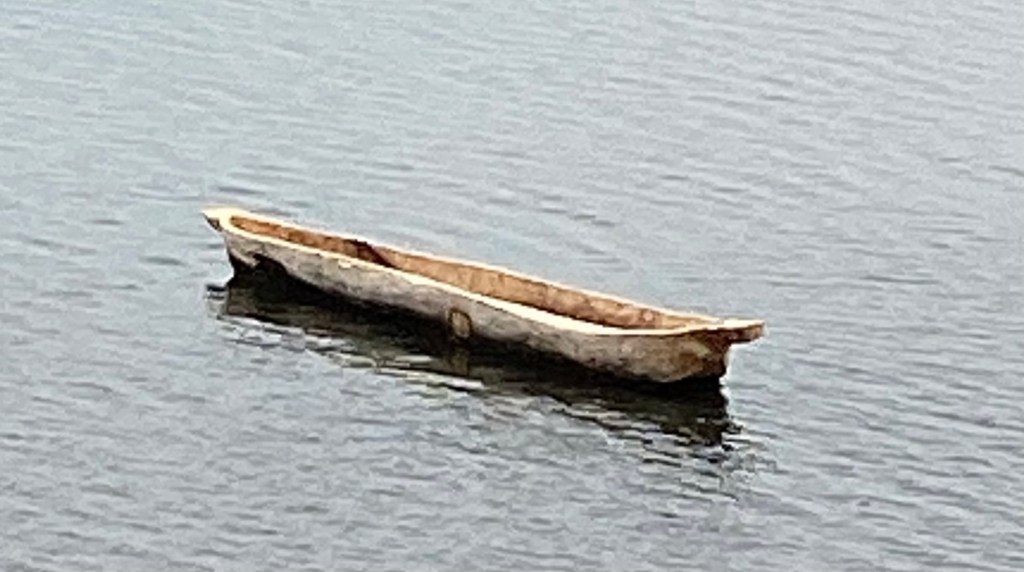
An unmoored boat awaits its owner.
The folks who went on the 9:00 am excursion raved about seeing so many animals from the river I jumped on the 3:00 pm trip.
The male of one pod of hippos seems bored with life in the river:
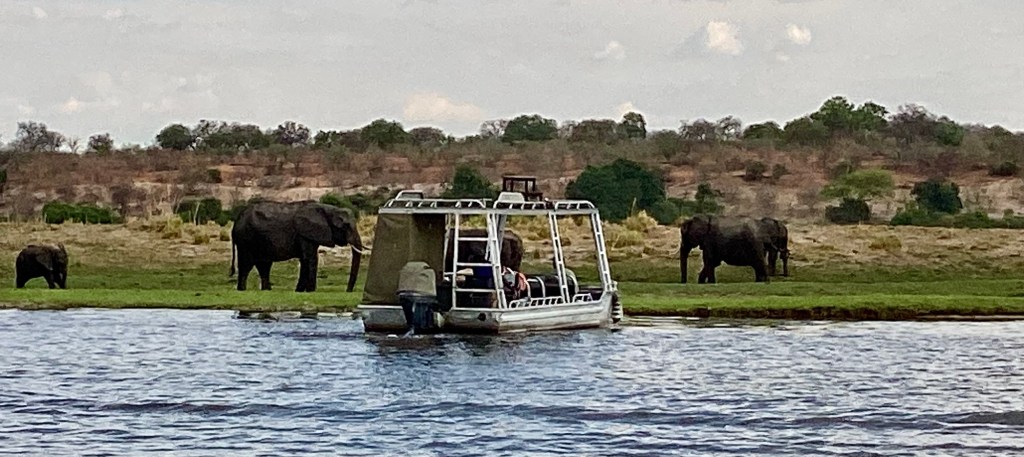
We encountered several families of elephants…
Amazing how close we could approach them:
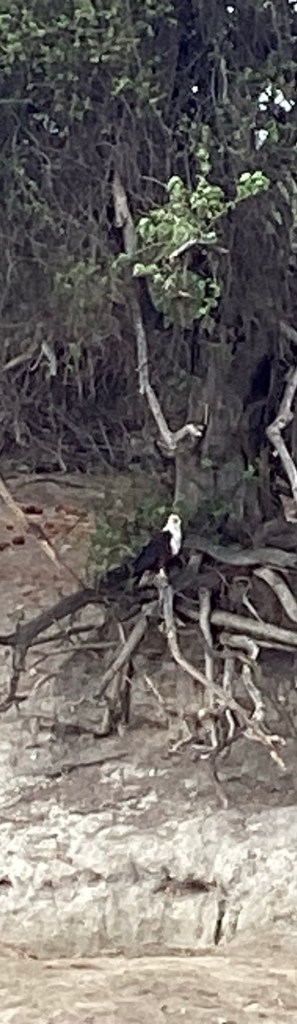
We encountered several fish eagles..
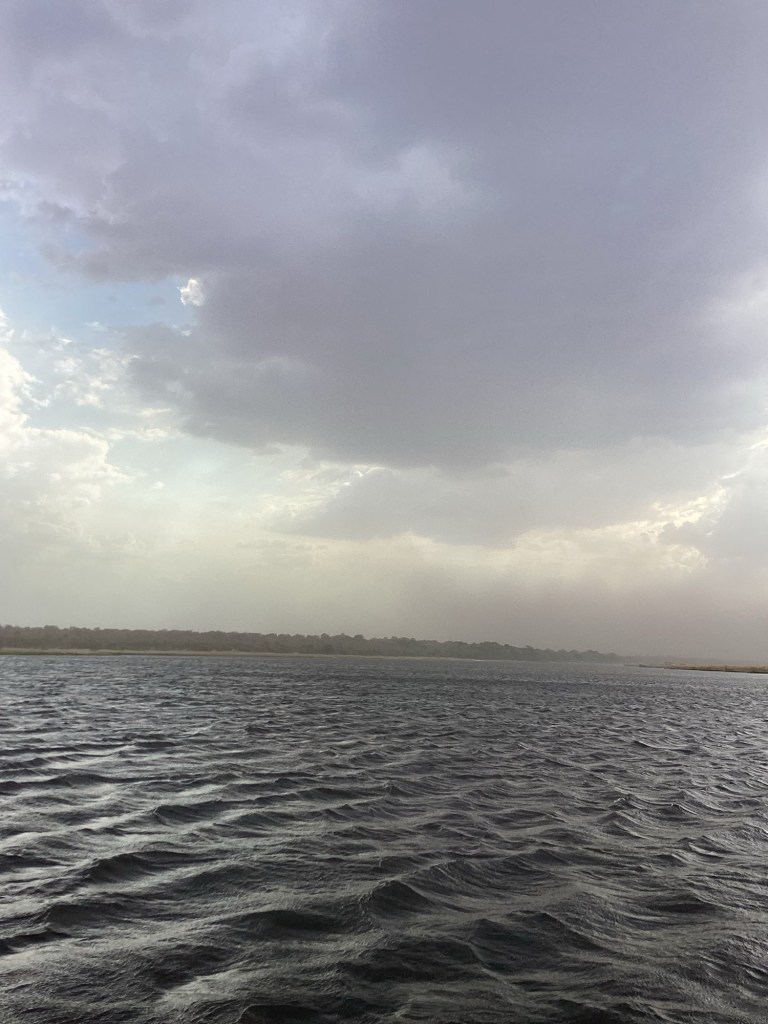
Soon the wind picked up and our guide said the animals can sense a storm approaching so they move inland, away from the river (and us).
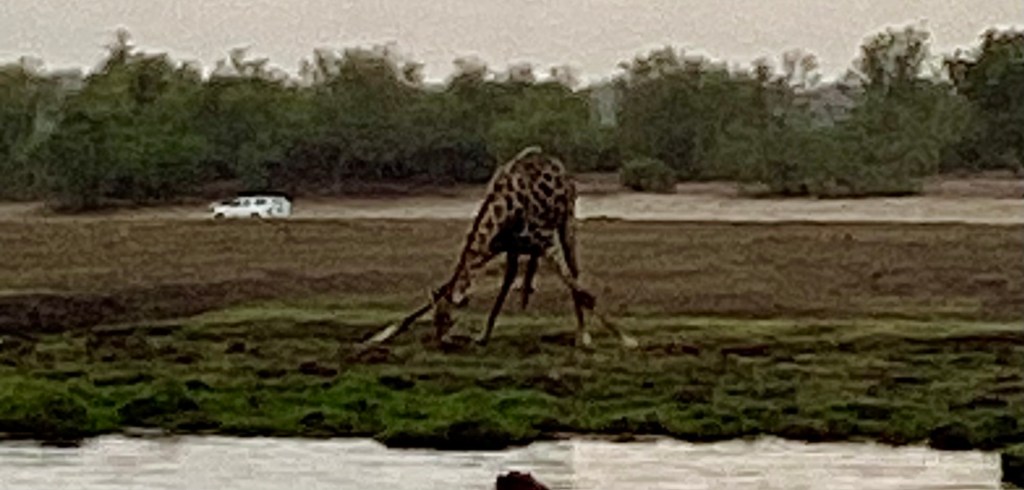
We were given lined waterproof ponchos to wear until the rain passed, and the animals returned to the river. Watching a giraffe spray its legs to get low to drink water from the river..
We happened upon a pod of several dozen hippos huddled together
Buses, planes, more buses, and tenders..a day of local travel.
Today we travel to the river boat Zambezi Queen, currently awaiting us the middle of the Chobe River, the border between Namibia and Botswana to the north of South Africa.
“Bags outside your room by 6:15 AM”, was our last admonition . We set the alarm for 5:30, but, little realizing the power of anxiety, we were up at 3:30 am.
We were fully packed at 5:15 and so had time for a cup of coffee in the room and a biscotti.
Our bags are stuffed and I am sure over the Airlink Airlines weight limit (20 kilos-44 pounds-for checked bags and 7 kilograms-15 pounds-for carryons). Two things could happen at the airport: we will be accessed a fee for our excess weight or all bags for our group will be weighted together to see if we are inside the total limit.
Luckily bags were weighted as a group so no excess weight charges (until later- see below).
Breakfast at 6:30, on the bus by 7, on the plane by 9.
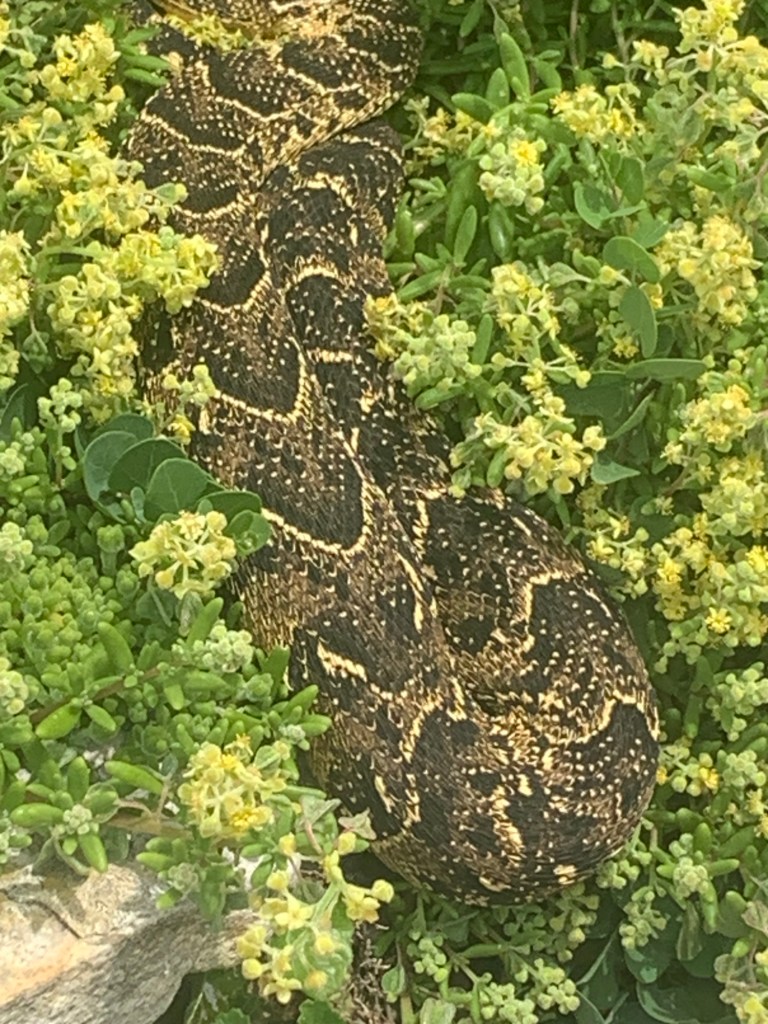
Before I forget I wanted to show a photo of a “pofadder” snake one of our group spotted in a walk the first day. They are very venomous but rather lazy, preferring to lie on a warm stone in middle of a walking path. Our guide said once bitten you have but 30 minutes to get help.
Pofadder Snake
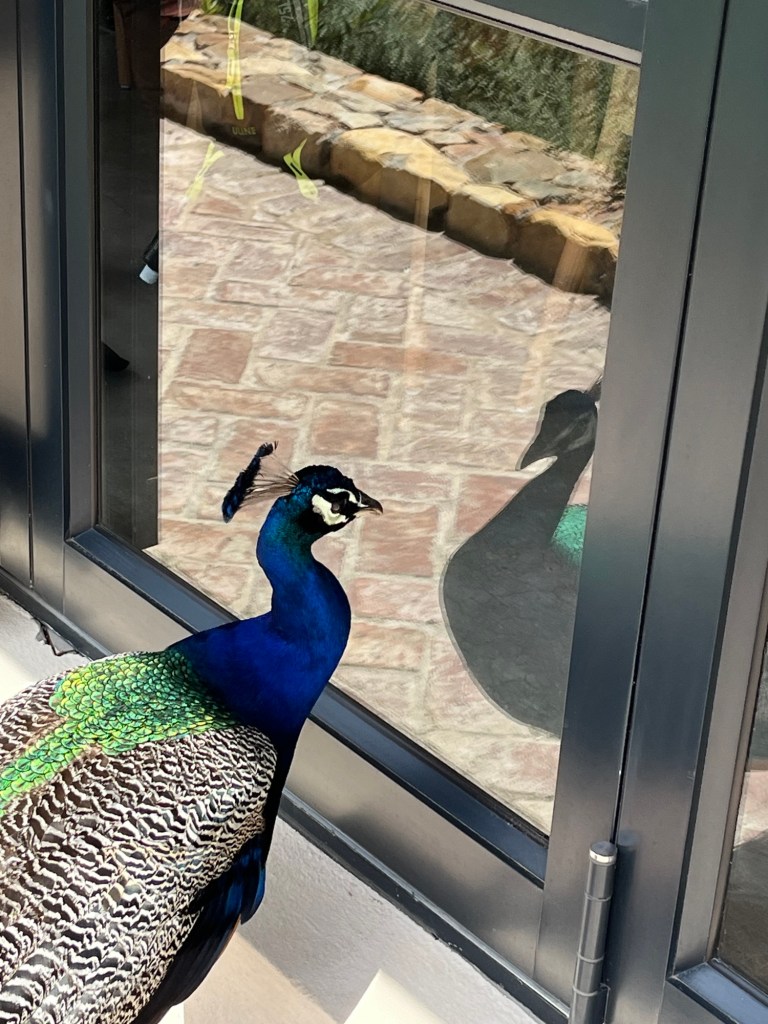
And this peacock at the Glenelly Estate who was not in a good mood when he saw his reflection in the glass.
He started fighting himself:
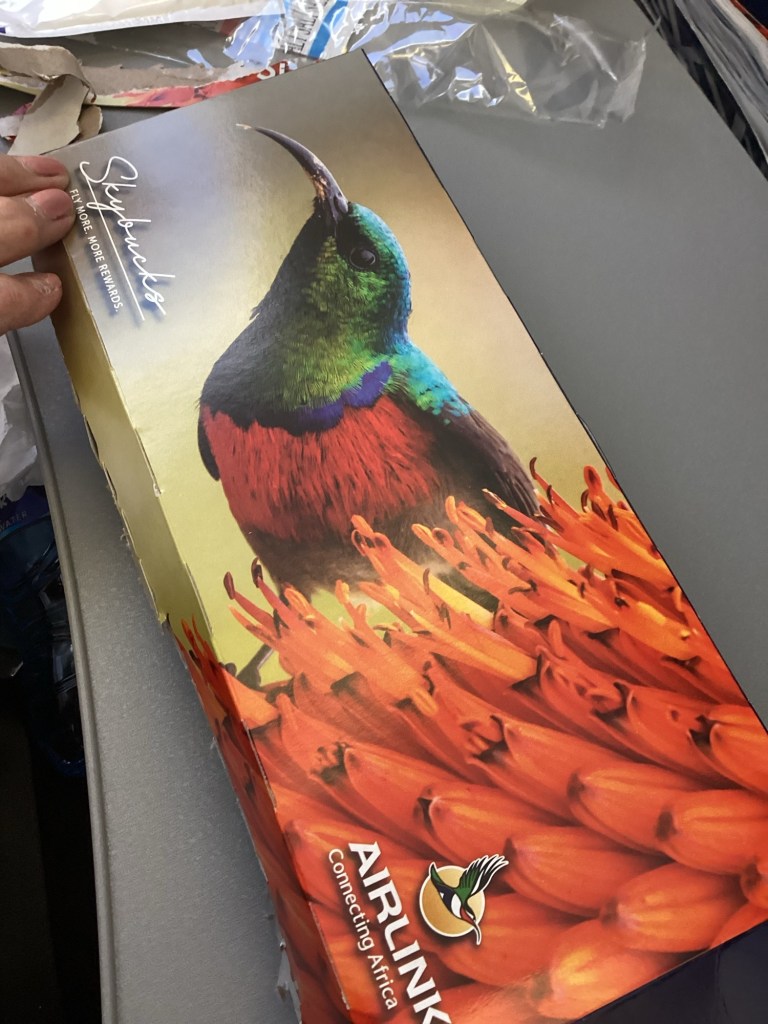
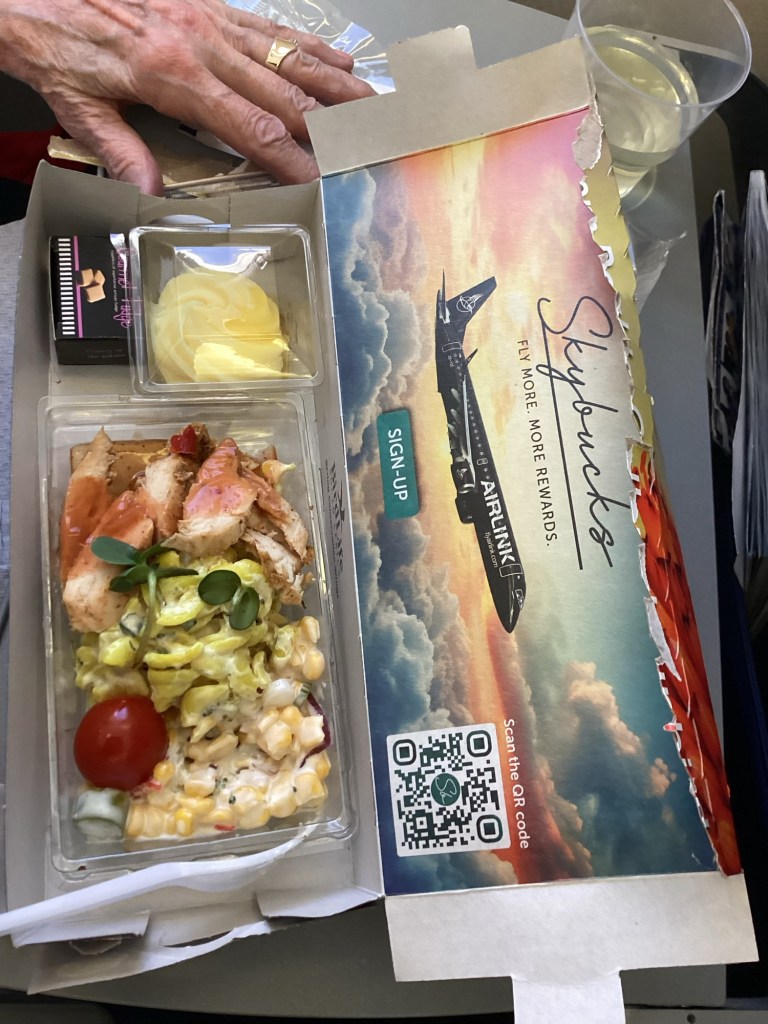
I write this part on the Airlink Airlines plane, flying the 3 hours to Victoria Falls Airport. Despite my earlier trepidation it’s really a rather nice plane even in economy. They’re serving drinks now and followed by meal later. We went for the white wine and sparkling water which is very common here. The boxed lunch ( loved the box)…
was delicious cold sliced chicken, paste salad and corn salad, followed lemon pudding and “gourmet” fudge.
Not as good as bother Steve’s fudge but on the whole quite tasty.
My second gaff of the trip (only 2?) came when passing through airport security in Cape Town.
I knew better but for some reason I packed four bottles of wine in my CARRY- ON bag. Oppps. Throw it away or return to check that bag and pay the excess weight penalty? Come on! It’s wine! I raced back to check the bag and caught up with the group.
They were still busy filling out immigration and health forms for Botswana, Namibia and Zimbabwe.
The airport at Victoria Falls has a beautiful waterfall just inside the terminal.
We left the airport with engraved water bottles on the right and a quartet of young men in native costume singing for us (and tips) on the left.
The hour-long bus ride took us through the middle of Zimbabwe. The flat, nearly arid land (we’re still in the dry season) brought some nice unexpected surprises.
The little one in the middle
Including this video of some disturbed bulls:
Stay away
Reaching Botswana we not only went through passport control but also walked over a very wet mat designed to kill the source of hoof and mouth disease that can devastate cattle herds. Our other shoes were given their own disinfectant scrubbing and the bus rolled its tires through the same solution.
Arriving at the Chobe River we boarded tender boats…
to take us first to Namibian passport control…
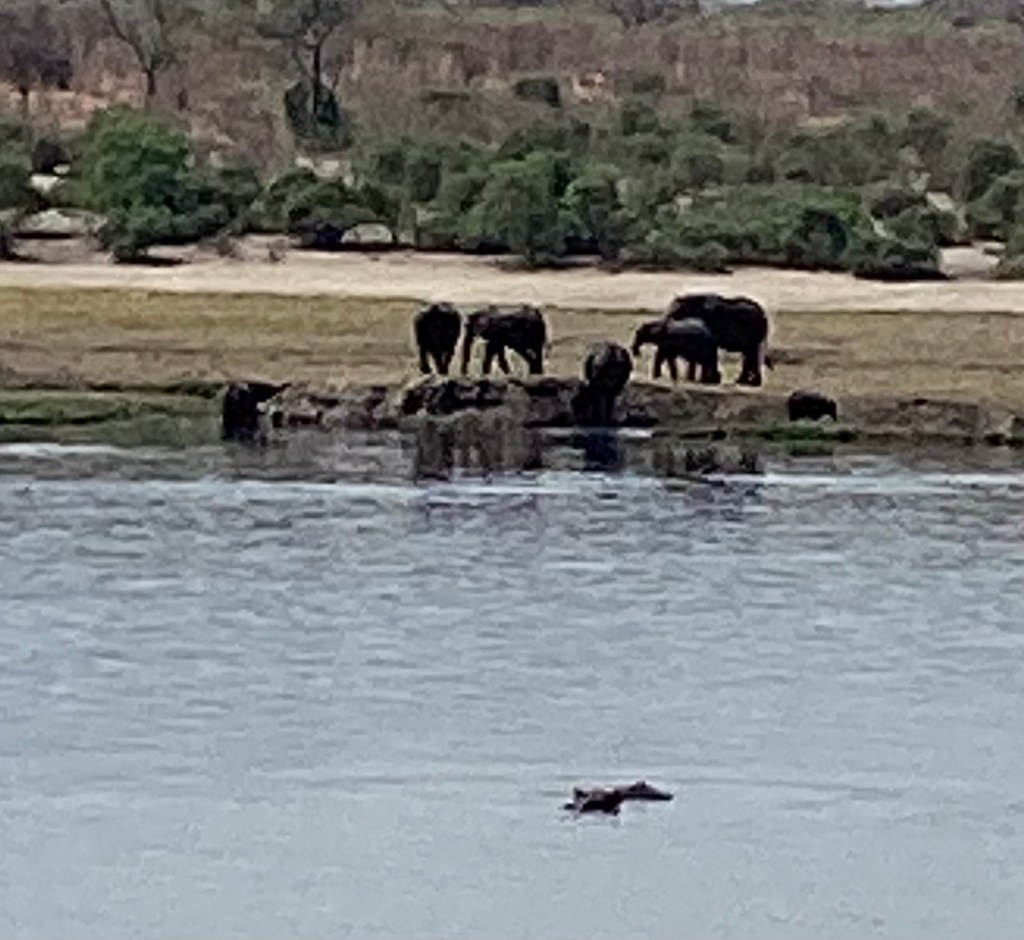
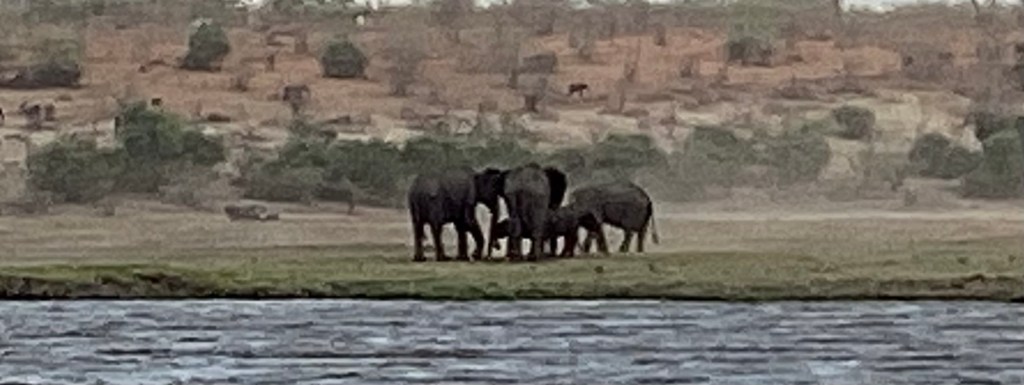
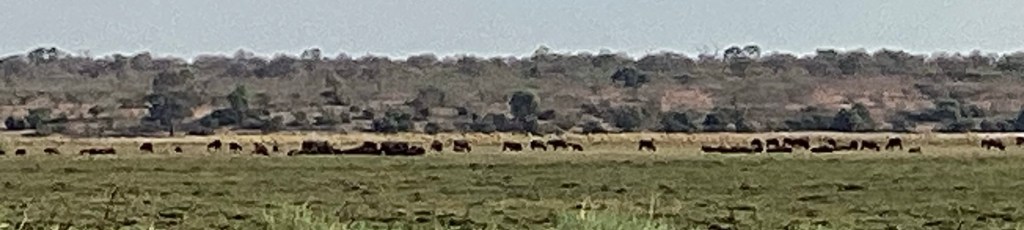
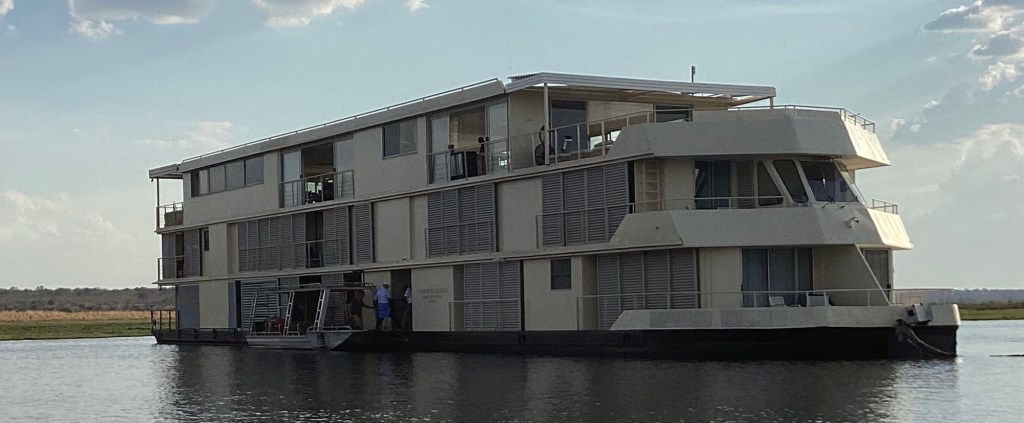
and then to the Zambezi Queen, our home for the next four days. Along the way we spotted an elephant herd in the distance…
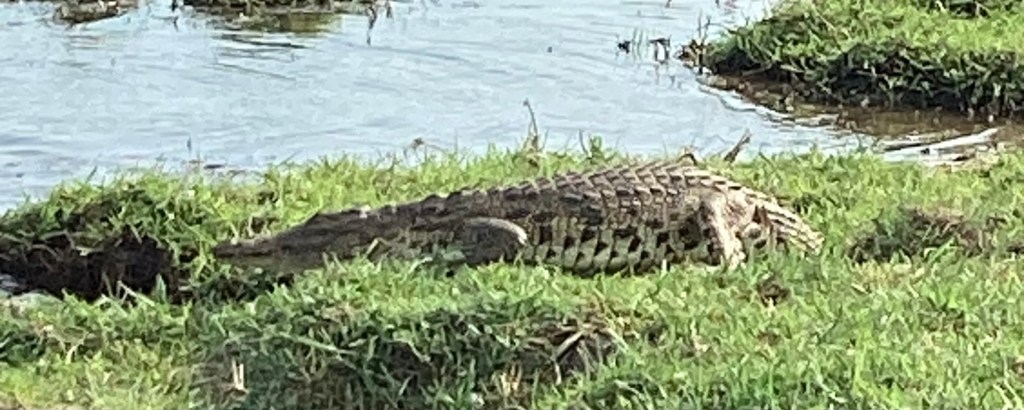
a crocodile headed for deeper water
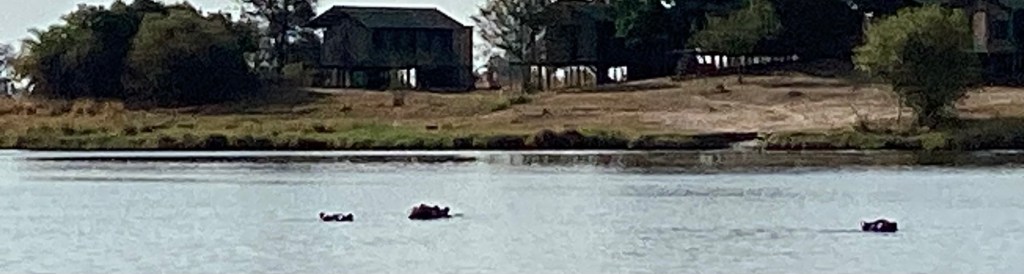
and the heads of some hippos
The Zambezi Queen was a welcome site after a very hot (102 degrees) tender ride and trip through Namibian passport control.
We were exhausted.
Dinner was wonderful. The Chenin Blanc was exquisite, followed by butternut squash soup, grilled brinjal (egg plant and tomato topped with cheese), hale fillet ( flaky white fish), and white chocolate mousse for dessert.
Tomorrow’s schedule calls for a bird (and animal ) watching tender ride at 6:30 am. I may make it.









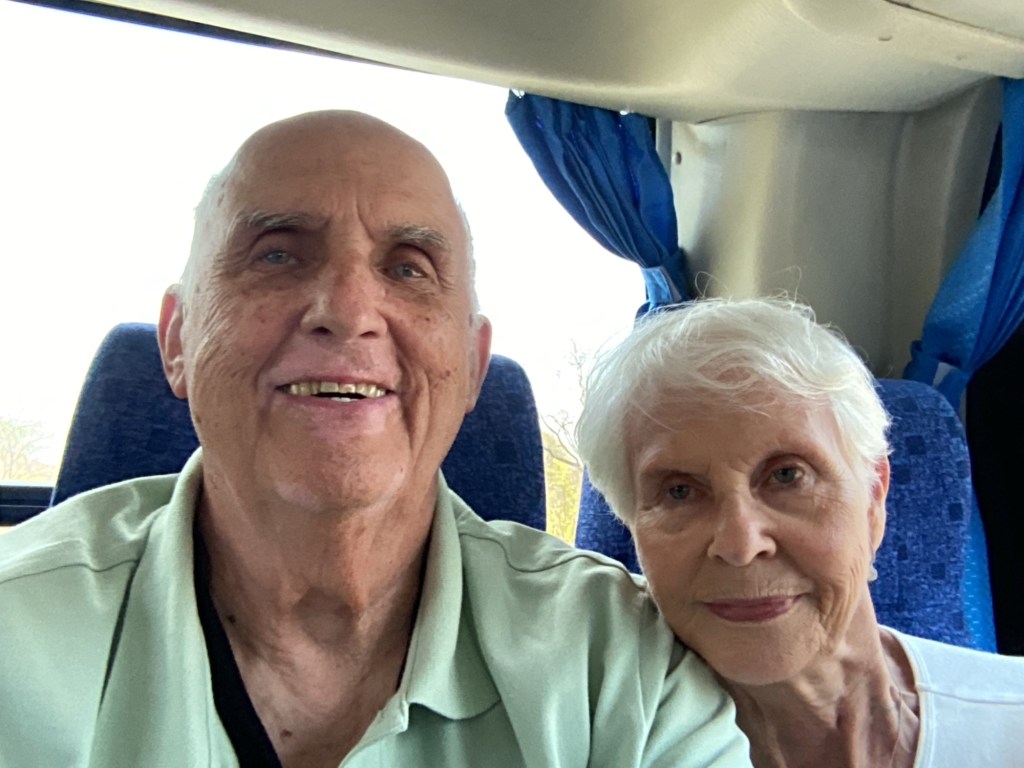
























 Our South African Adventure
You must be logged in to post a comment.